01
Design Goal
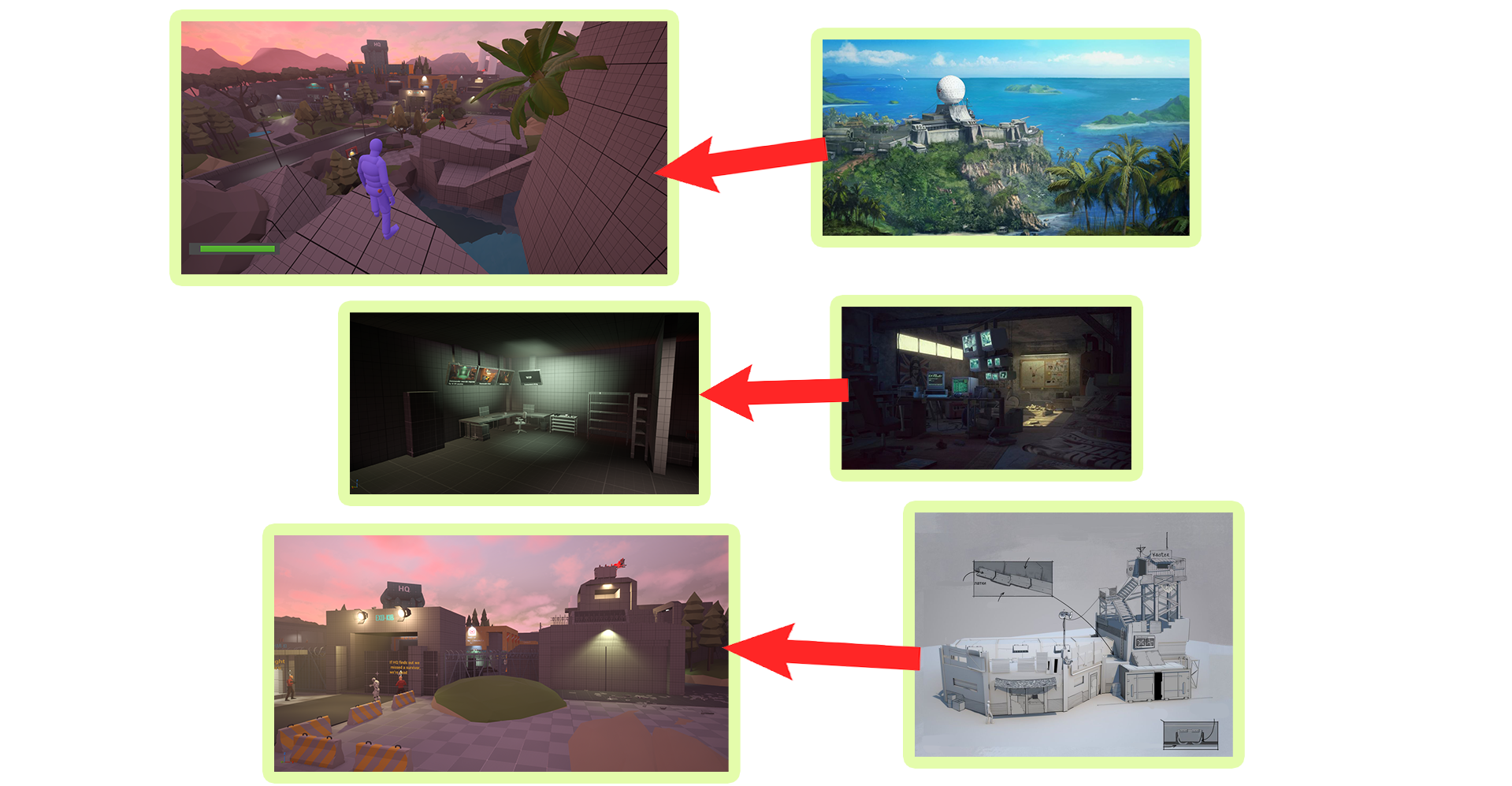
My goal for this project was to bring a mix of stealth, action, and investigation. A believable story with emotional stakes like Splinter Cell and Metal Gear Solid 1, combined with narrative-driven spatial progression. I wanted every space to feel purposeful not just visually distinct, but emotionally and mechanically meaningful. The level is structured around a rising emotional arc:
Vulnerability → Tension → Loss → Hope → Empowerment
My core design goals focused on three interconnected pillars:
02
Iterative Progression
Click any thumbnail to enlarge
03
Level Overview & Highlights
Setting & Tone
Setting: A remote forest concealing a clandestine enemy research facility
Tone & Mood: Isolation, tension, dread, rising urgency
Constraints:
Engine: Unreal Engine 5 · Perspective: TPS (third person shooter) · Platform: PC
Synopsis
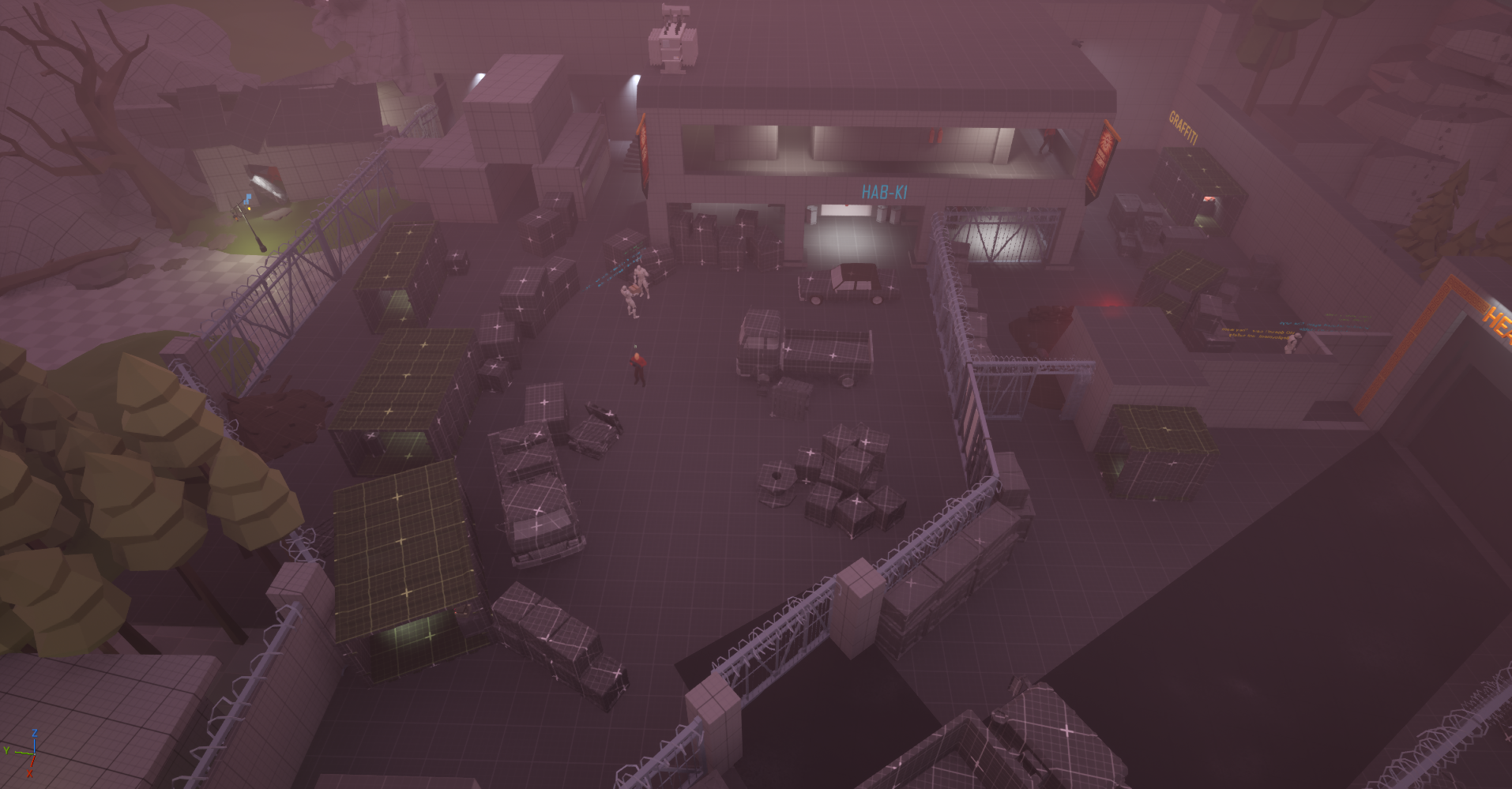
The level is set in a remote forest where a special-ops squad is ambushed while approaching a hidden enemy research facility. The player, the sole survivor of the crash, must navigate hostile territory, uncover the truth behind the ambush, and sabotage the facility before the looming danger begins to surface.
Narrative-Driven Environment Storytelling
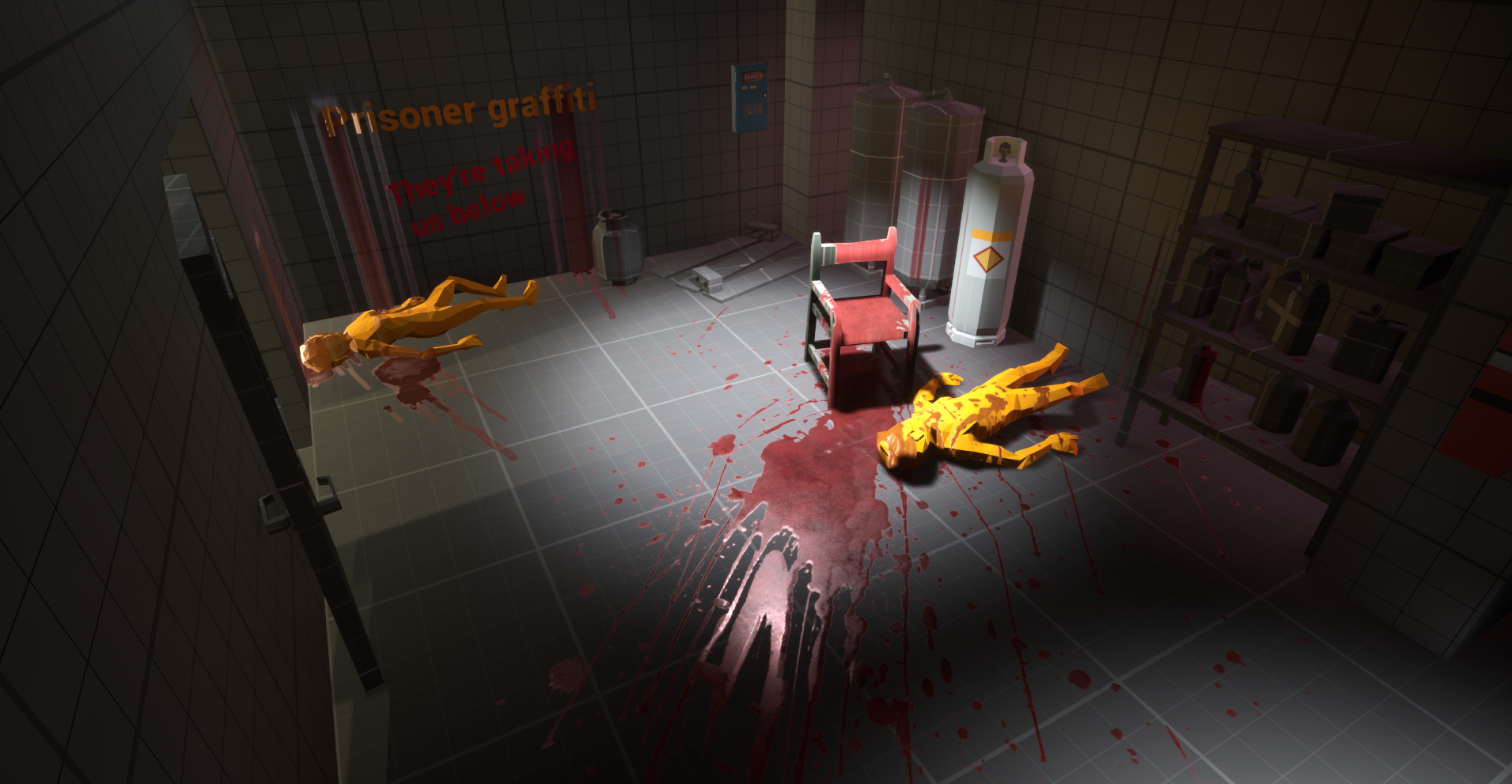
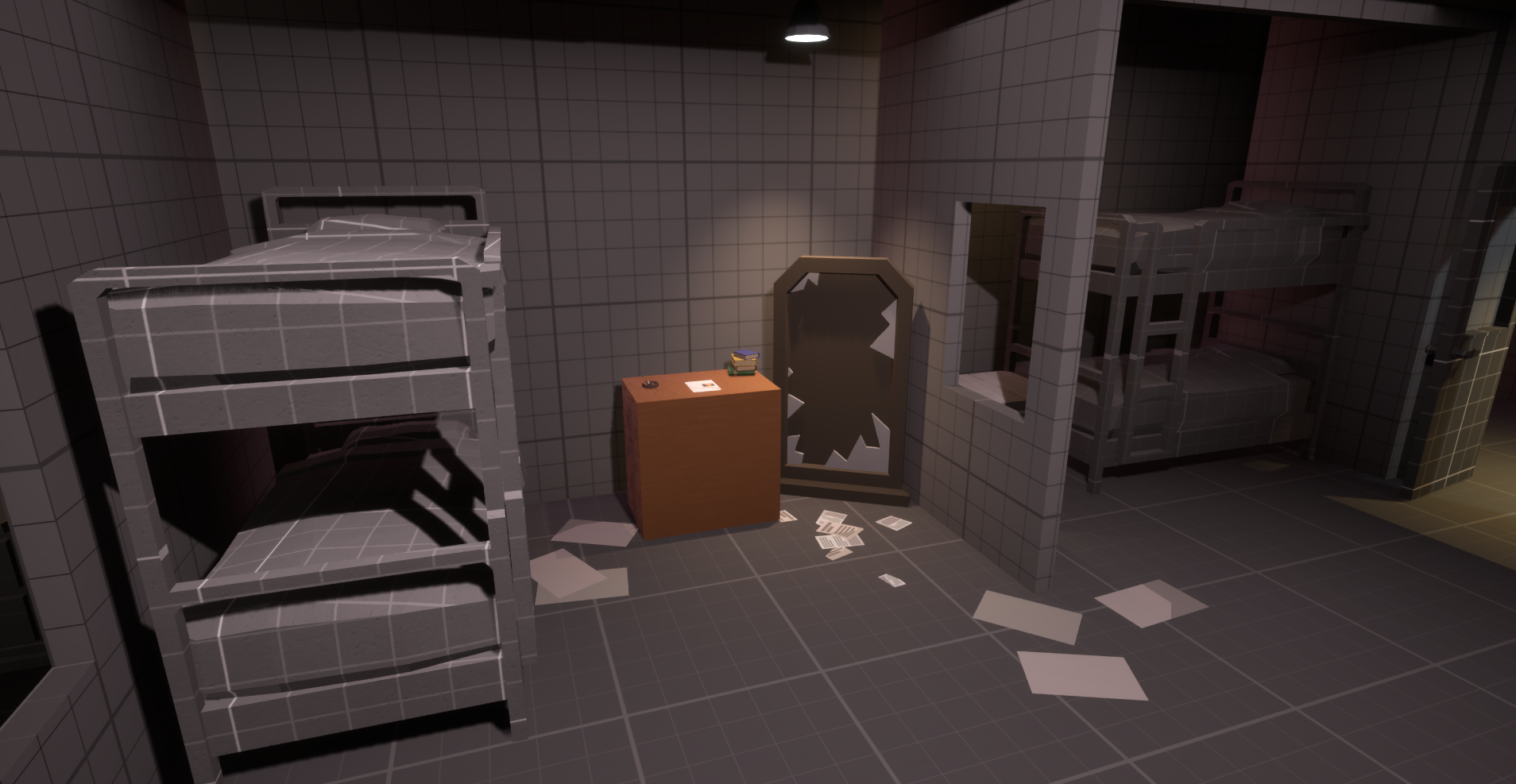
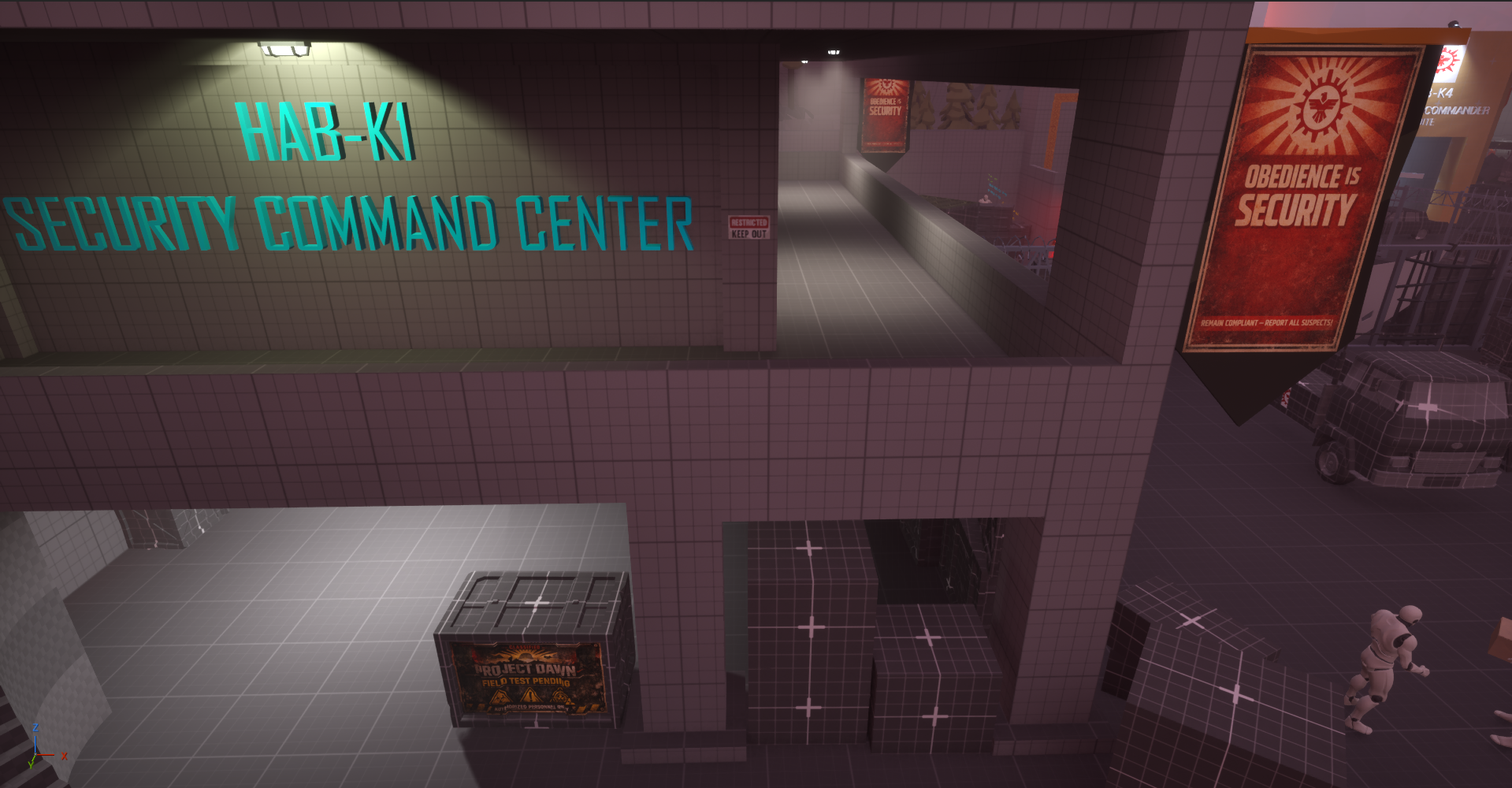
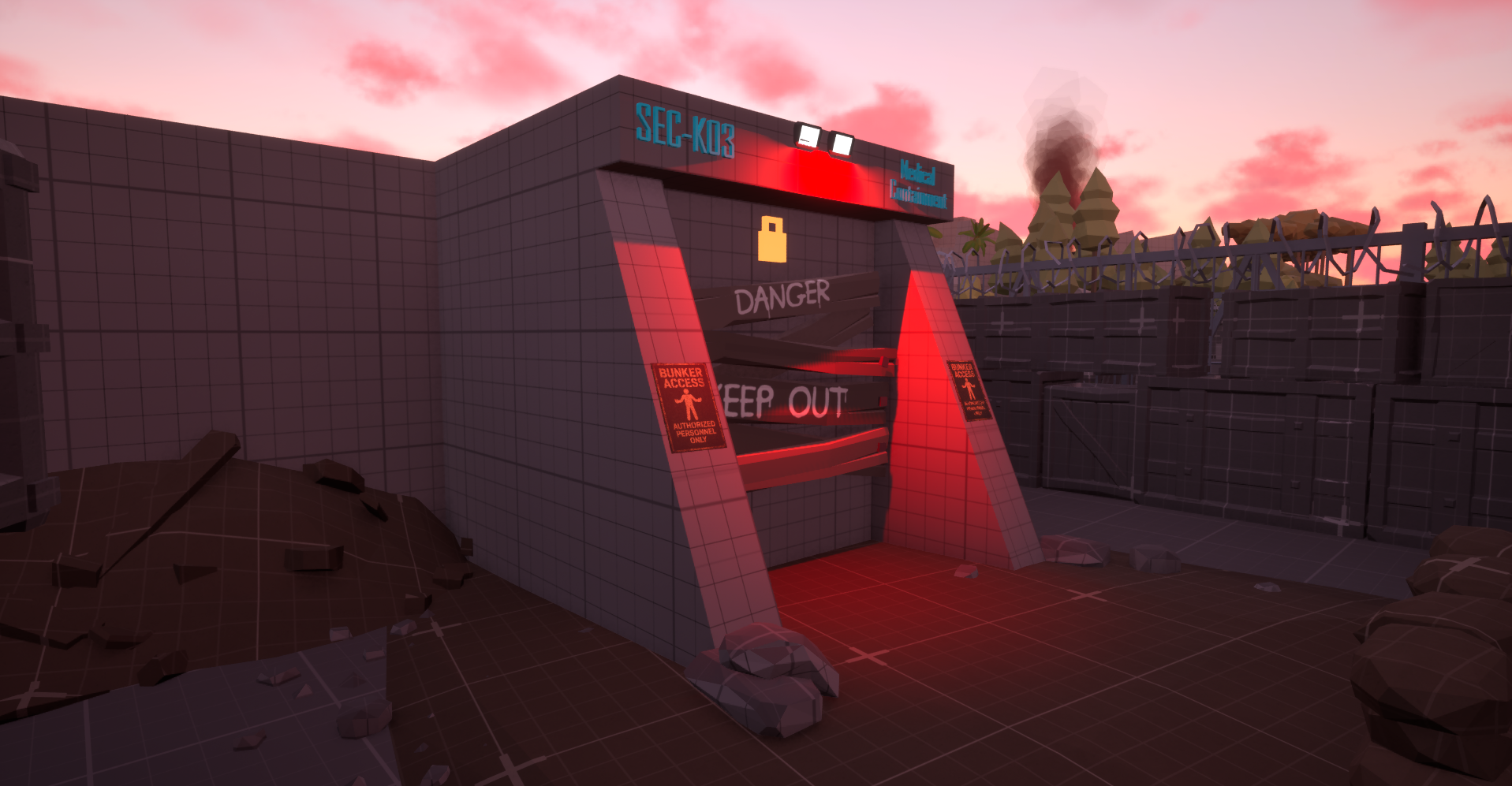
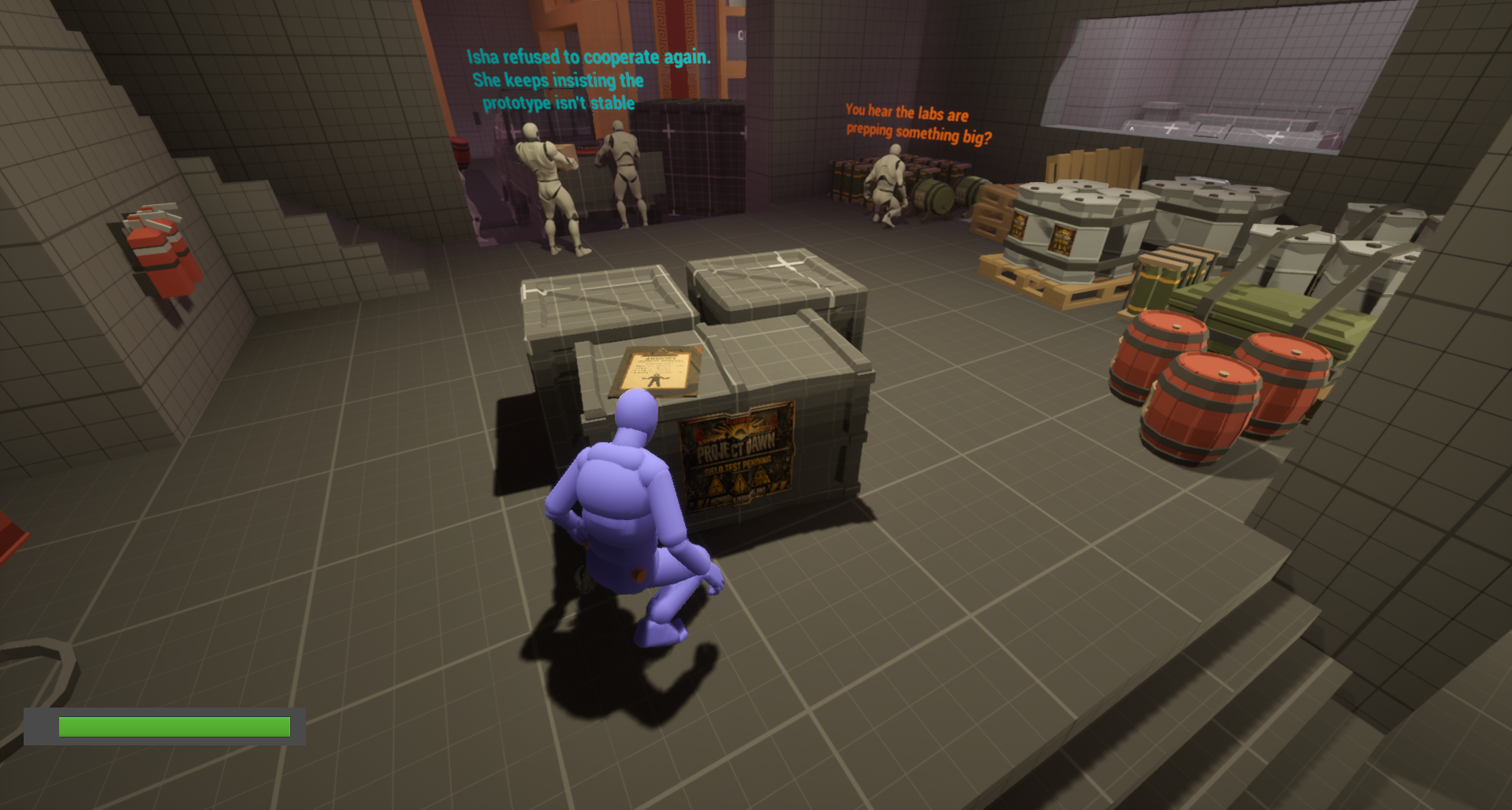
Every space should tell a story without a single line of dialogue.
- Used environmental storytelling to create the world that feels alive and to reflect the Enemy facility's current state.
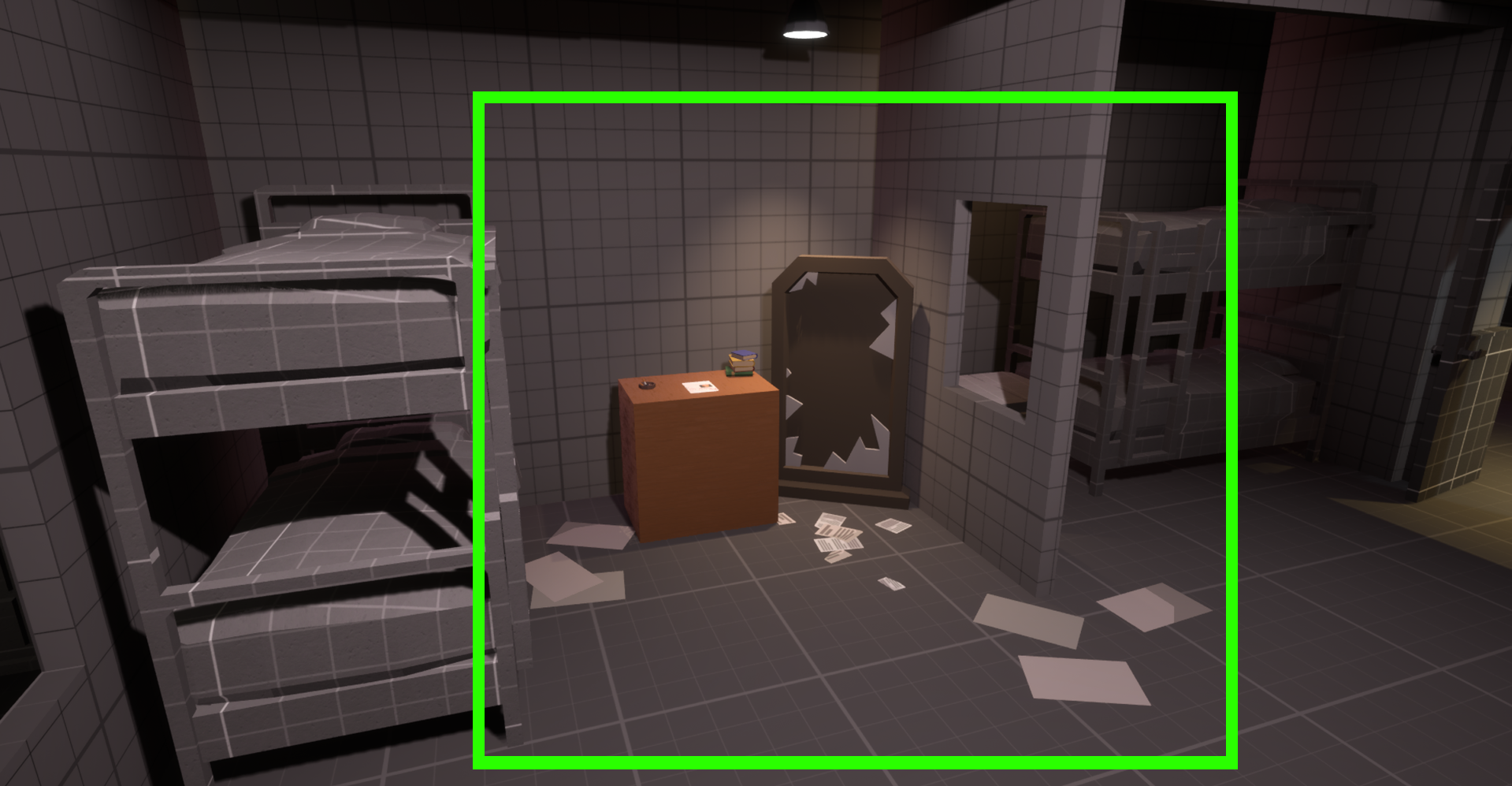
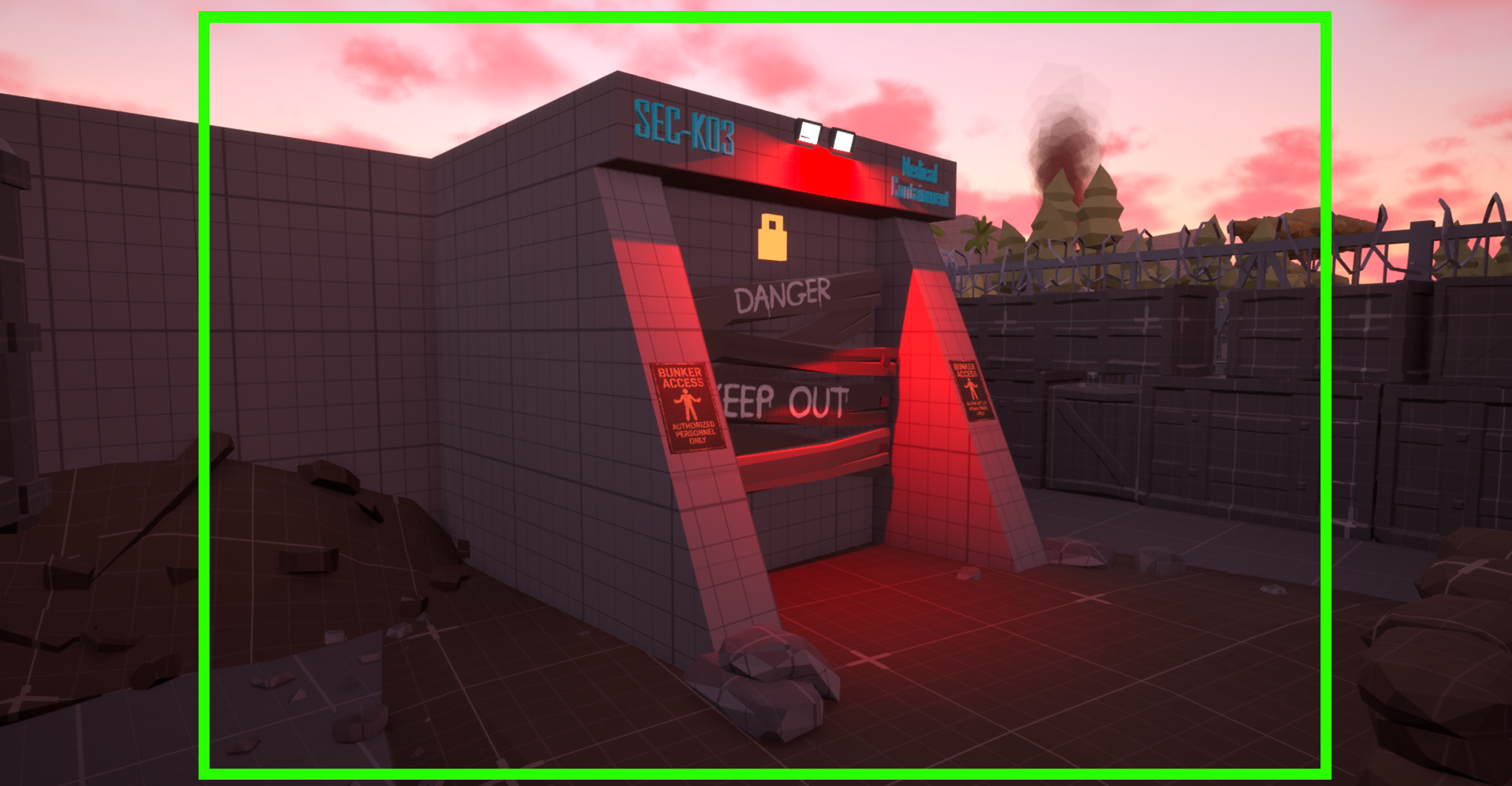
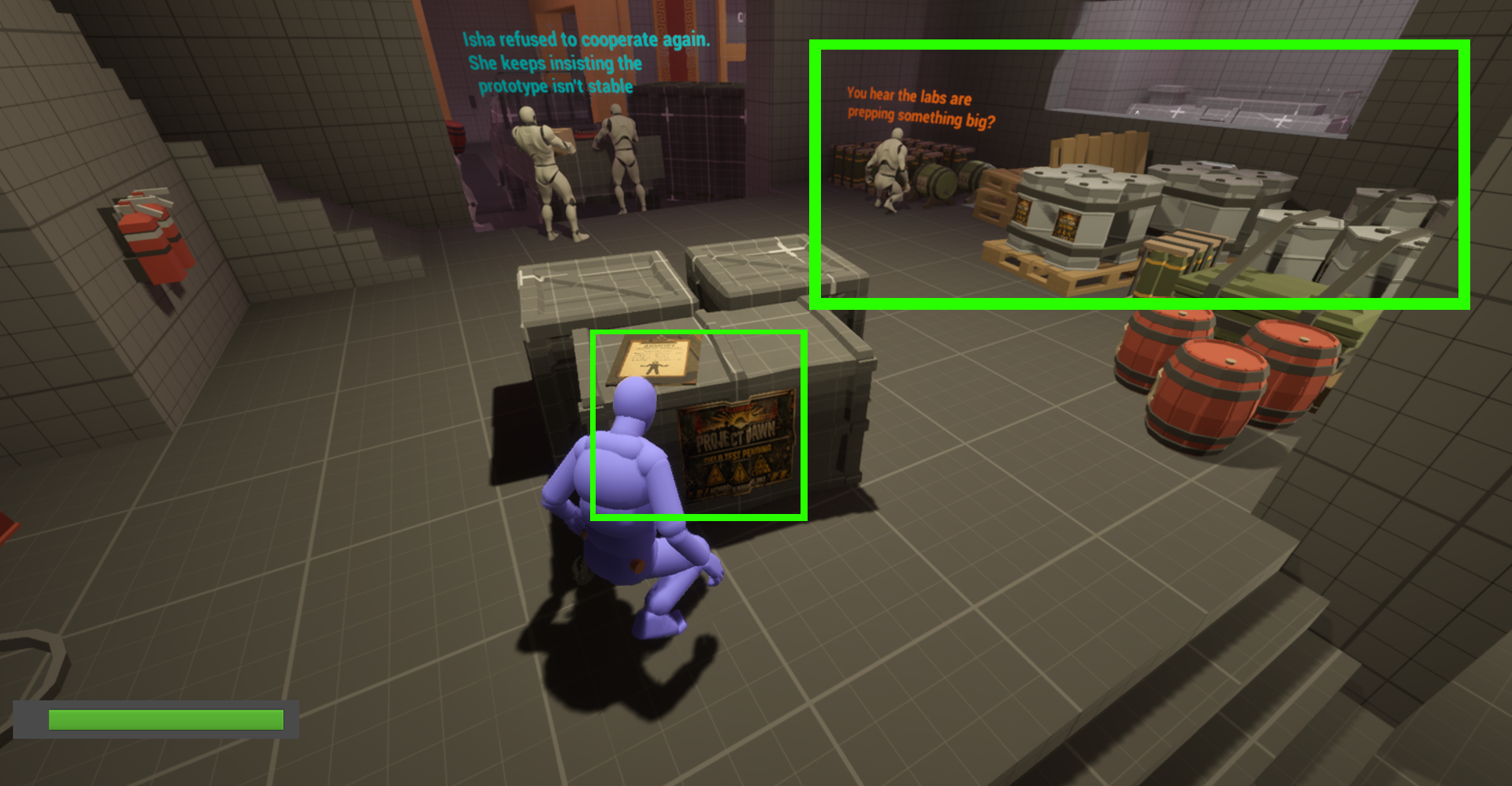
- I mix in small storytelling details throughout the environment — things like overheard enemy chatter, posters, warning signs, or even a cracked mirror to give the world personality and let the narrative unfold naturally as the player explores.
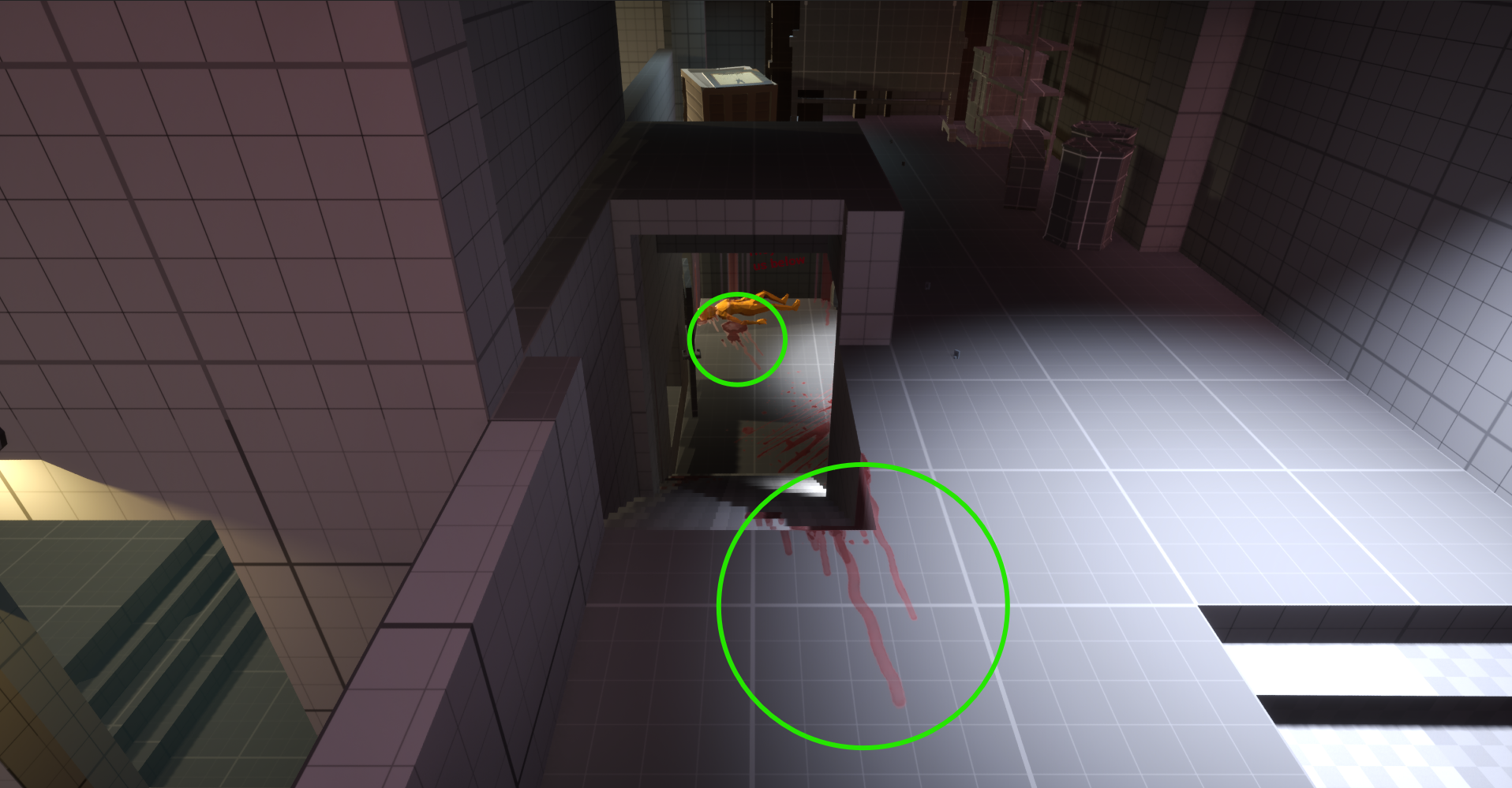
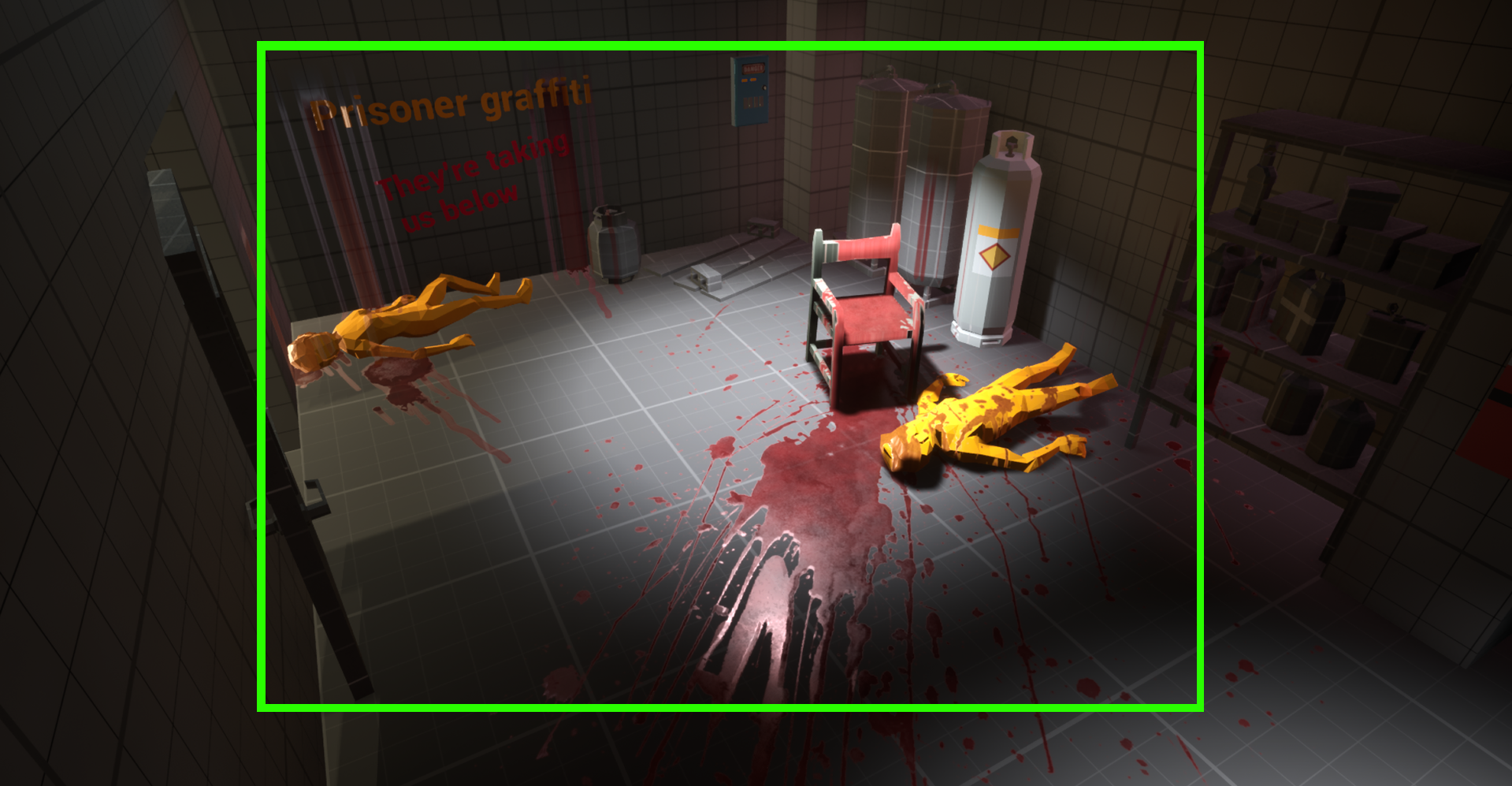
- Used environmental "breadcrumbs" — blood trails, Stone debris, Tree branches, bodies — to deepen immersion.
Rewarding Exploration
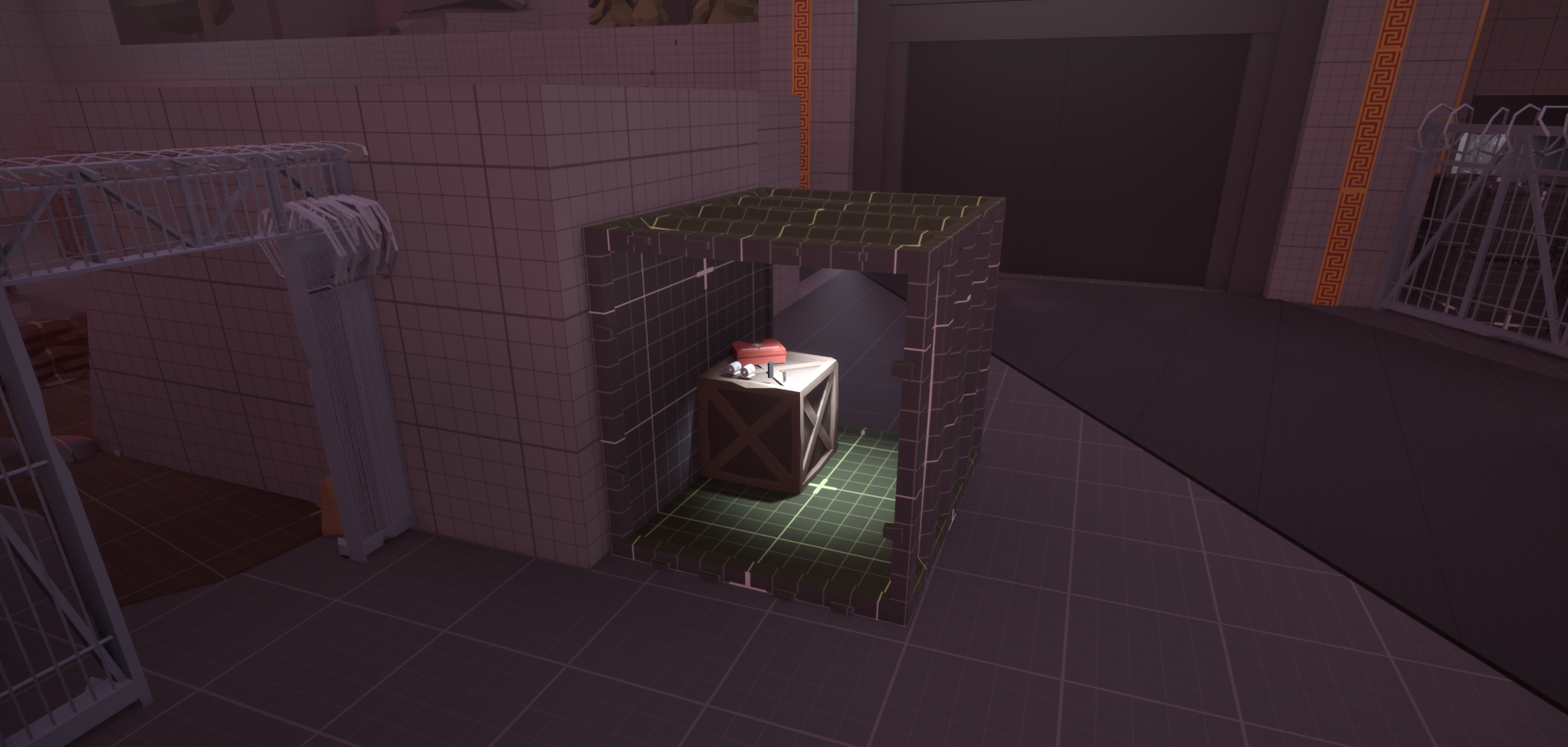
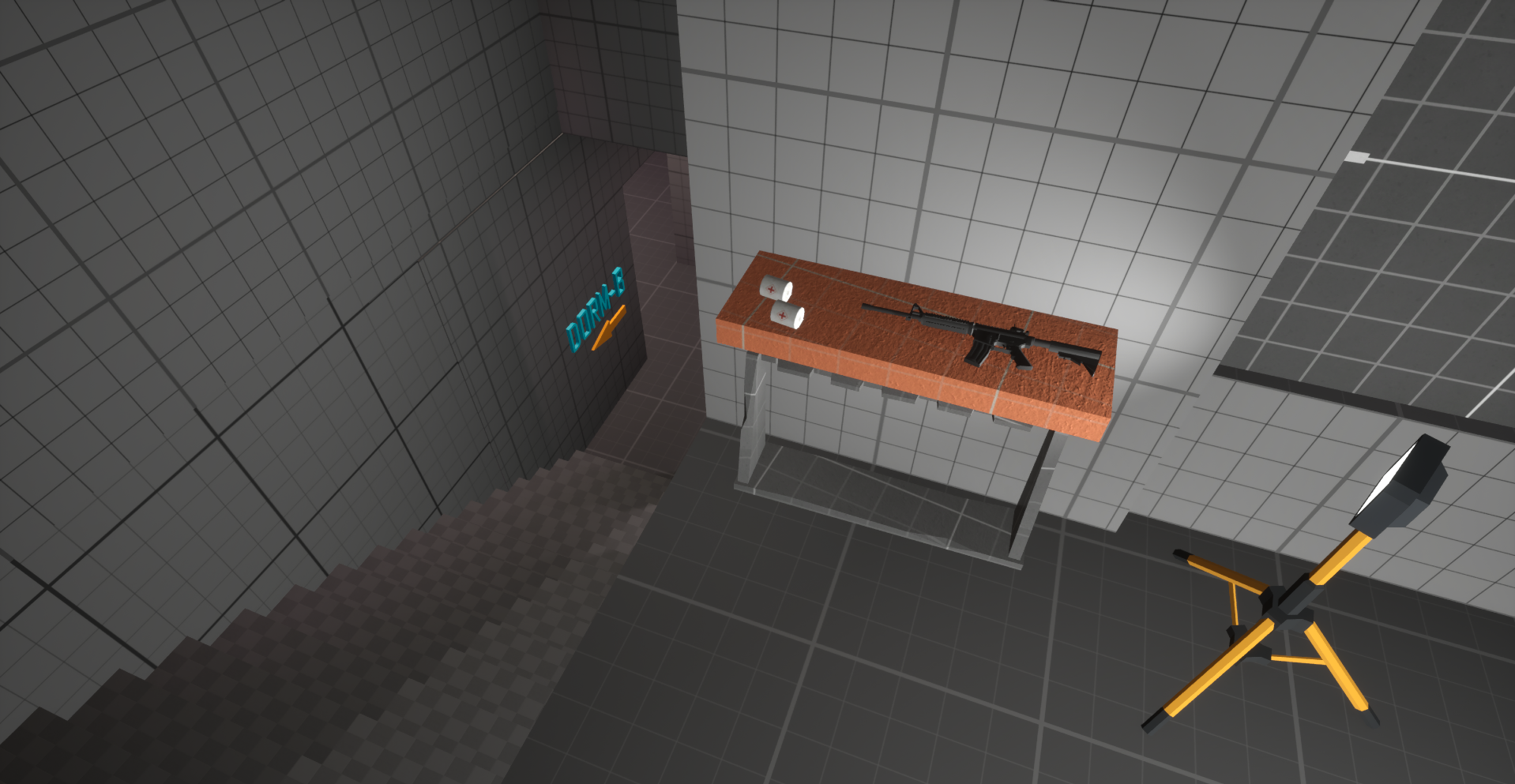
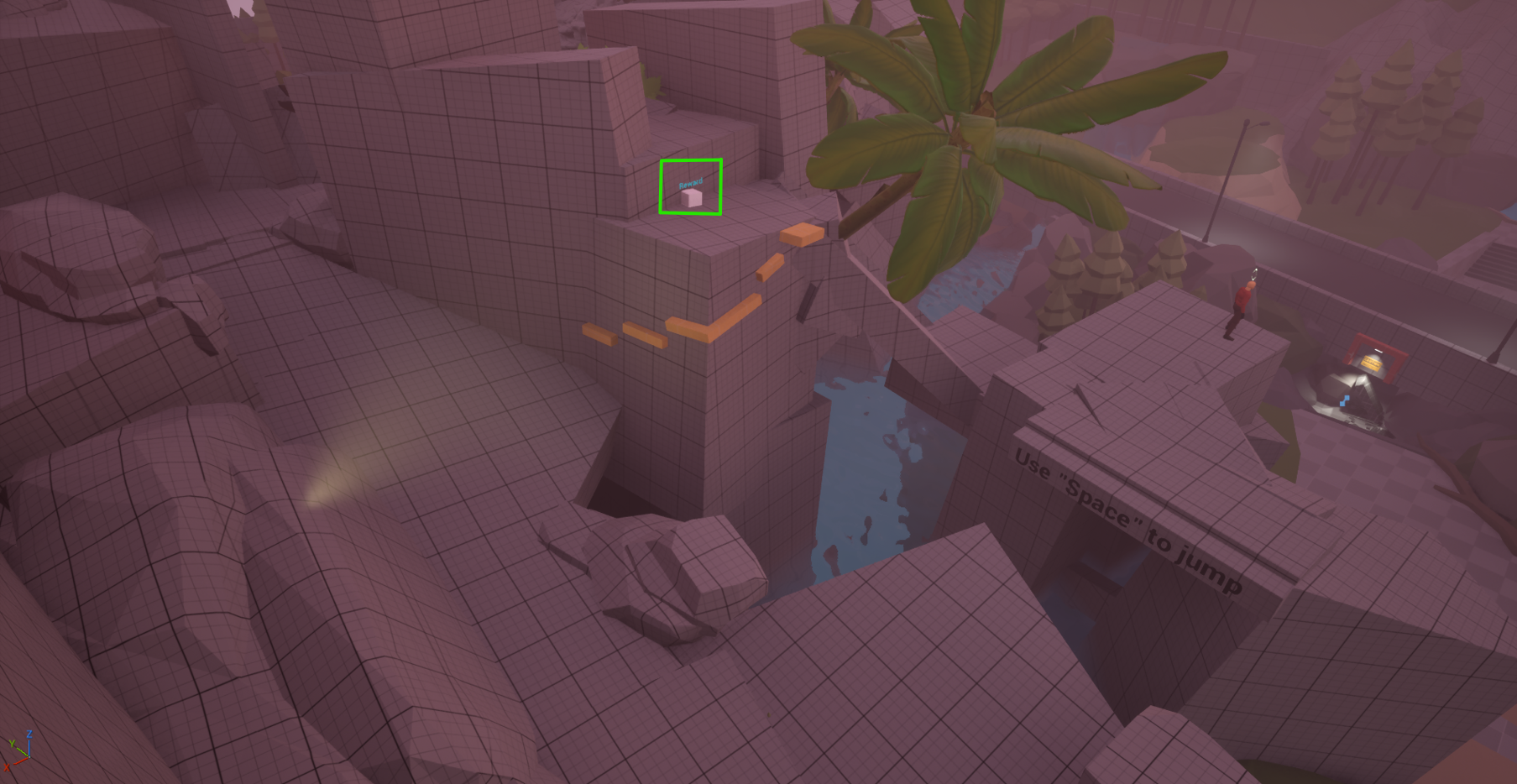
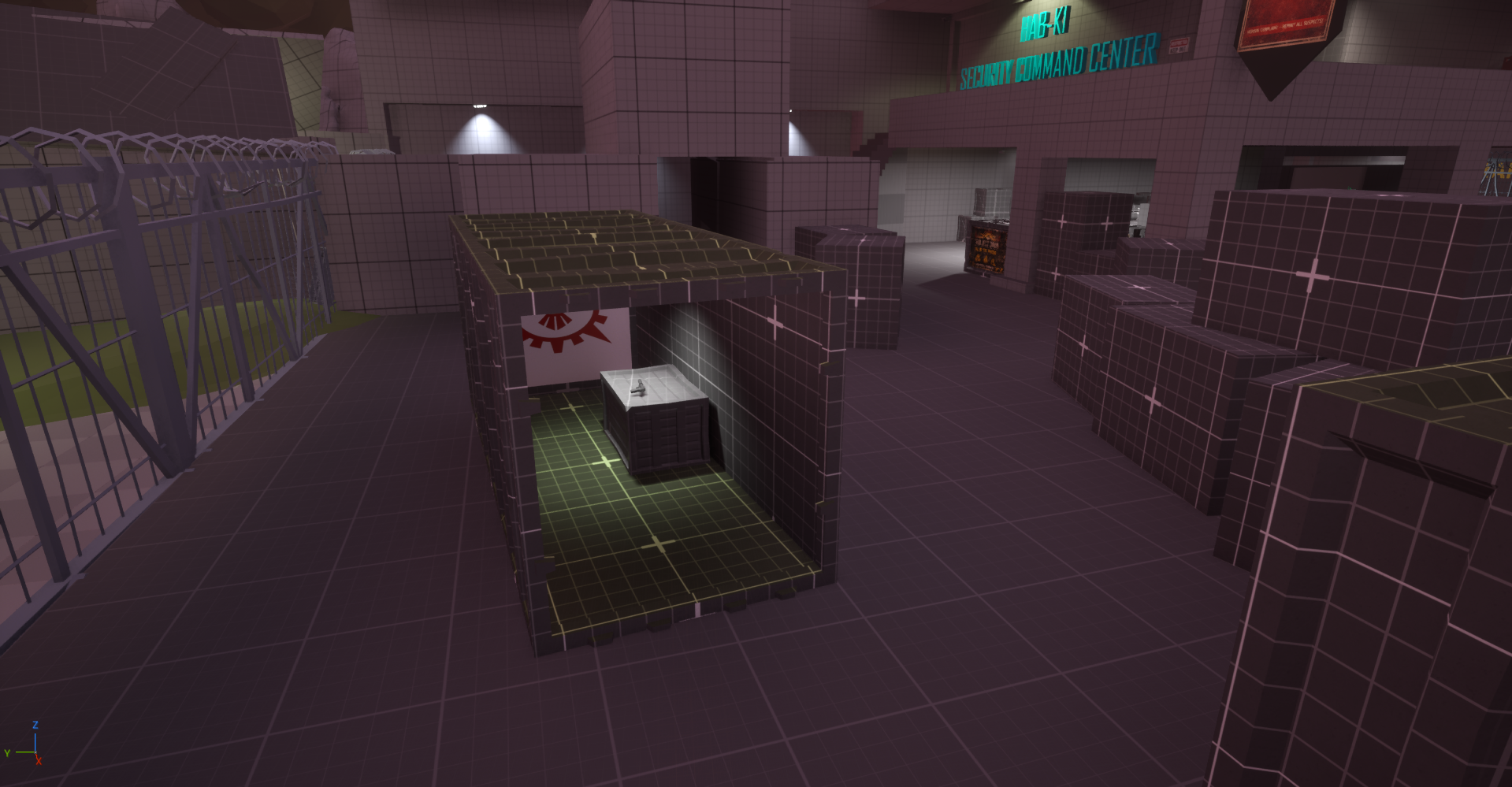
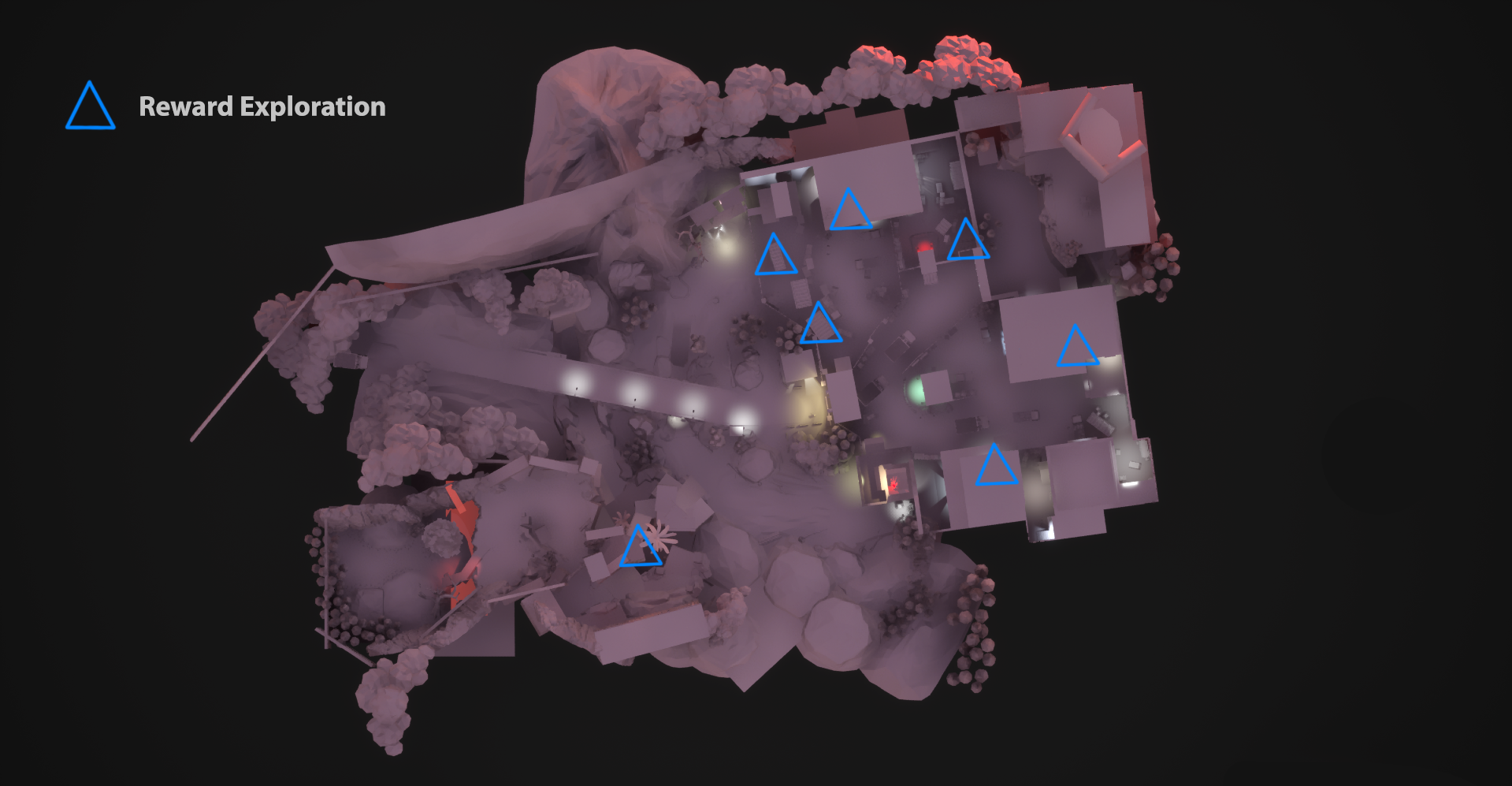
- Placed hidden and visible rewards throughout the level to drive exploration and give players a sense of meaningful discovery and support both casual and completionist players.
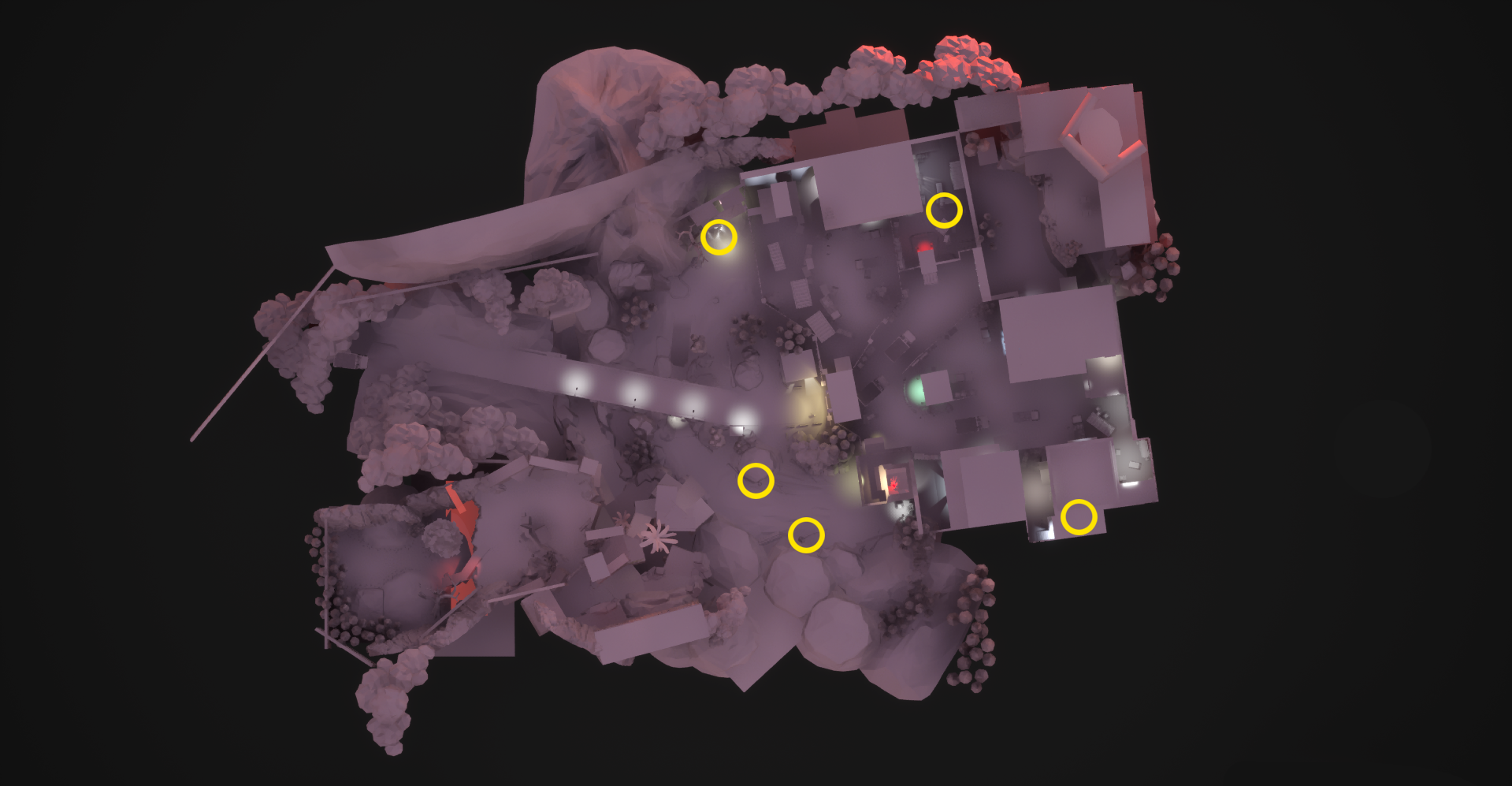
- 8 Interaction triggers · 4 Audio logs · 4 ammo & 8 medical bandages pickup points
- Positioned meshes and props to subtly guide the player toward revealing secrets about the facility — curious shapes, Lighting contrasts, or visual gaps invite exploration.
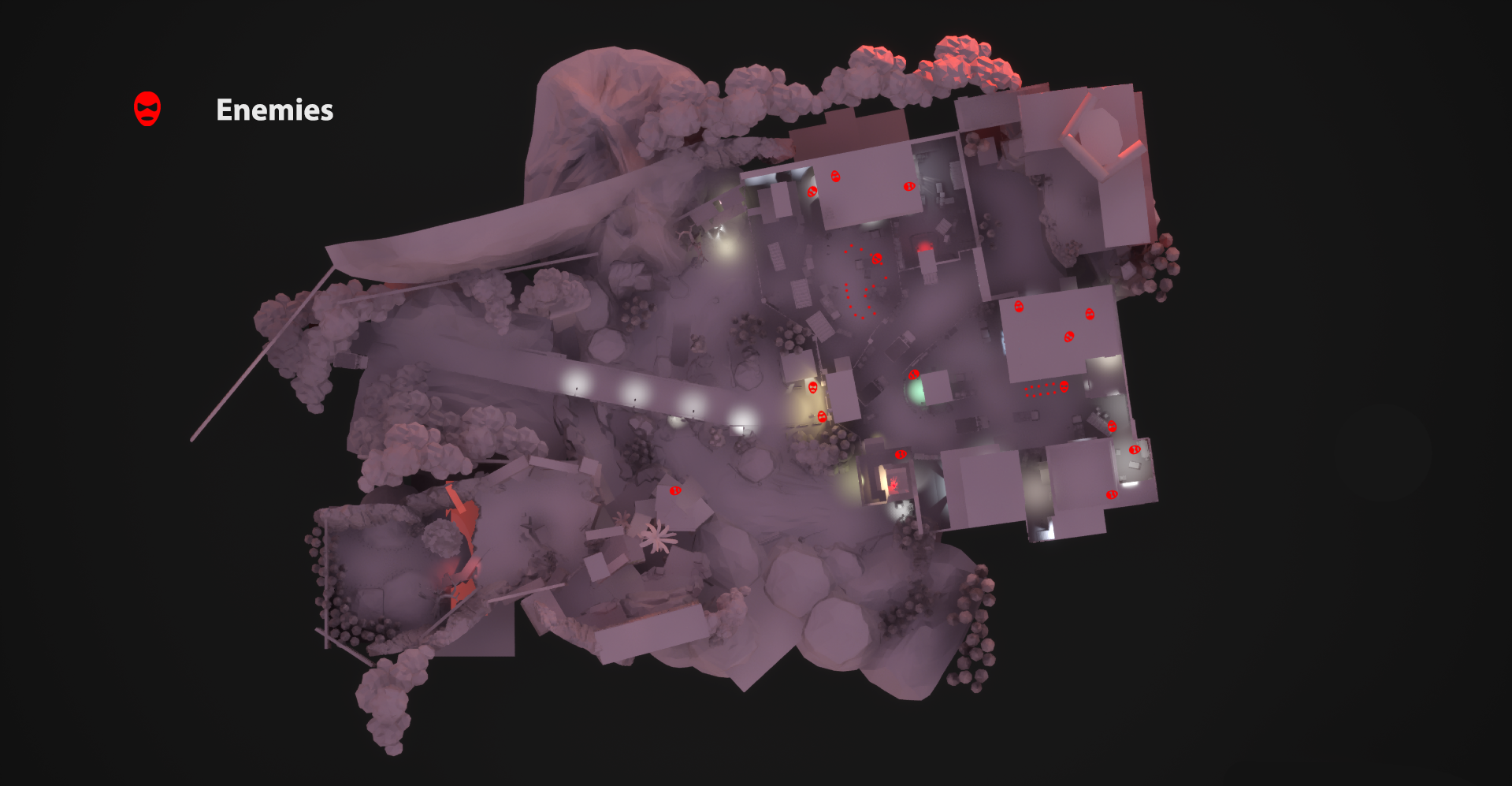
Enemy Types Overview
To support both narrative progression and stealth-focused gameplay, the facility features a coordinated enemy ecosystem. Any guard who detects the player immediately alerts the entire team, creating high-stakes tension and encouraging careful navigation.
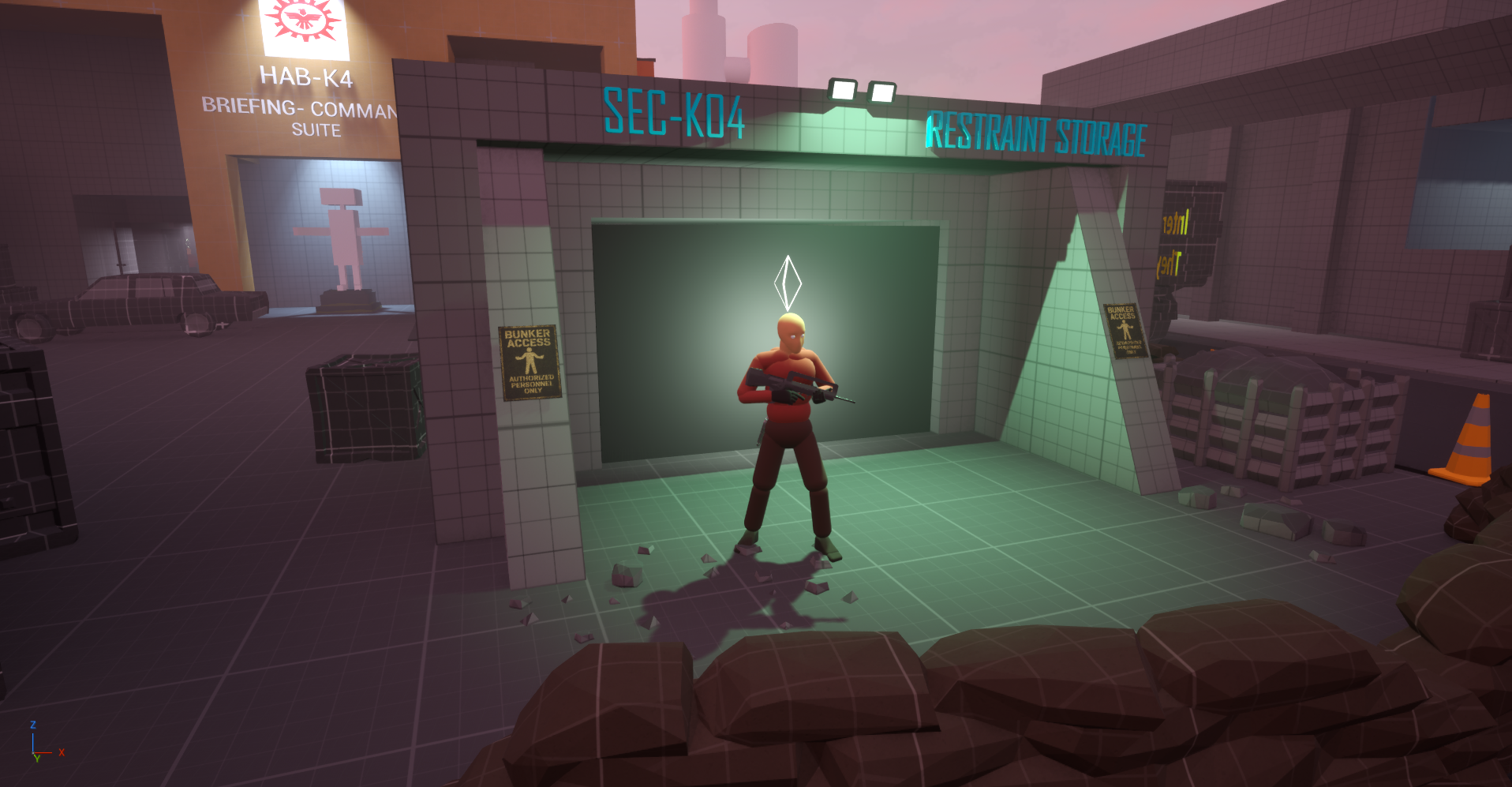
Standby Guards
Role: Static sentinels controlling key choke points.
Behaviour: Remain stationed at fixed positions. Maintain a constant line of sight over important doors, corridors, or objectives.
Design Purpose: Encourage players to engage with stealth takedowns · Create predictable but high-pressure obstacles · Reinforce the feeling of infiltrating a tightly controlled facility.
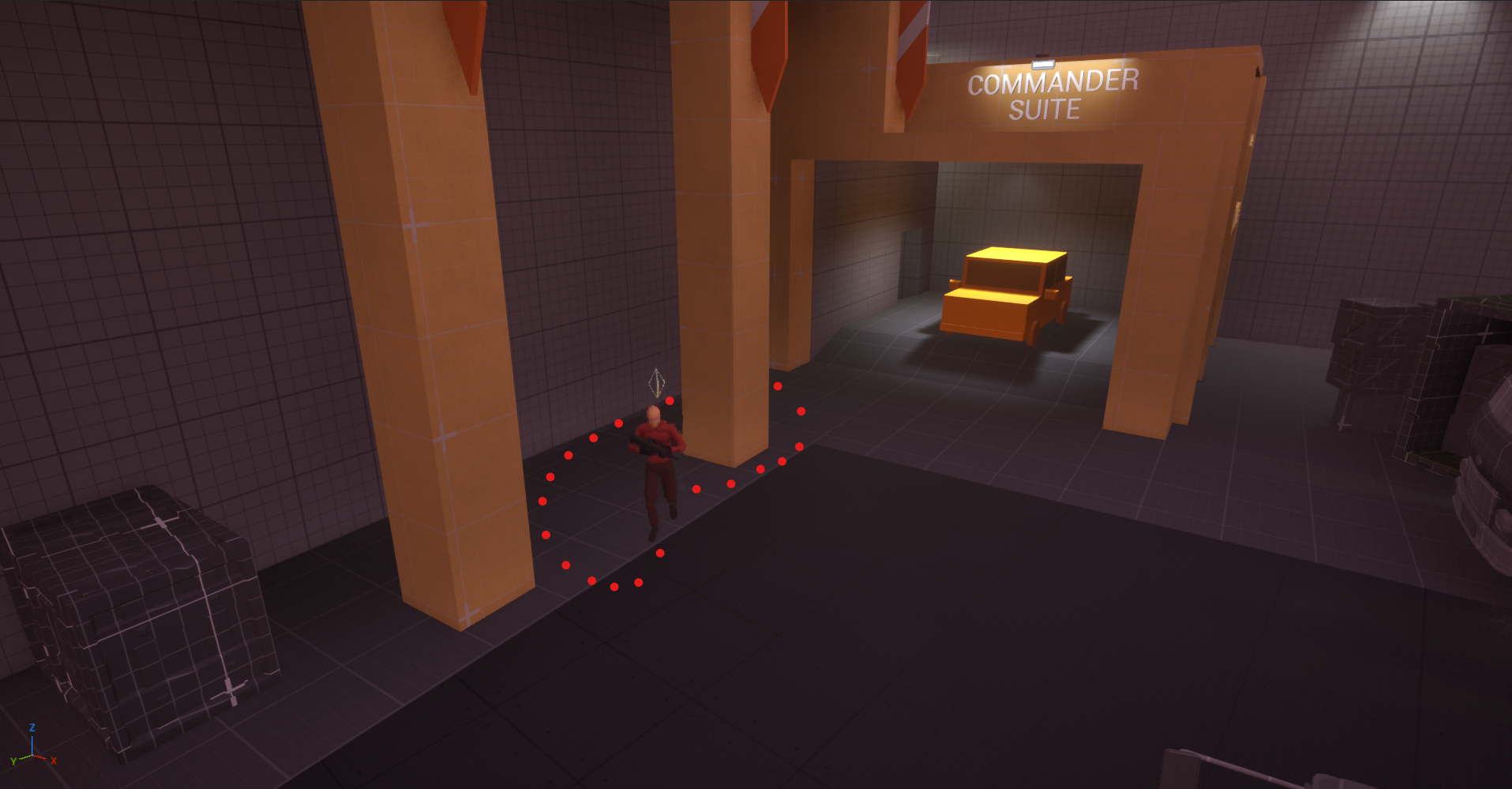
Patrolling Guards
Role: Mobile threats that sweep the environment.
Behaviour: Move along predefined patrol routes. React quickly. Designed to catch players who rely too heavily on predictable patterns.
Design Purpose: Test player reflexes and timing · Add dynamism and unpredictability to stealth sections · Increase tension by forcing players to track movement cycles.
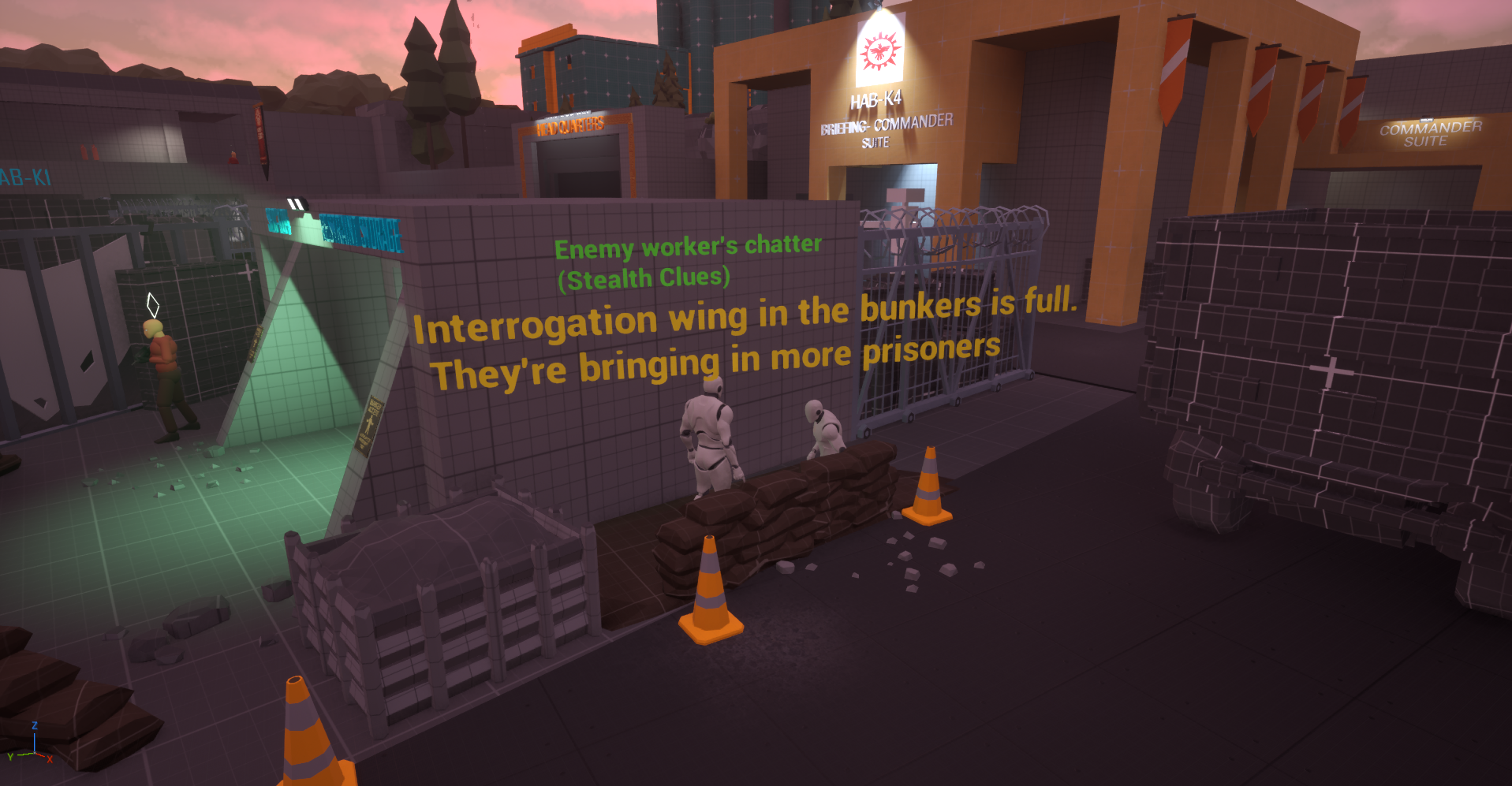
Enemy Workers
Role: Non-combat staff who still pose a detection risk.
Behaviour: Unarmed but alert. Report suspicious activity to nearby guards. Populate the environment to make it feel alive and operational.
Design Purpose: Challenge player awareness and environmental scanning · Introduce low-threat but high-impact detection sources · Encourage players to consider non-combatants in their stealth strategy.
Supports Multiple Playstyles
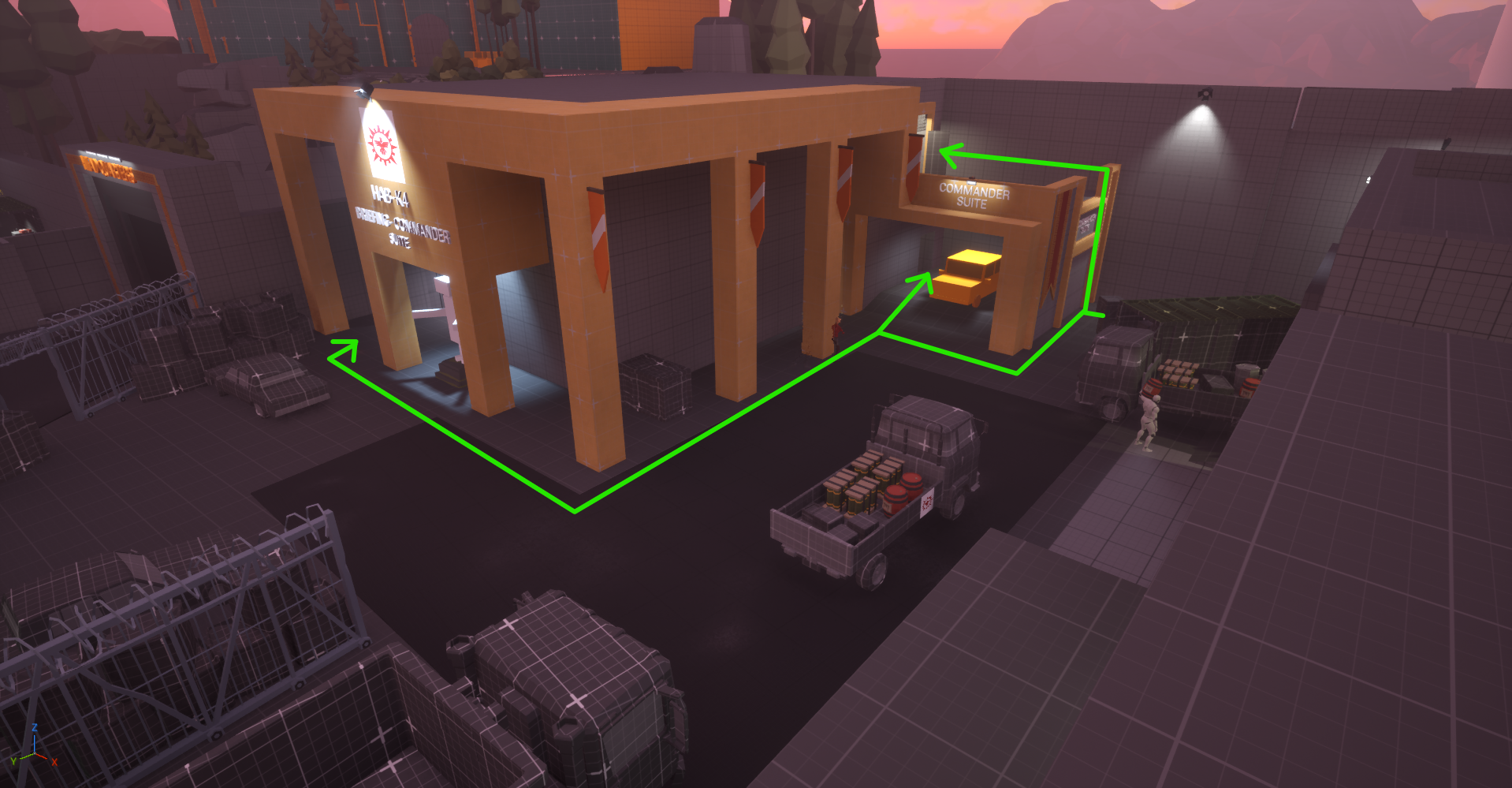
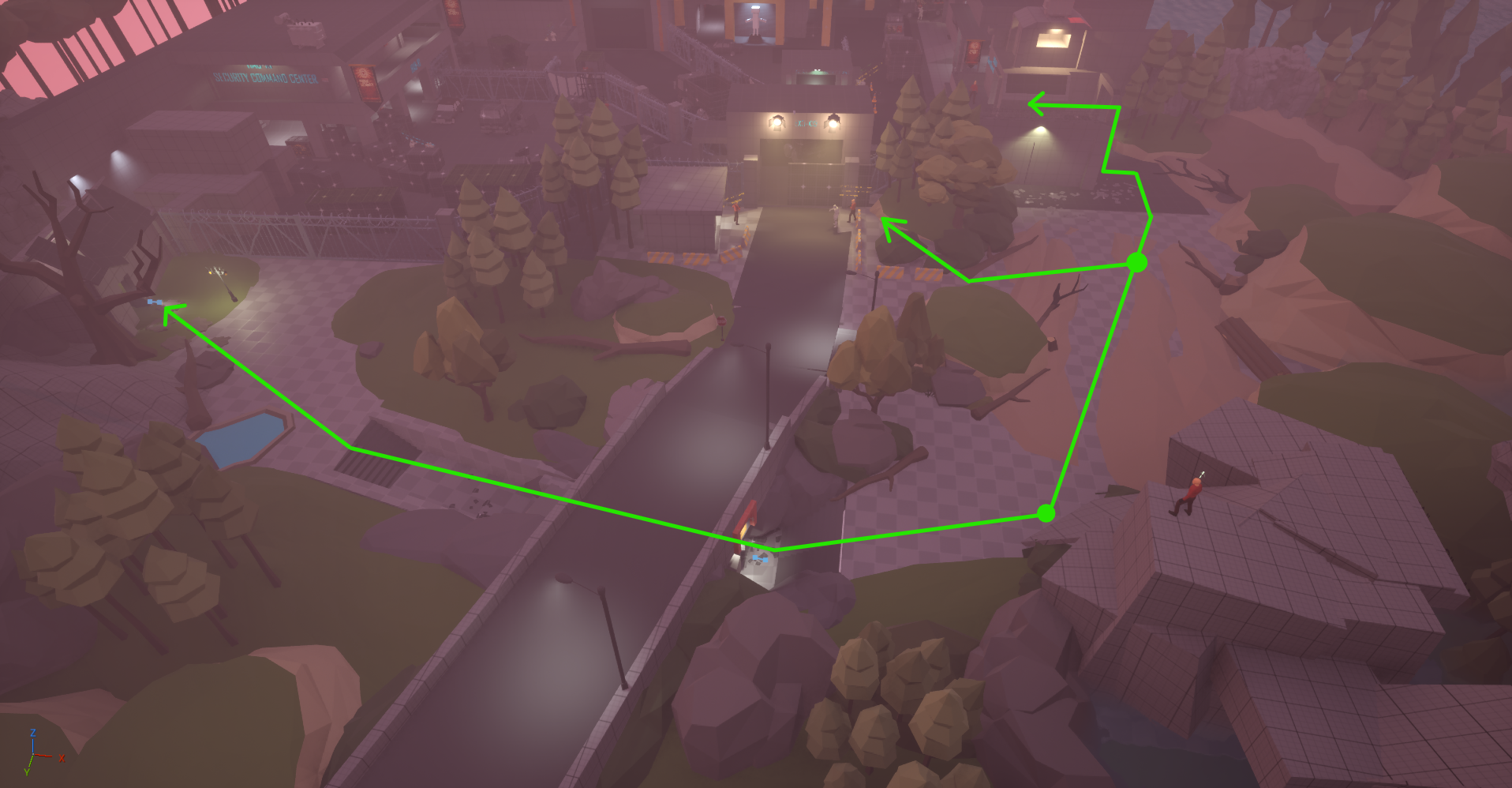
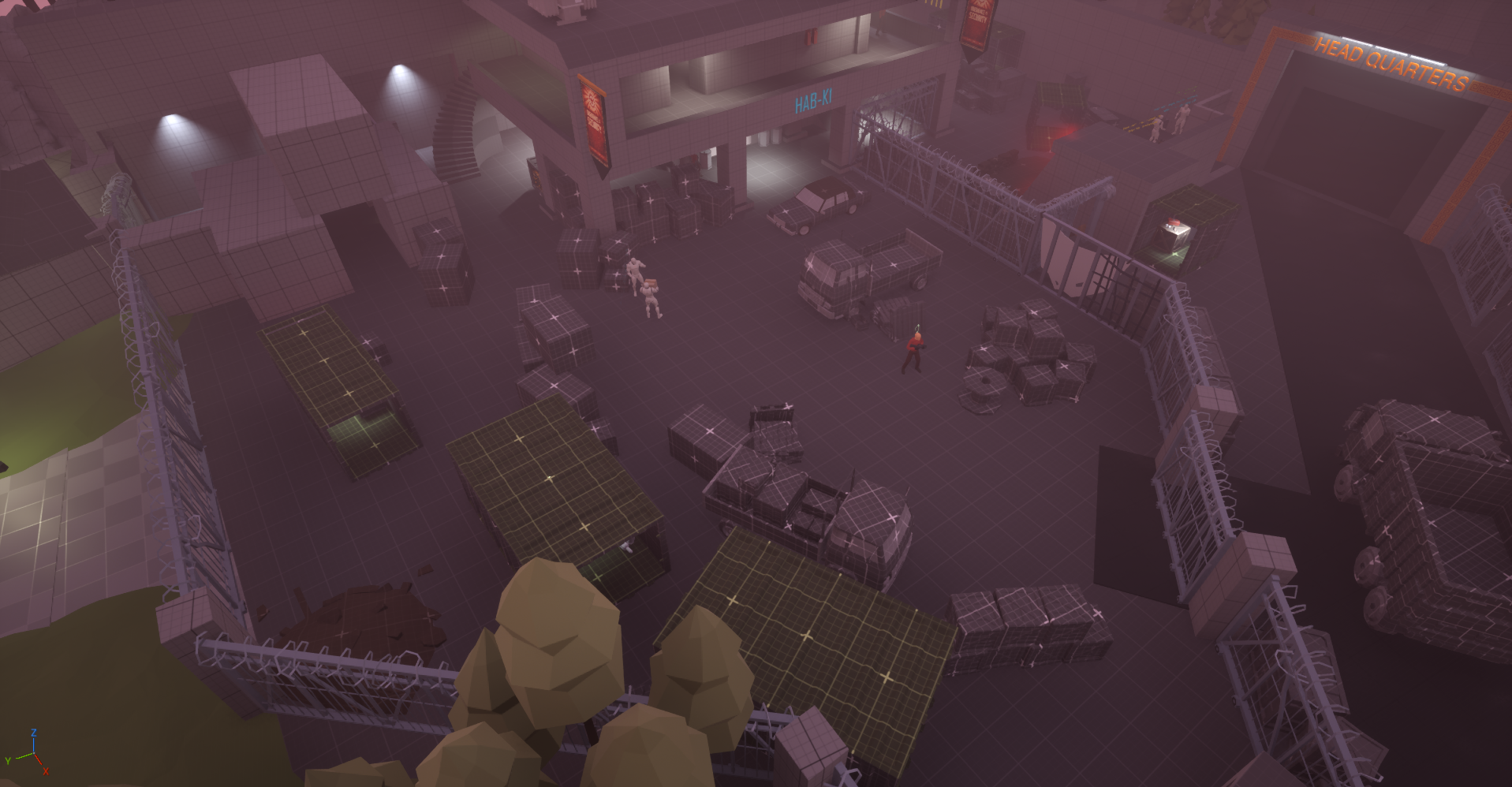
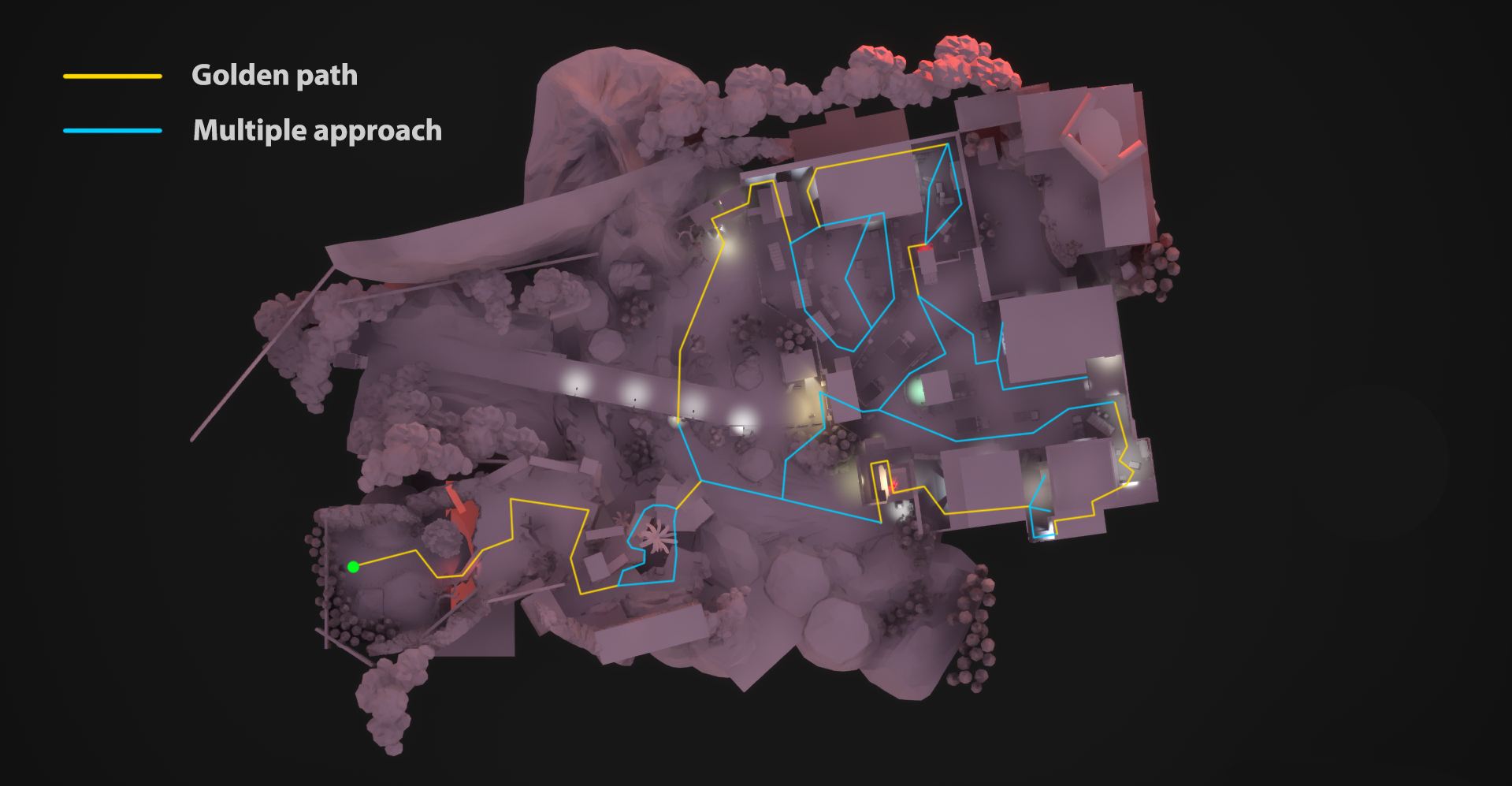
Designed multiple areas inside the facility supporting multiple playstyles — stealth, direct combat & silent takedowns.
I designed three distinct entry paths to support different playstyles and emotional tones:
- Left Path – Collapsed Building: A tense, grounded route through debris. You lift a fallen door and slip inside through a fractured fence. It's quiet and gear rich.
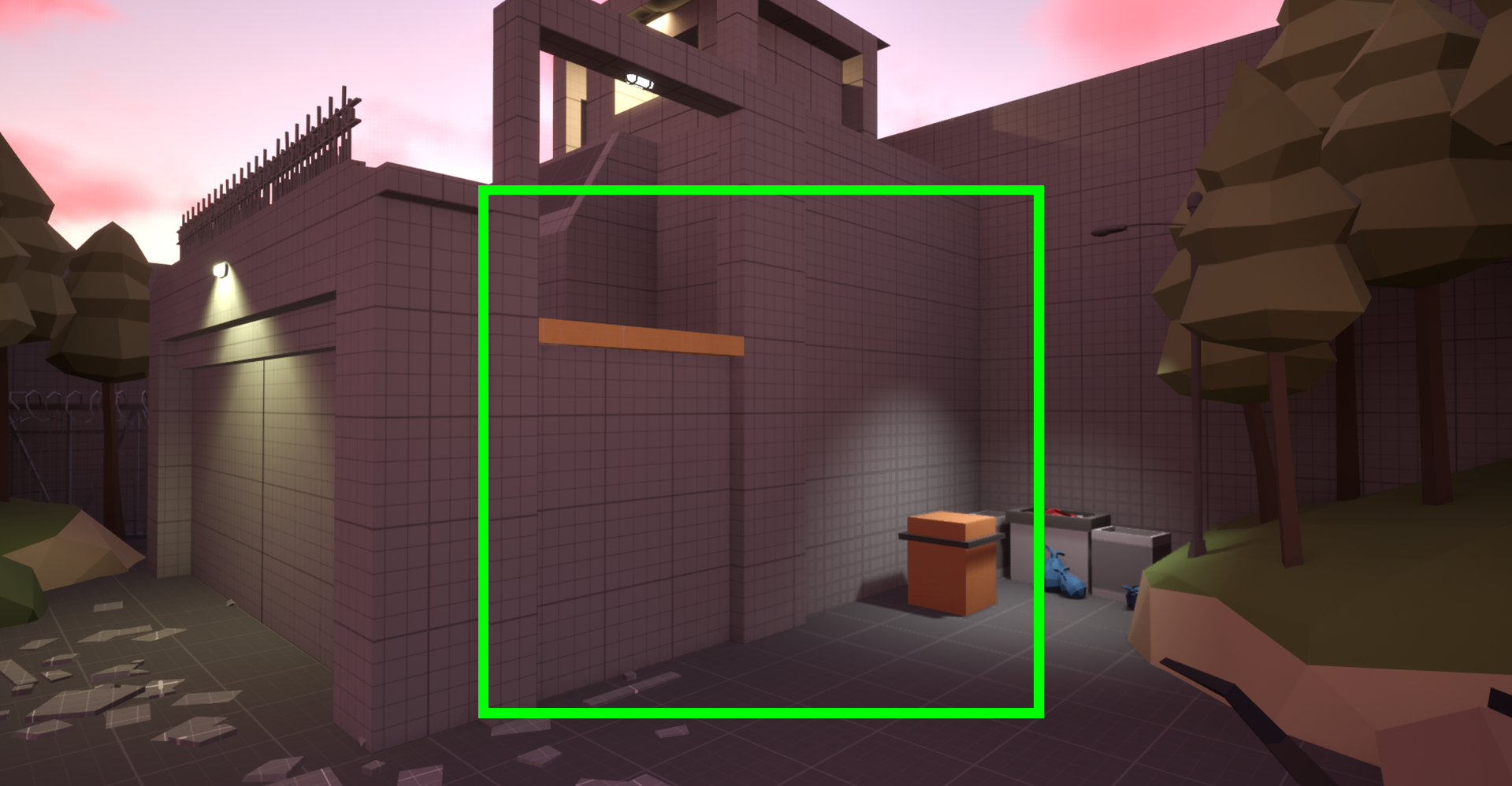
- Right Path – Rooftop Climb: A stealthy vertical approach. Players scale a box to reach the roof, exposed but silent. Ideal for those who favour precision and avoidance.
- Main Gate – Frontal Assault: The boldest route. Straight through the front, with patrols, cover, and chaos. Perfect for players who want to take control and go loud but not easy.
Each path is designed to reflect a different mindset — stealth, survival, or aggression and to set the tone for what's coming inside the facility. Added alternate paths, climbable spots, and visual guides (lights, silhouettes) to encourage creative thinking and reward players for outsmarting enemies.
04
Walkthrough
Beat-by-beat narrative breakdown with embedded video for each section.
Game Beat by Beat Narrative Emotional Arc
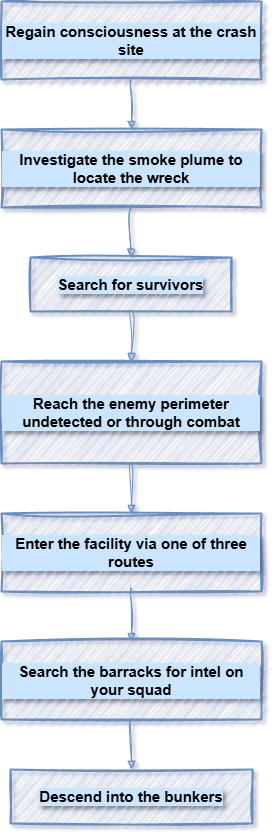
Awakening After the Crash
Narrative: The player wakes alone downside the wreckage, spots a rising smoke plume and a broken rotor blade, guided by clear environmental cues.
Purpose: Set the tone, spark mystery, and give the player a clear first objective.
Investigating the Wreckage
Narrative: Player finds dying teammate who reveals the crash was an ambush.
Purpose: Personal stakes + mission motivation.
First Sight of the Enemy Base
Narrative: Player reaches cliff edge and sees hidden facility.
Purpose: Establish main objective + scale of threat.
Perimeter Yard Infiltration
Narrative: First Enemy encounter & a cinematic sequence of the truck passing towards the main gate & enemy chatter hints.
Purpose: Teach player choice + introduce antagonist presence indirectly.
A quiet vertical approach. Dragging a bin to reach the roof creates a small, hands-on puzzle. High exposure, low noise — ideal for players who prefer slipping past danger.
The loudest option. Direct conflict with patrols, cover-to-cover movement, and chaos. Suits players who want control through force.
A grounded, tense route through debris. Lifting a fallen door and squeezing through a fractured fence creates a gritty, improvised infiltration for players who favor cautious progression.
Facility Infiltration
Narrative: The player spots Crates with a label "Field test pending", Enemy chatters stealth clues, as you explore a Whiteboard schedule for the crew revealing truths about the facility.
Purpose: Establish the facility's size and visually introduce the bunker network.
"Something sinister is happening underground."
Emotion: Curiosity sharpening into urgency. Gameplay: Terminal interaction logs, intel gathering.
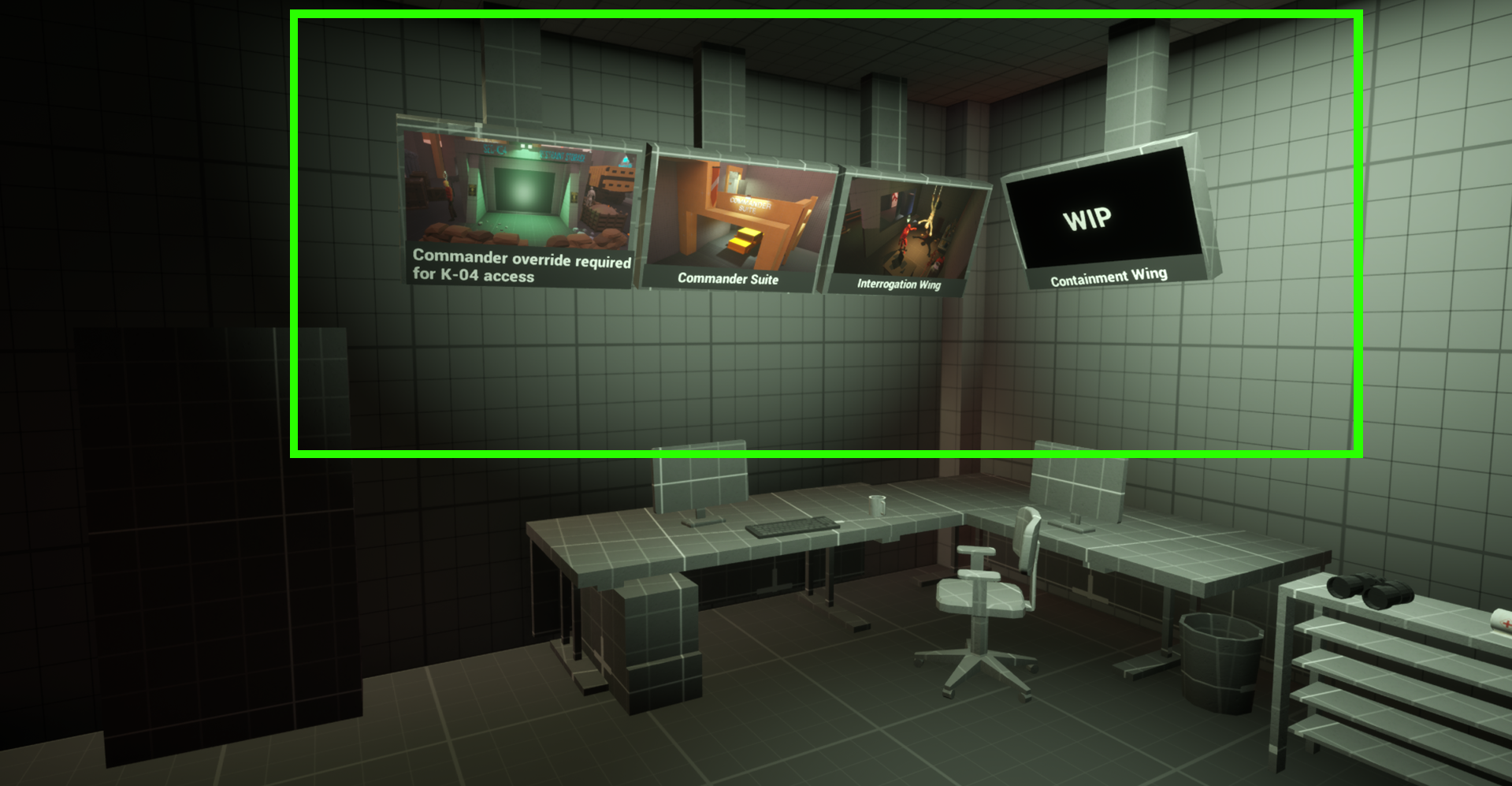
Narrative: Stealth takedowns, CCTV feeds show scientist being escorted deeper underground, while another feed shows a wounded soldier. Terminal logs confirm resistance, restricted access, and the Commander's involvement.
Purpose: Reveal Scientist directly through a letter, show prisoner movement, and reinforce K04 as the critical destination.
"Scientist is important and both she and your squad are inside K04 under Commander control."
The barracks are where the story begins to take shape. Instead of exposition, I used: Whiteboards, Radio logs (Audio logs), Half-packed gear, Tactical maps, Interactive Investigation. These props communicate that the enemy was preparing for something — and that the squad's ambush was intentional. This area is designed to reward exploration and slow the pacing before the emotional drop in the bunkers.
Emotion: Heightened alertness, tension. Gameplay: Climb, observation, light stealth.
Narrative: Player gains a vantage point, spots Bunker K04, and realizes it's locked but active.
Purpose: Establish K04 as the infiltration target and tease access requirements.
Emotion: Unease, empathy. Gameplay: Interior exploration, environmental storytelling, optional loot (weapon).
Narrative: Player sees personal effects, signs of stress, and a letter about a scientist being moved to containment.
Purpose: Humanize the enemy and reveal interrogations tied to Isha.
Emotion: Dread, urgency. Gameplay: Hazard navigation, discovery, light combat.
Narrative: Player finds crates marked for field tests, dead personnel, and illegal containment tech.
Purpose: Foreshadow biohazard threats and expose unstable prototype experiments.
Commander Suite Access
Narrative: The player enters the Commander's Suite and discovers the access terminal that can unlock K04. Beyond the office, a connected meeting room reveals a stage draped with a massive "PROJECT DAWN" banner. An officer is mid-speech to assembled troops, outlining the urgency of bringing the scientist into compliance. The player overhears key lines tying Isha to the project and confirming the facility's true purpose.
Purpose: Unlock K04 while revealing Project DAWN's scale and ideology — and show Isha's defiance is causing internal pressure.
Descent into the Bunkers
Narrative: Player walks down to the bunkers and the story uncovers in Act – 2.
Purpose: Emotional low point + clear direction toward labs.
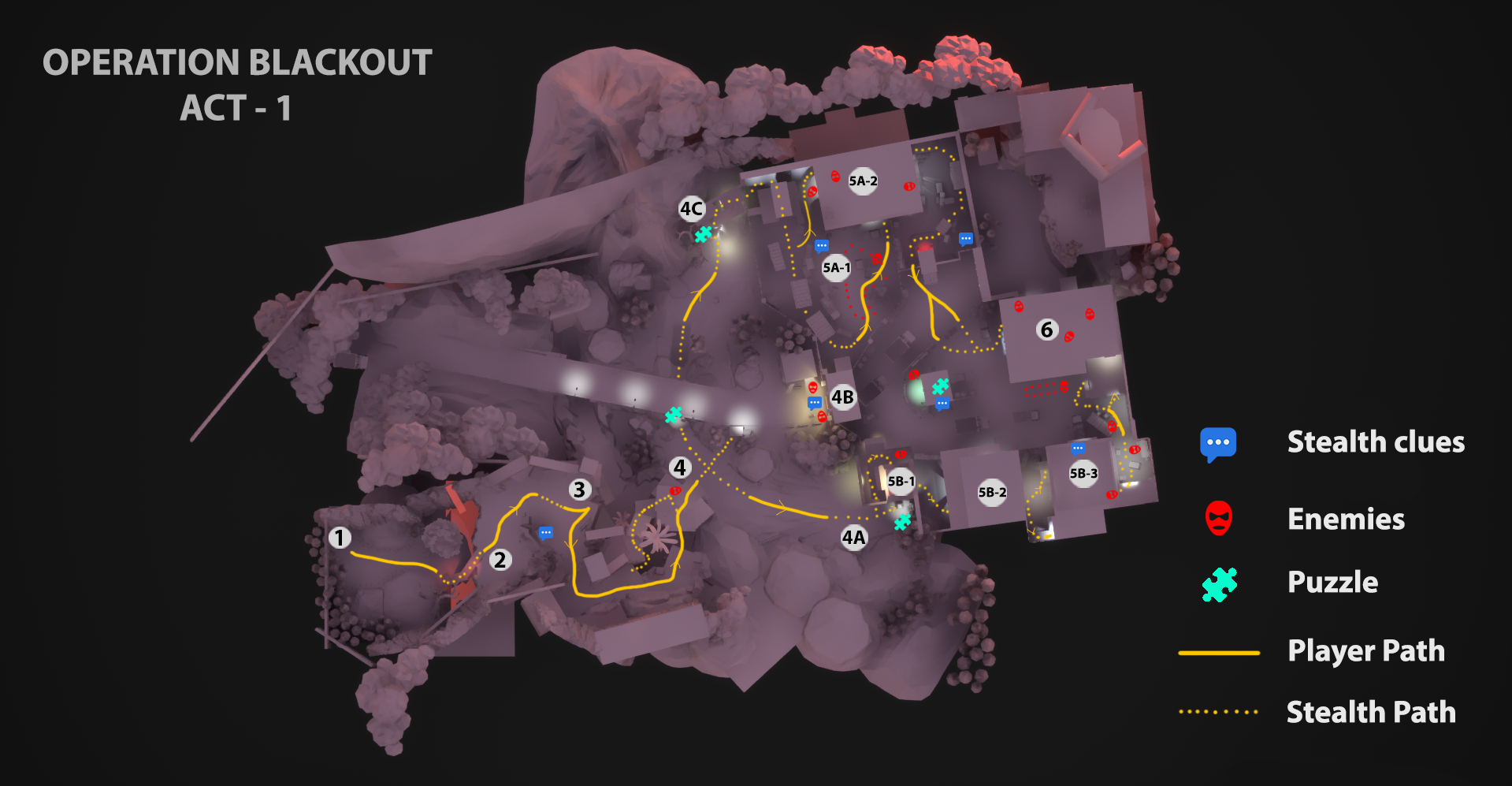
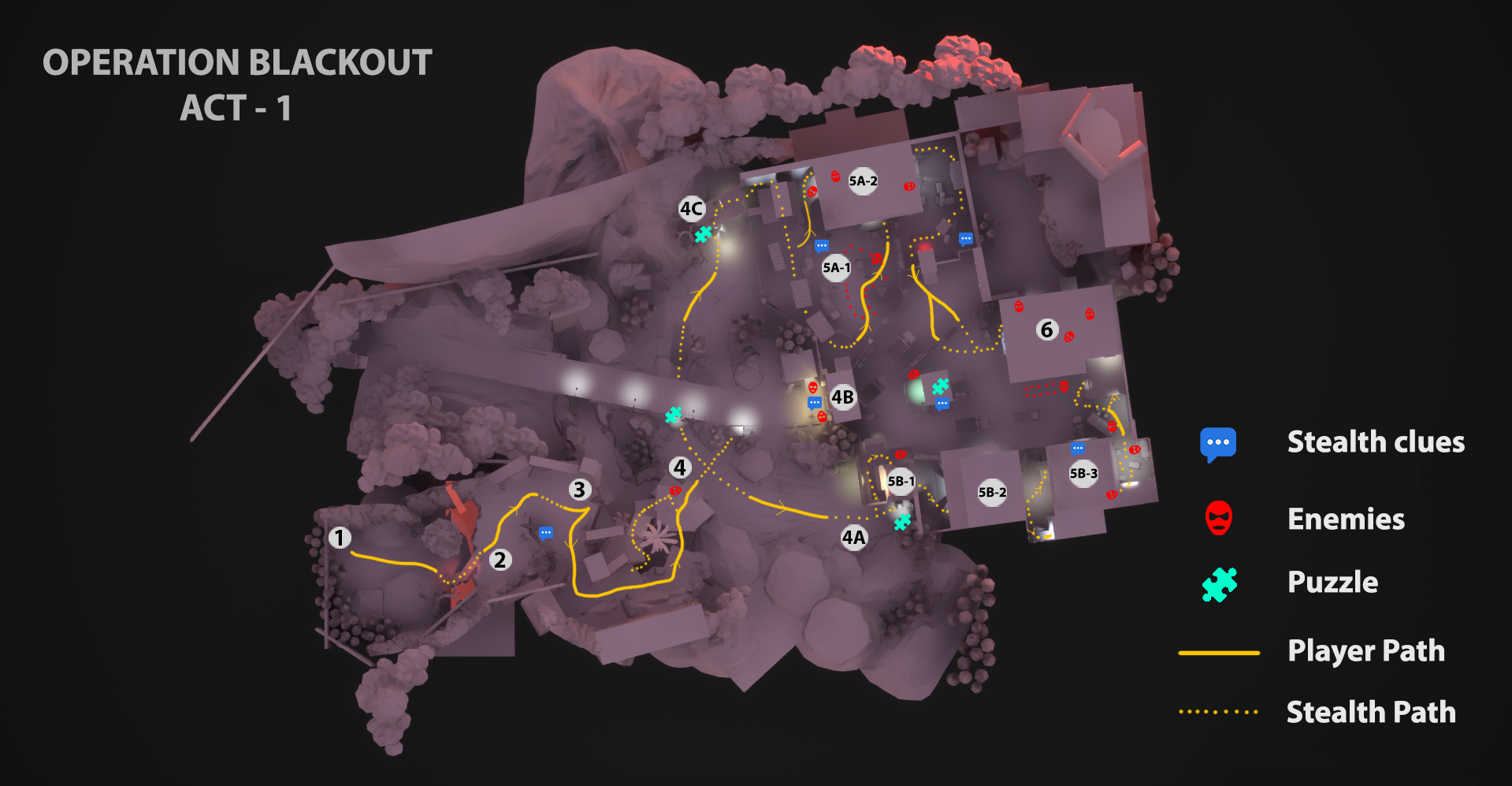
Top-Down View of Beats
05
Techniques
Level design tools and methods applied throughout the project.
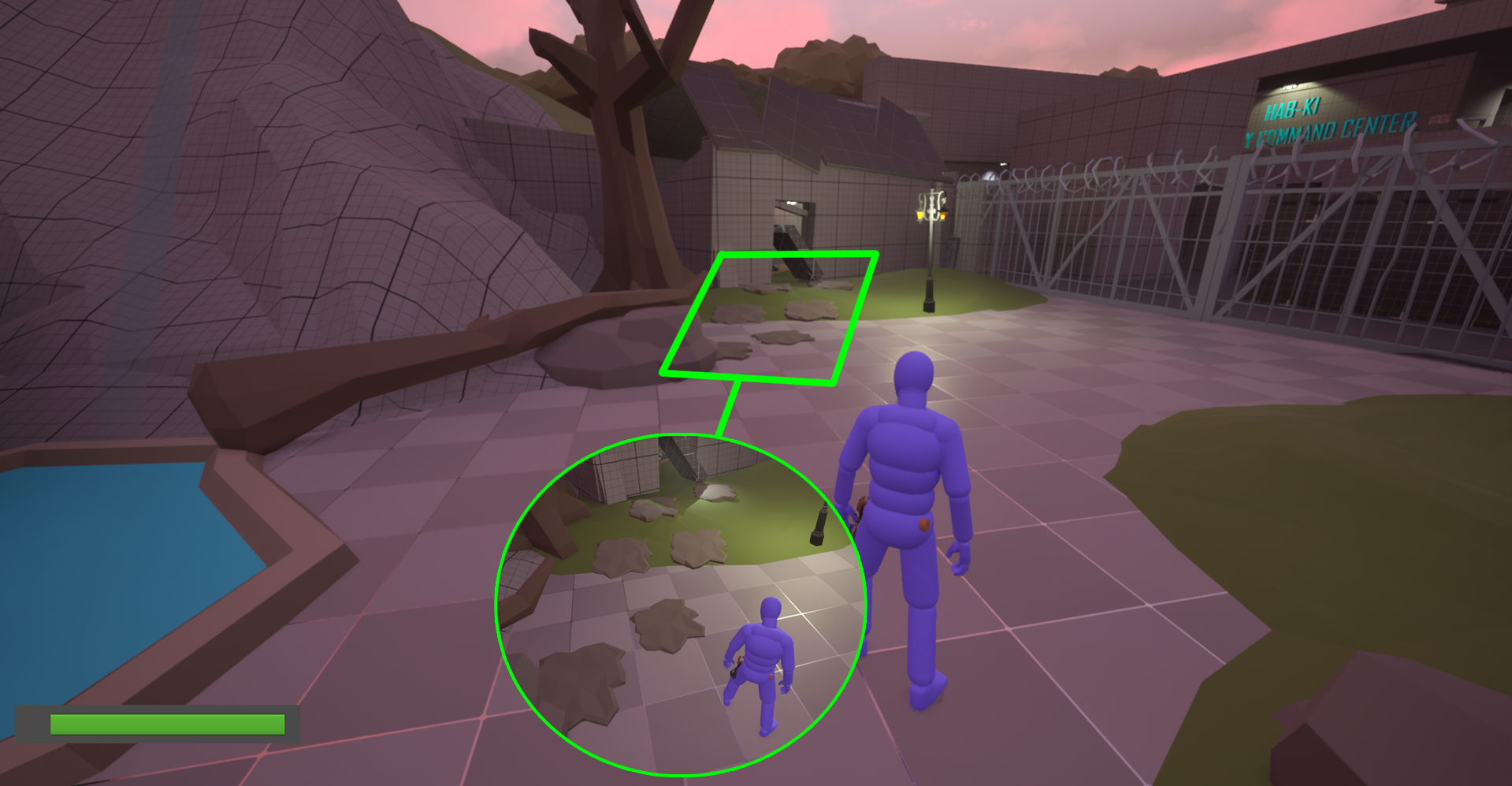
Use Breadcrumbs to Guide Players
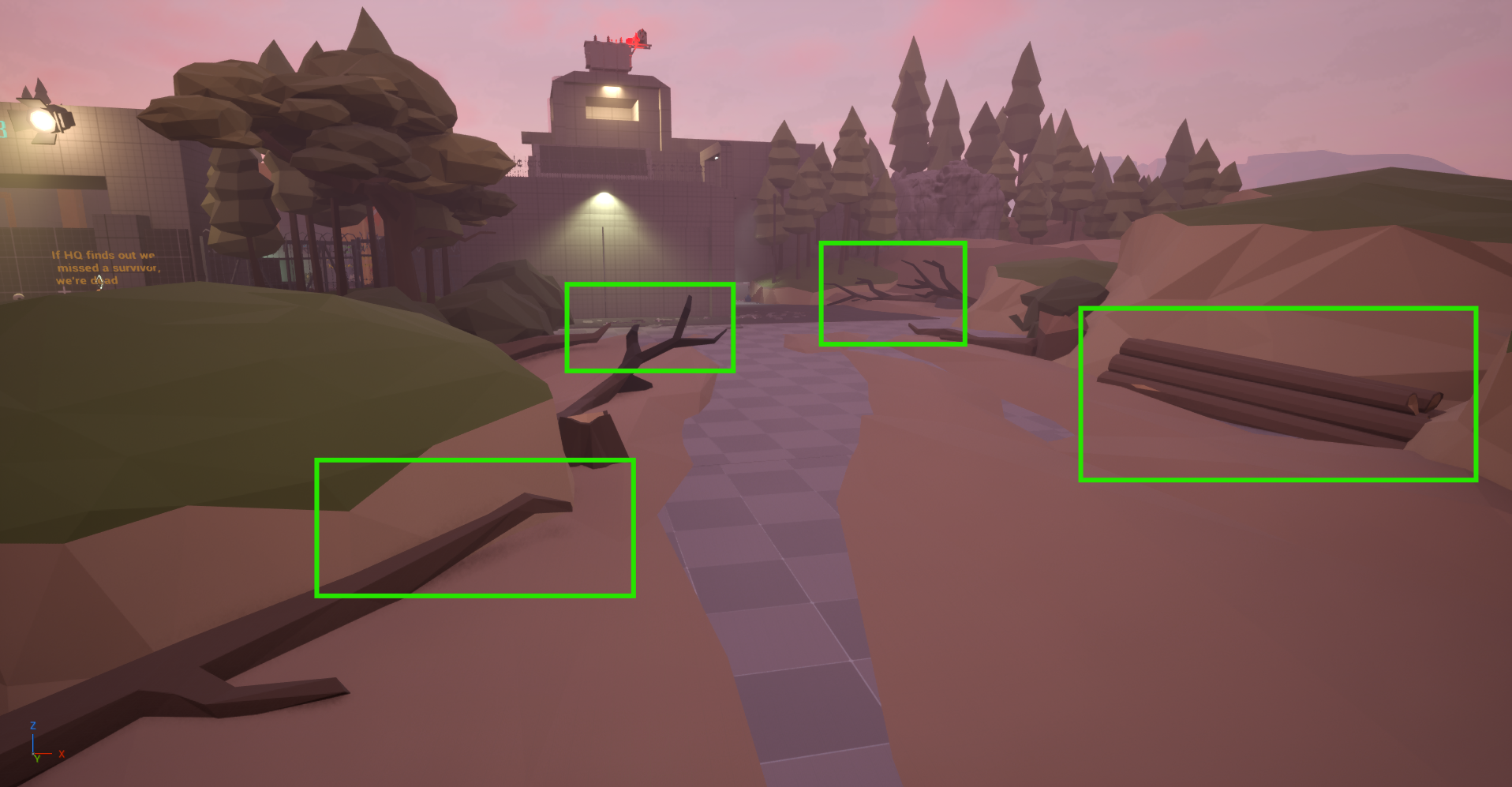
Points of Interest (POI)
Affordances
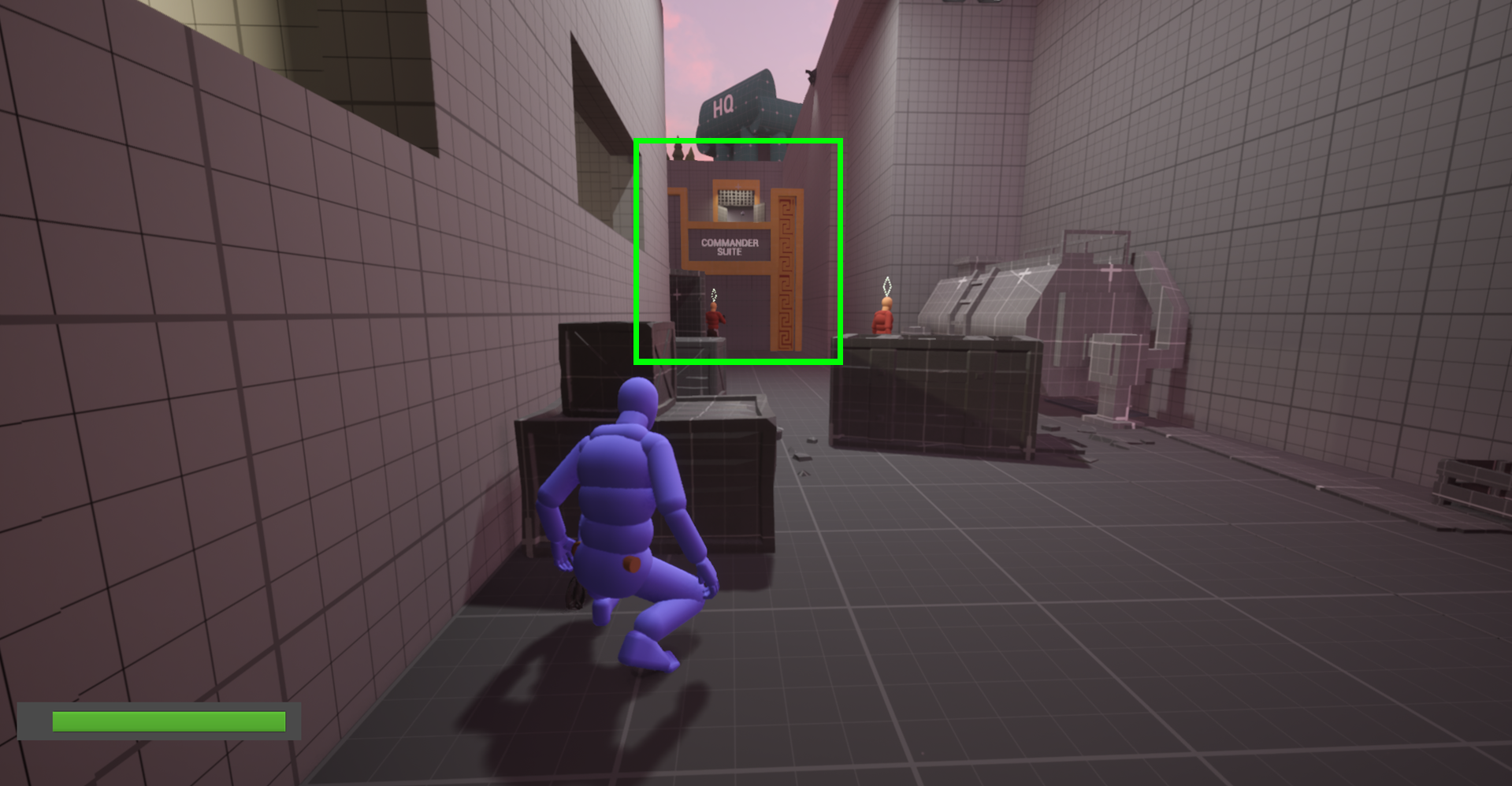
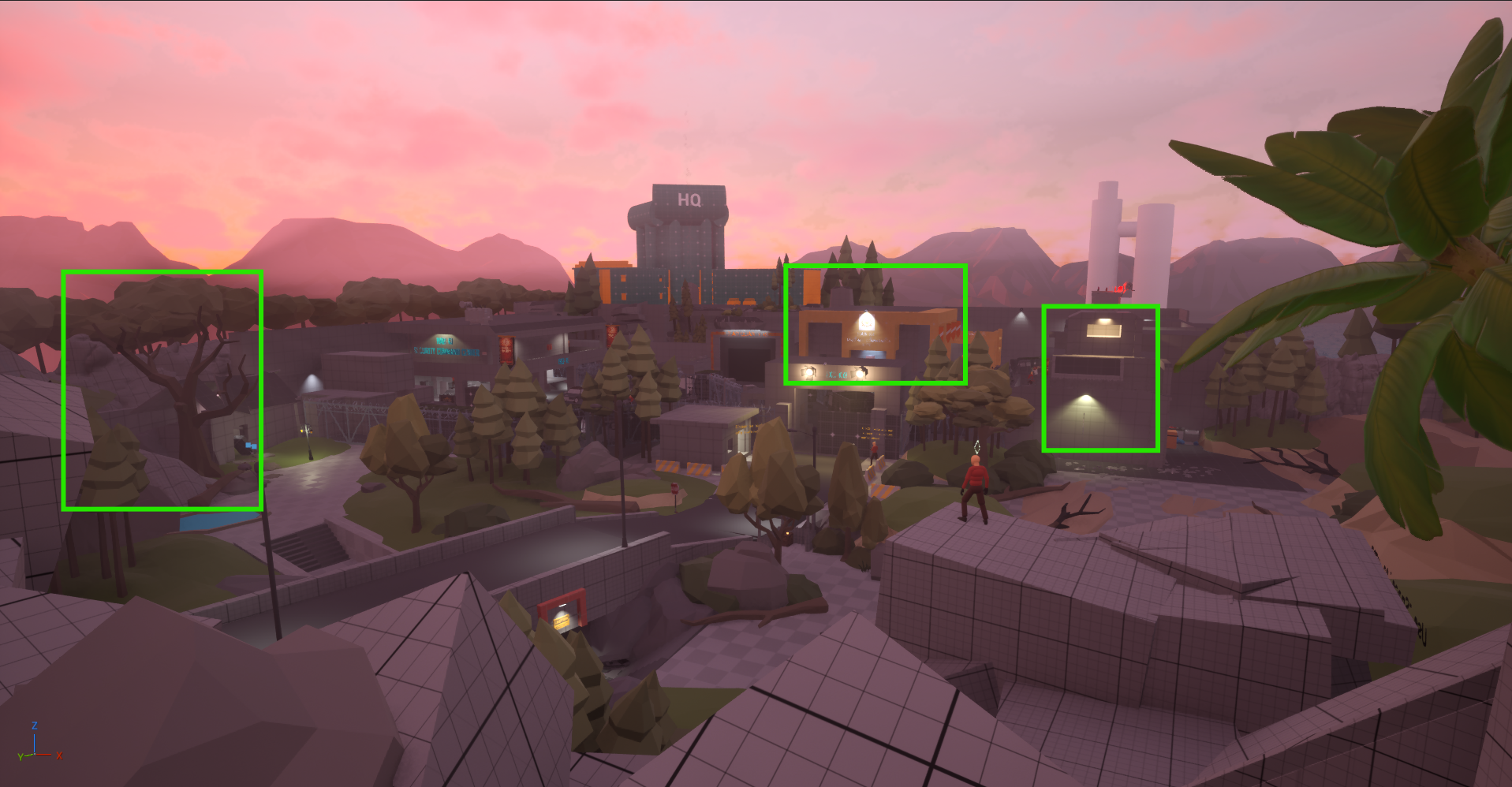
Landmarks
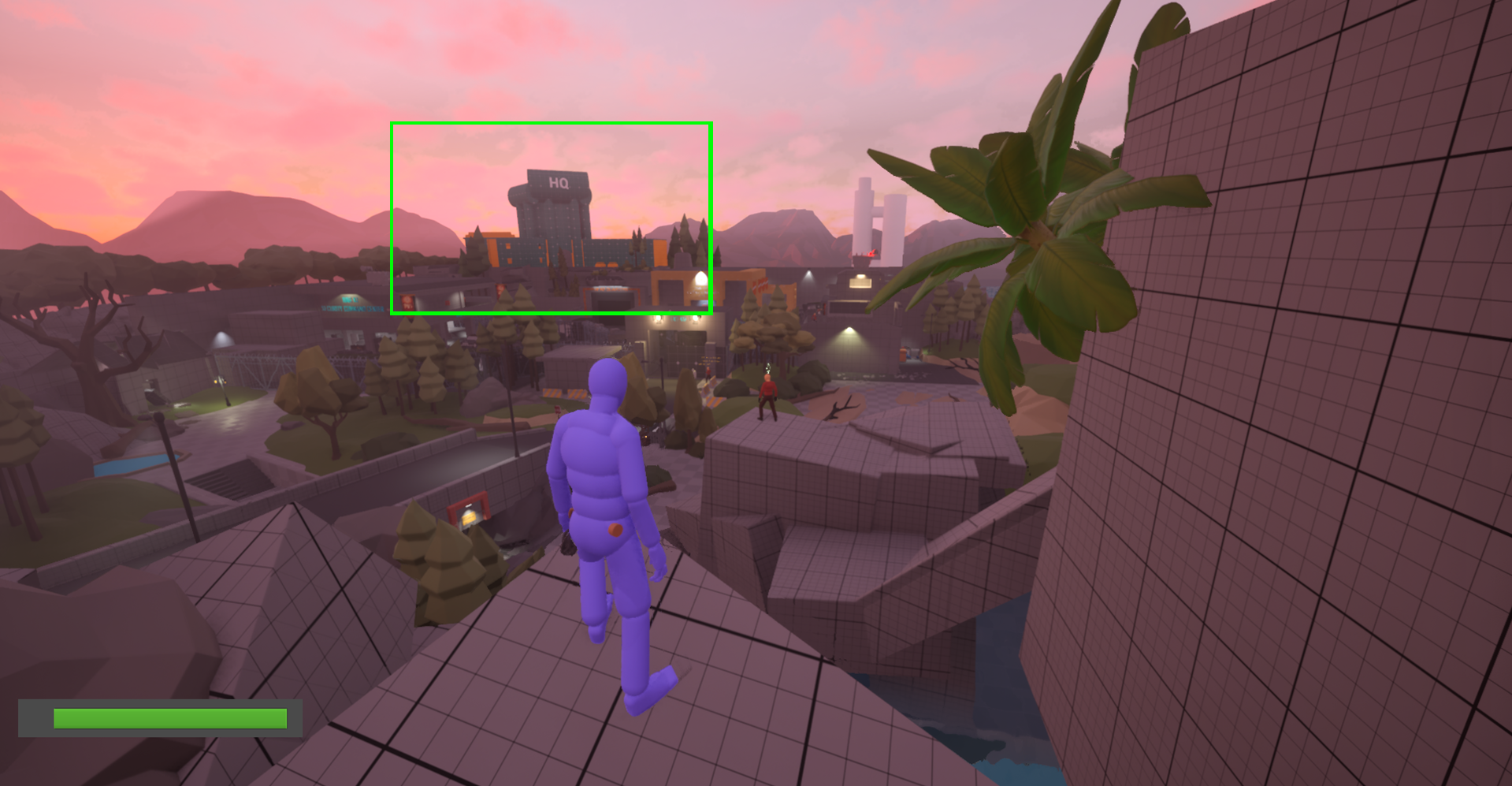
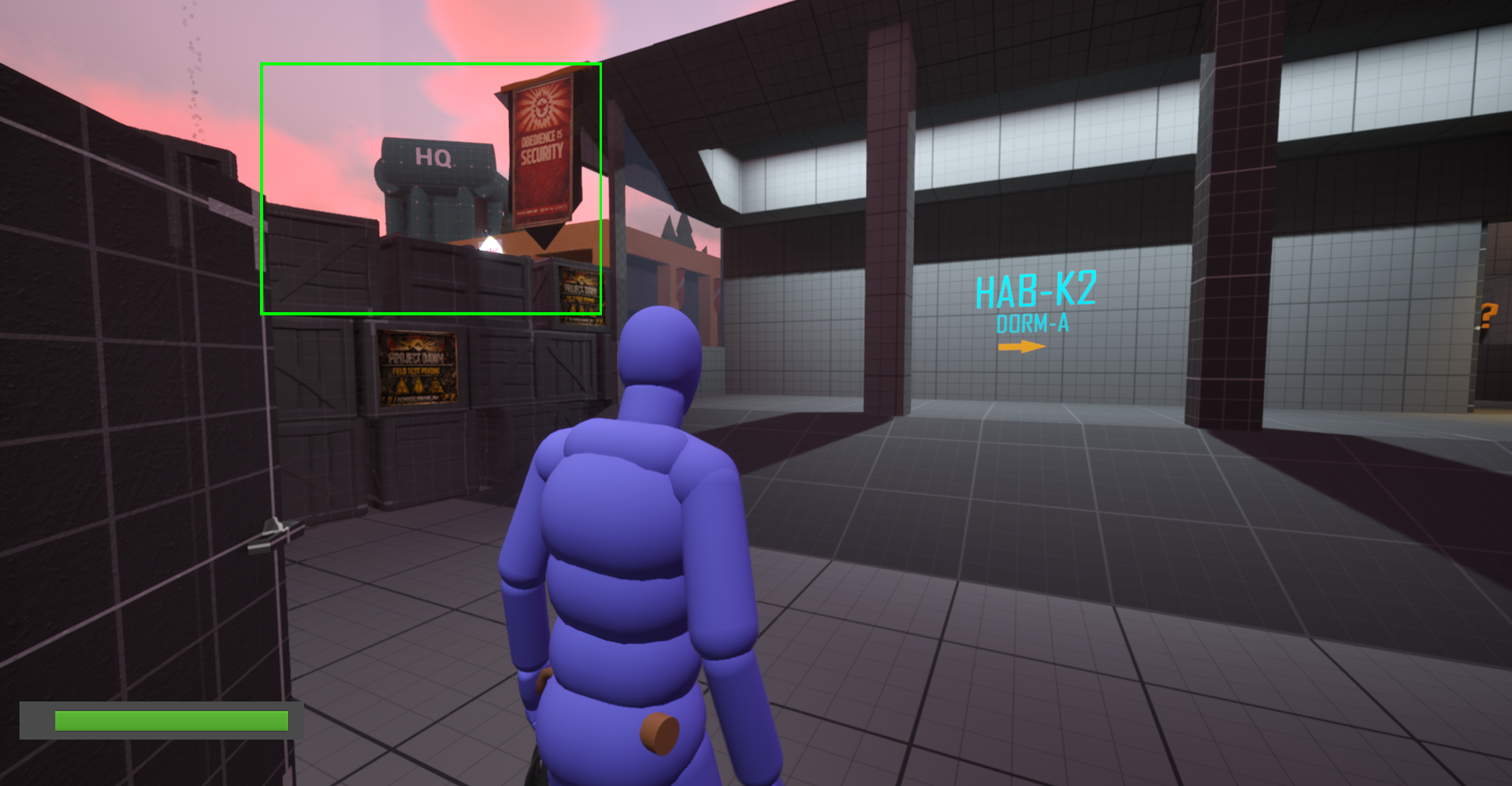
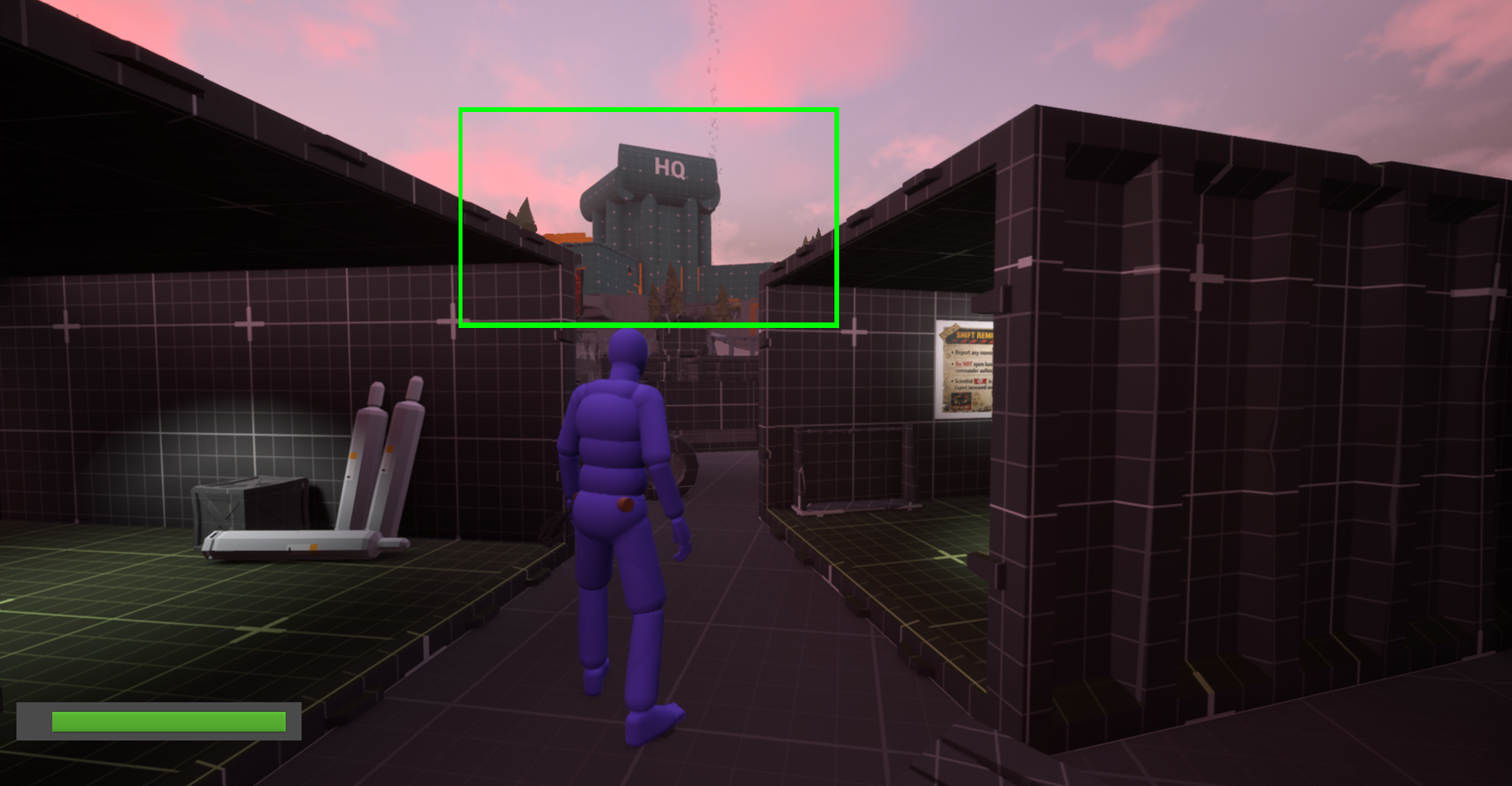
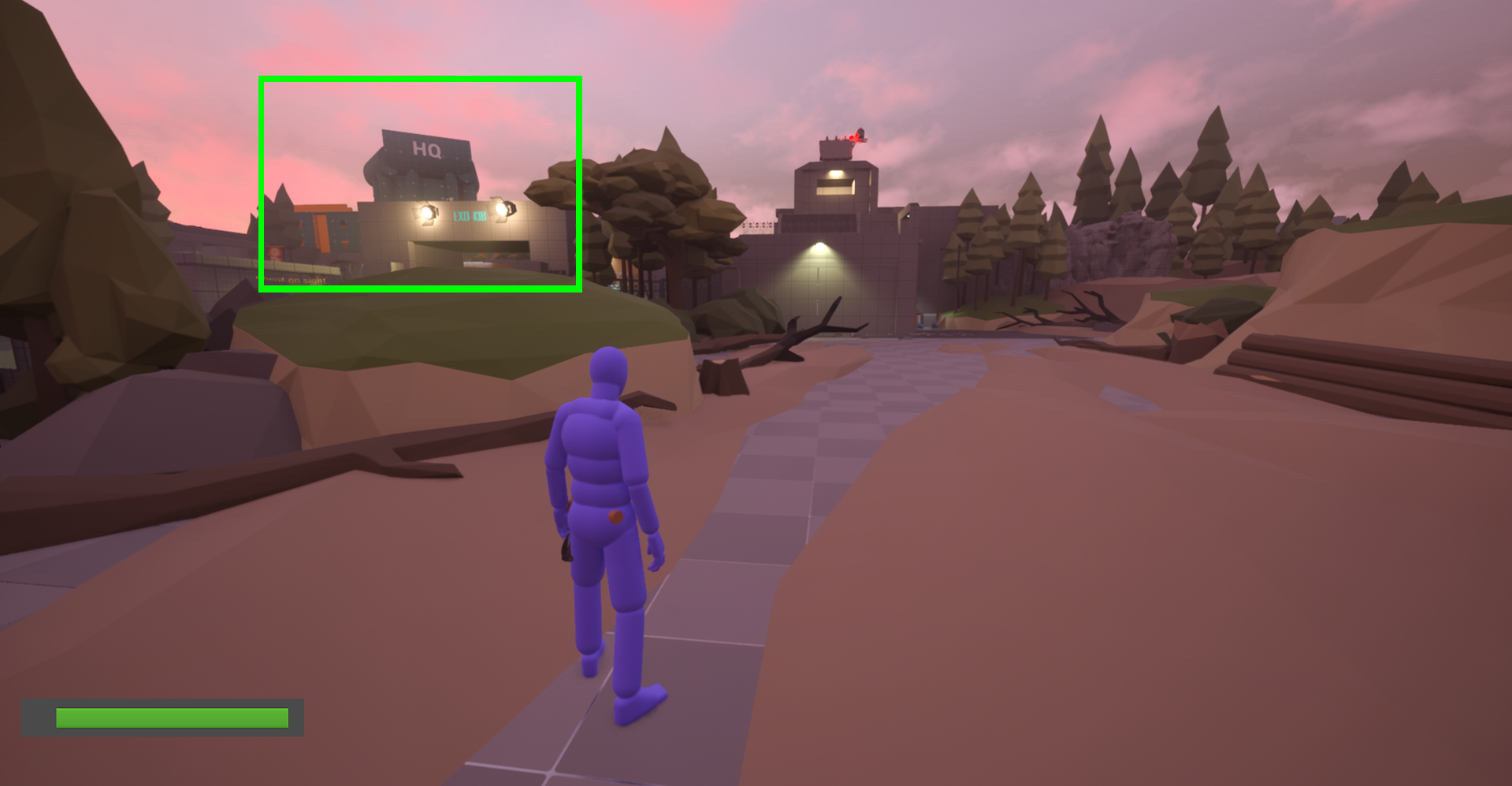
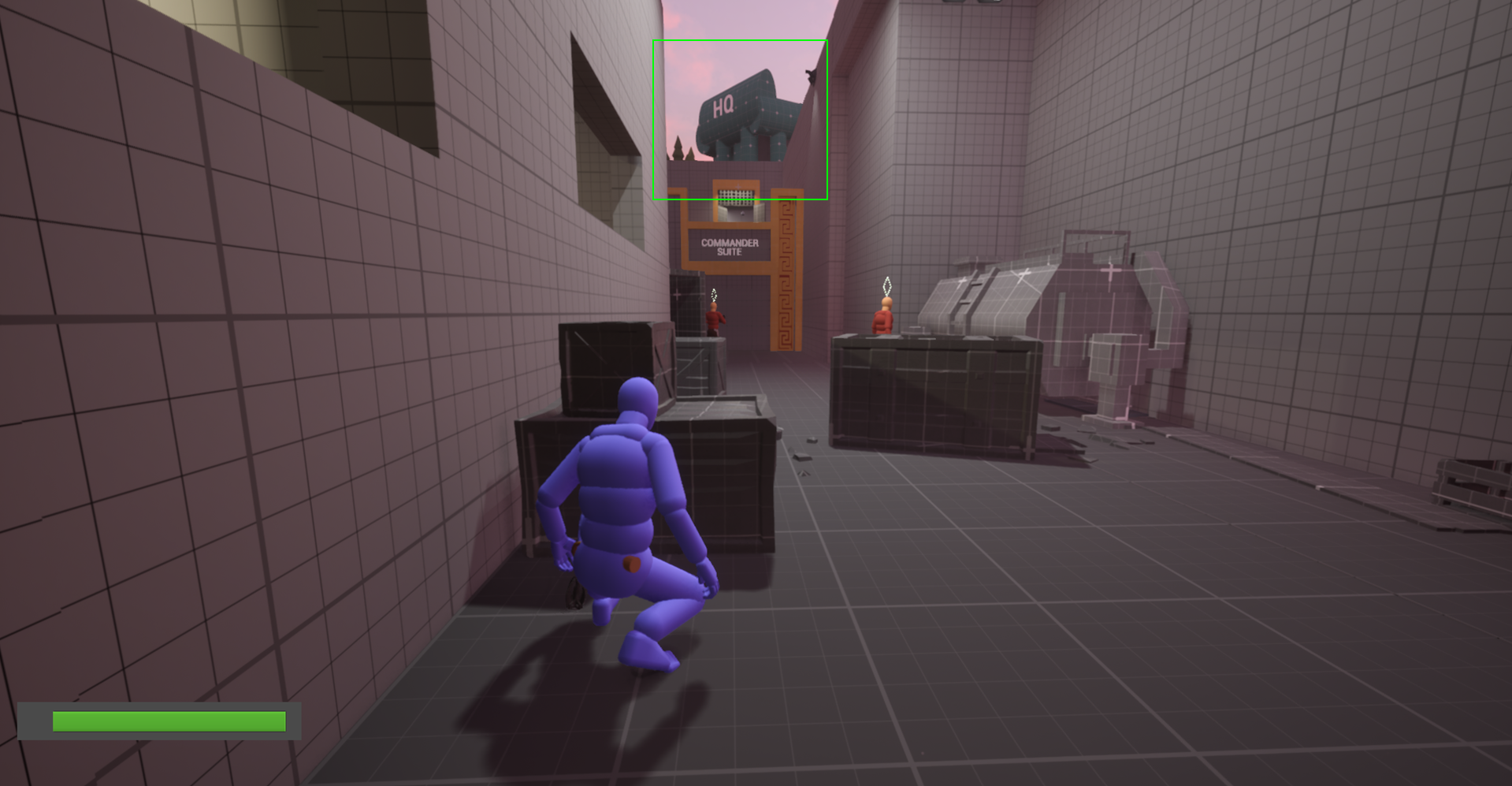
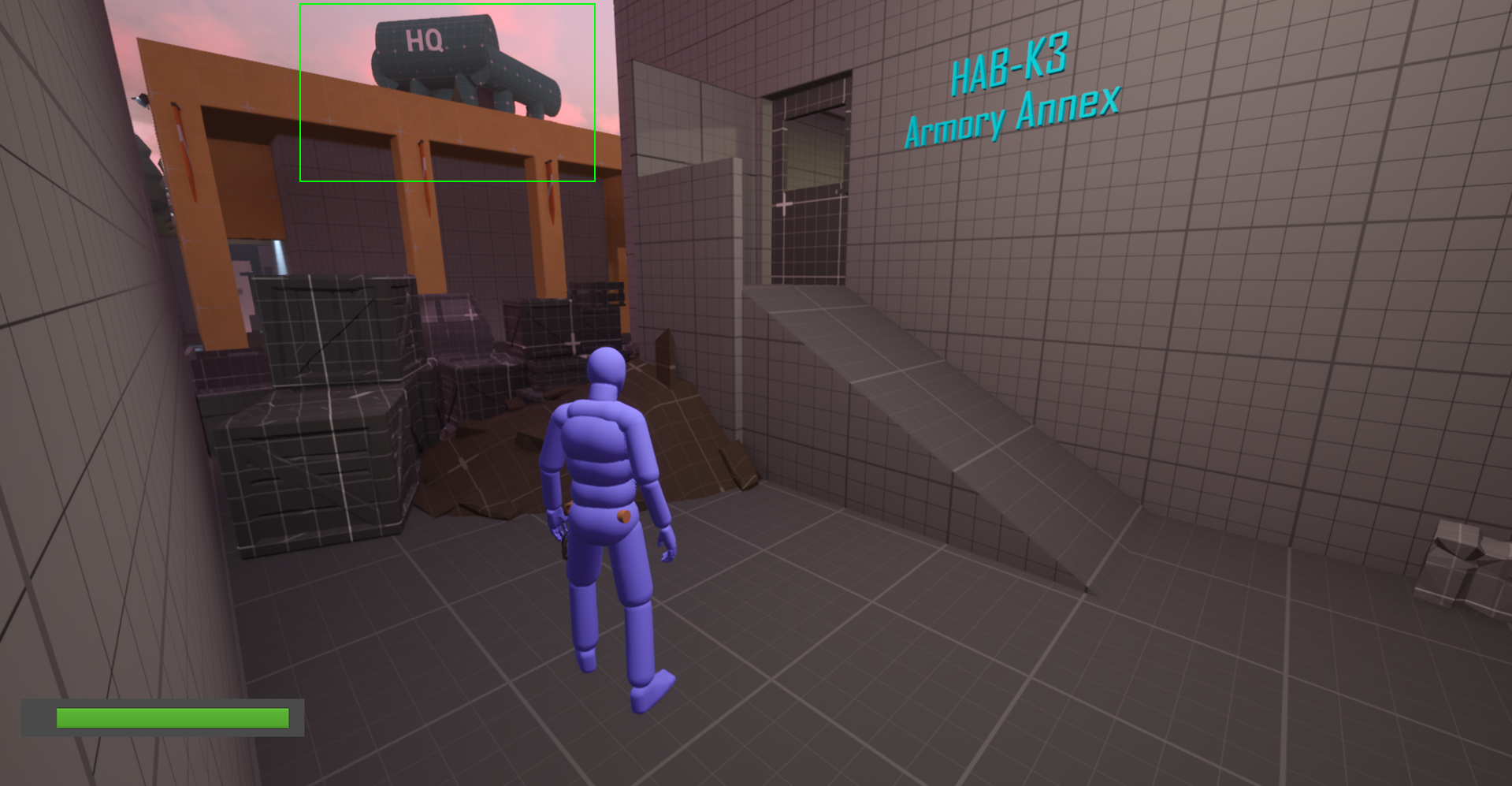
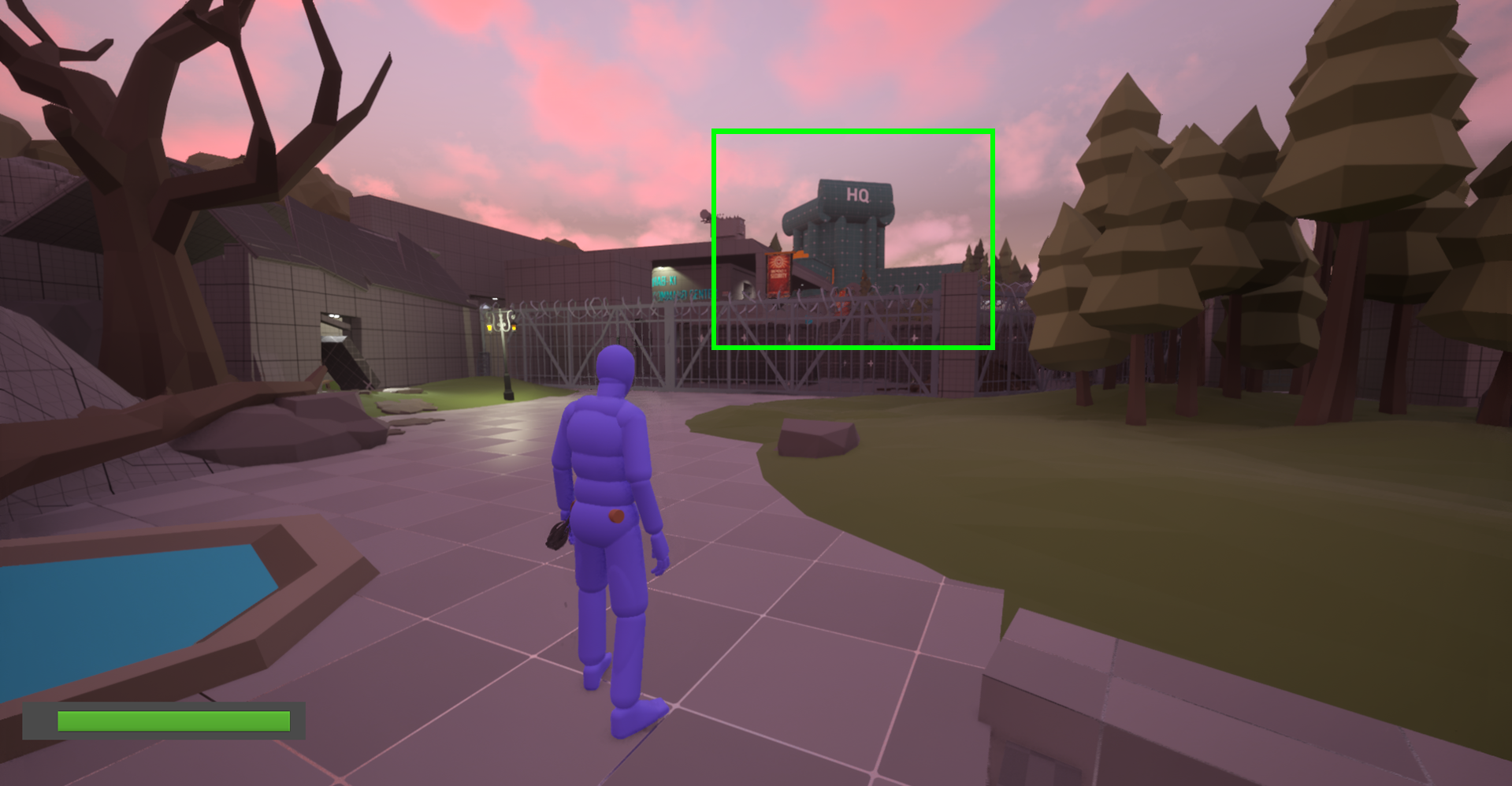
A central structure anchors the player's orientation and serves as a consistent landmark. No matter where the player is in the environment, this structure remains visible, helping them maintain spatial awareness and navigate the space more intuitively.
Environmental Storytelling
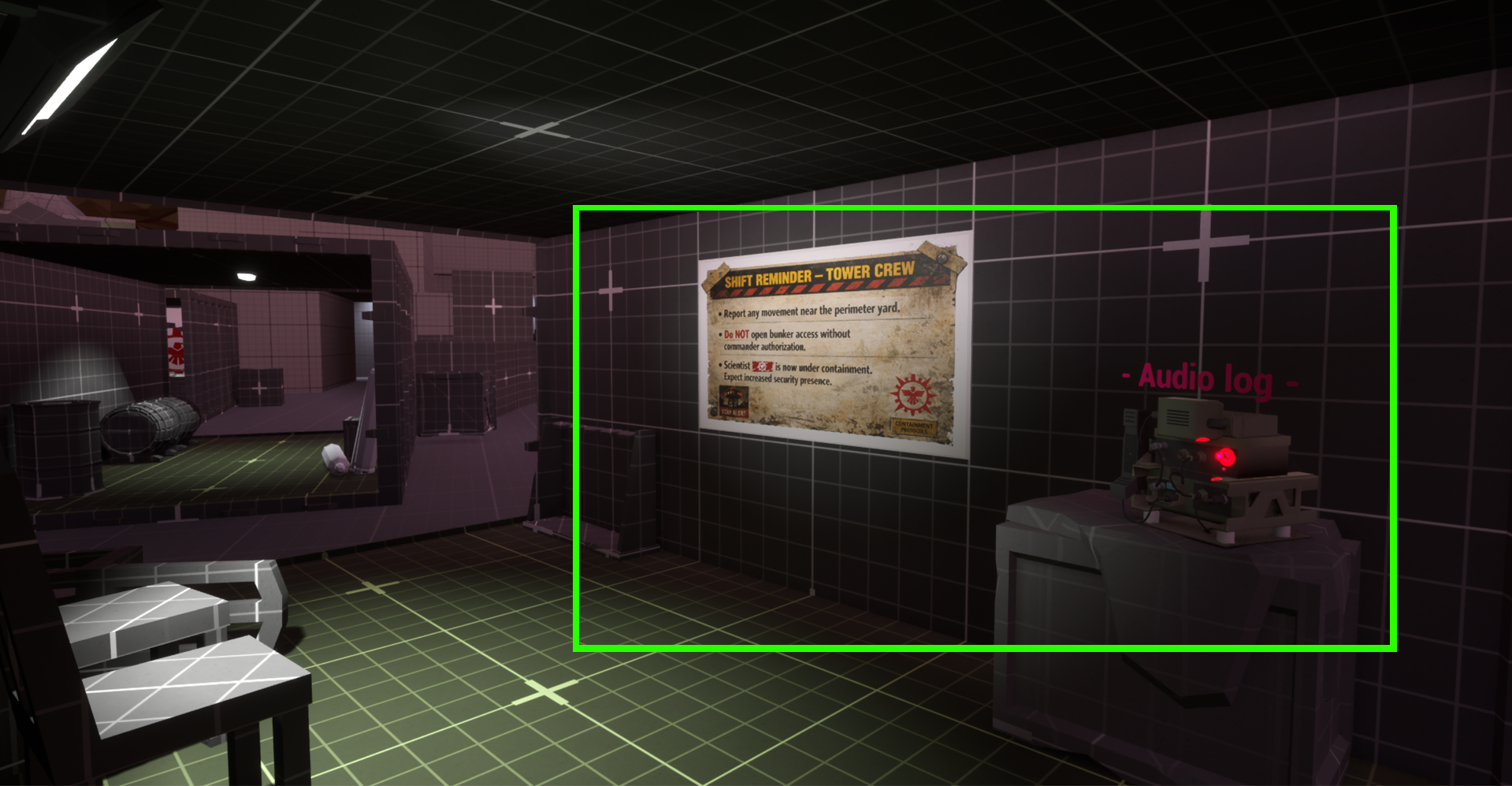
Contrast & Composition
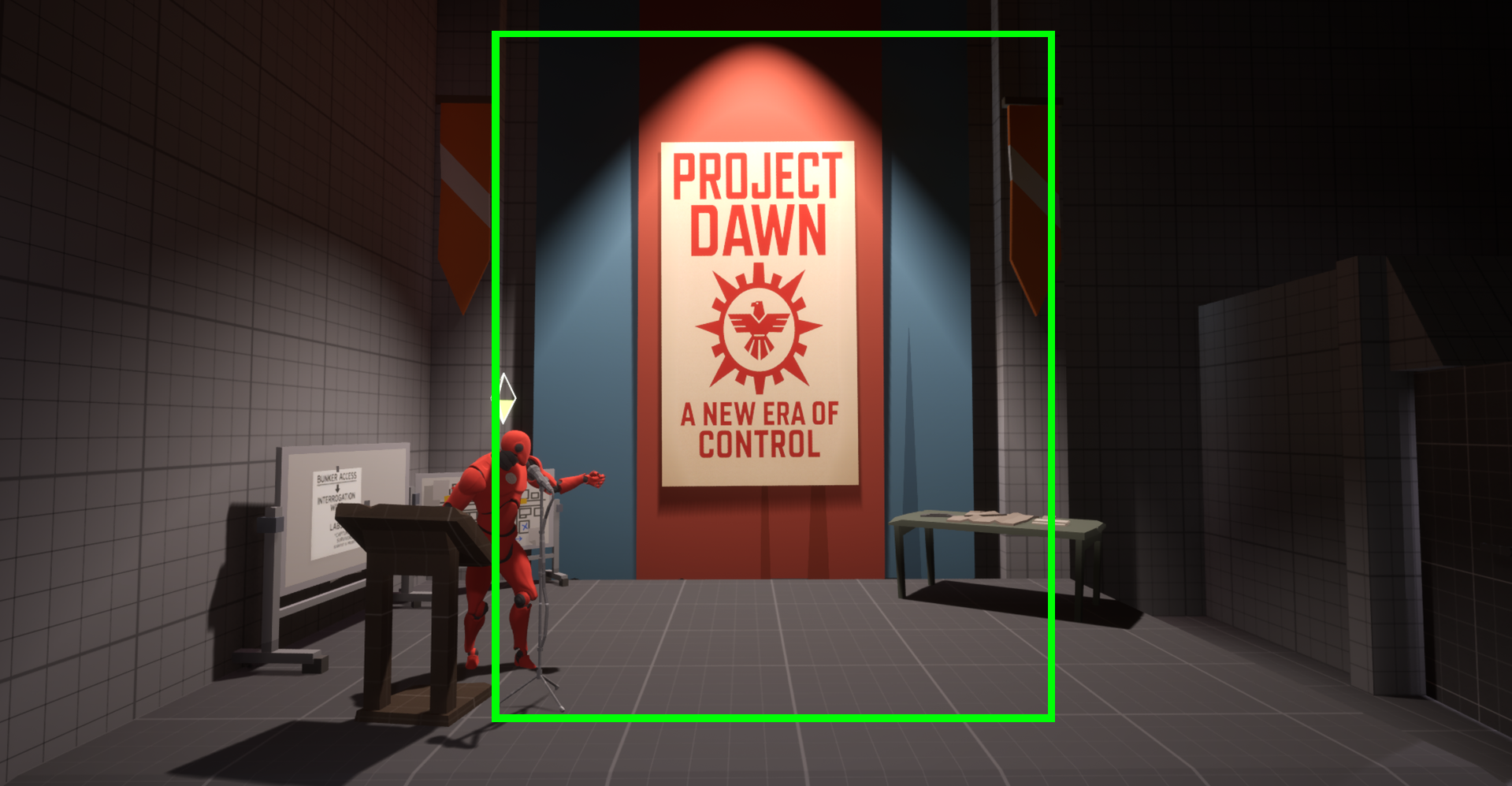
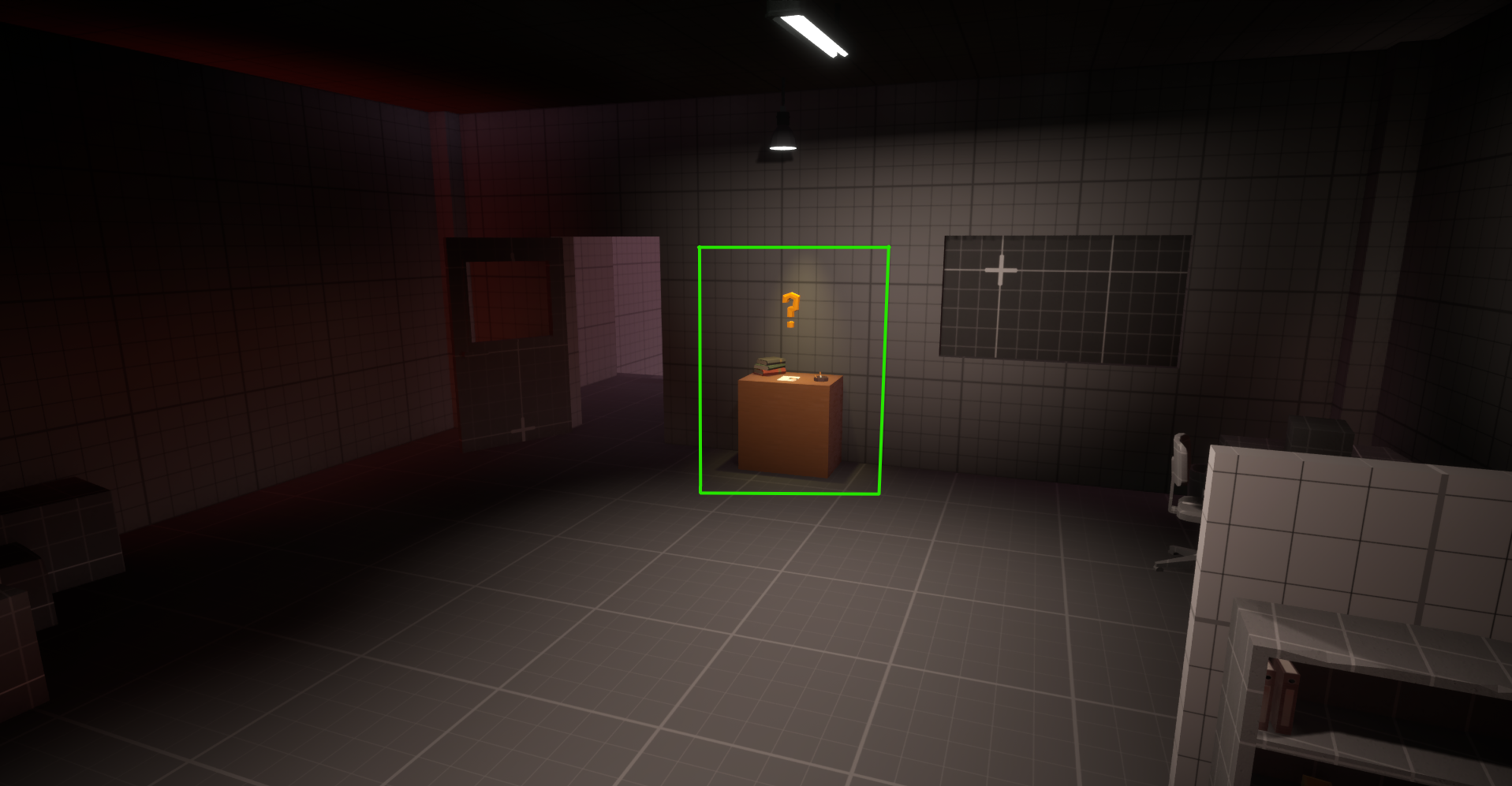
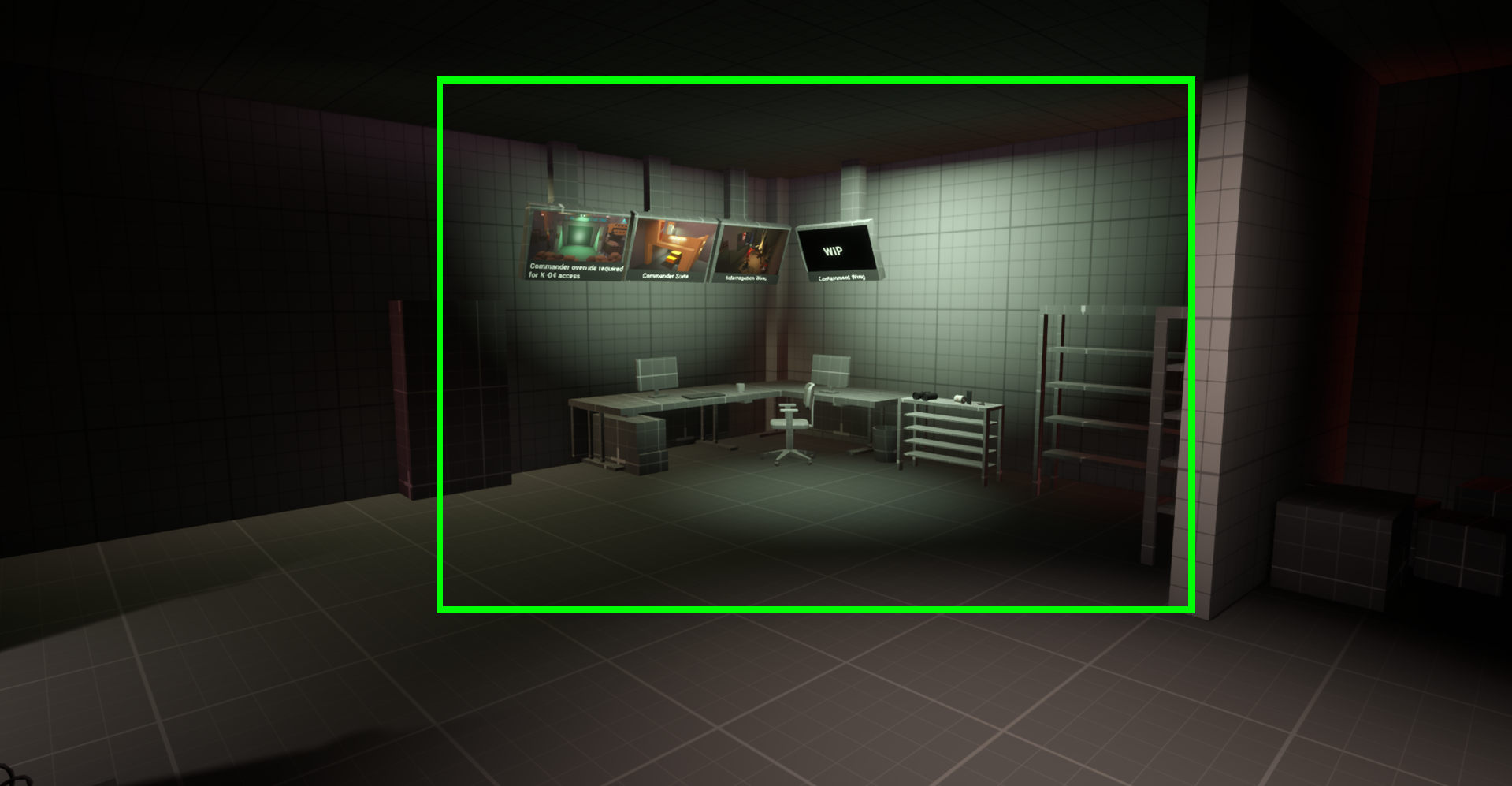
Light, shadow, and color are used to emphasize important gameplay areas or objects.
Spatial Composition
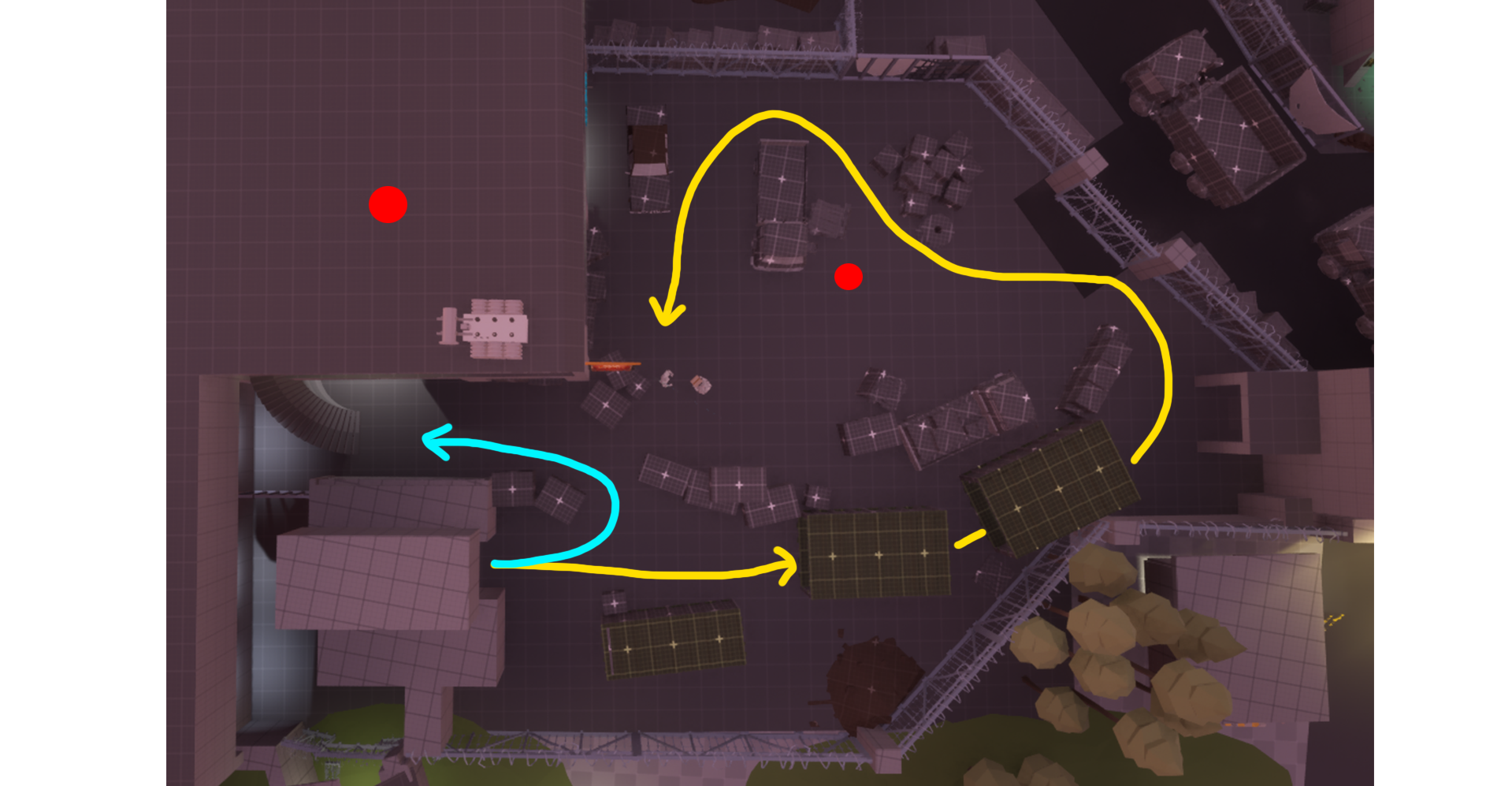
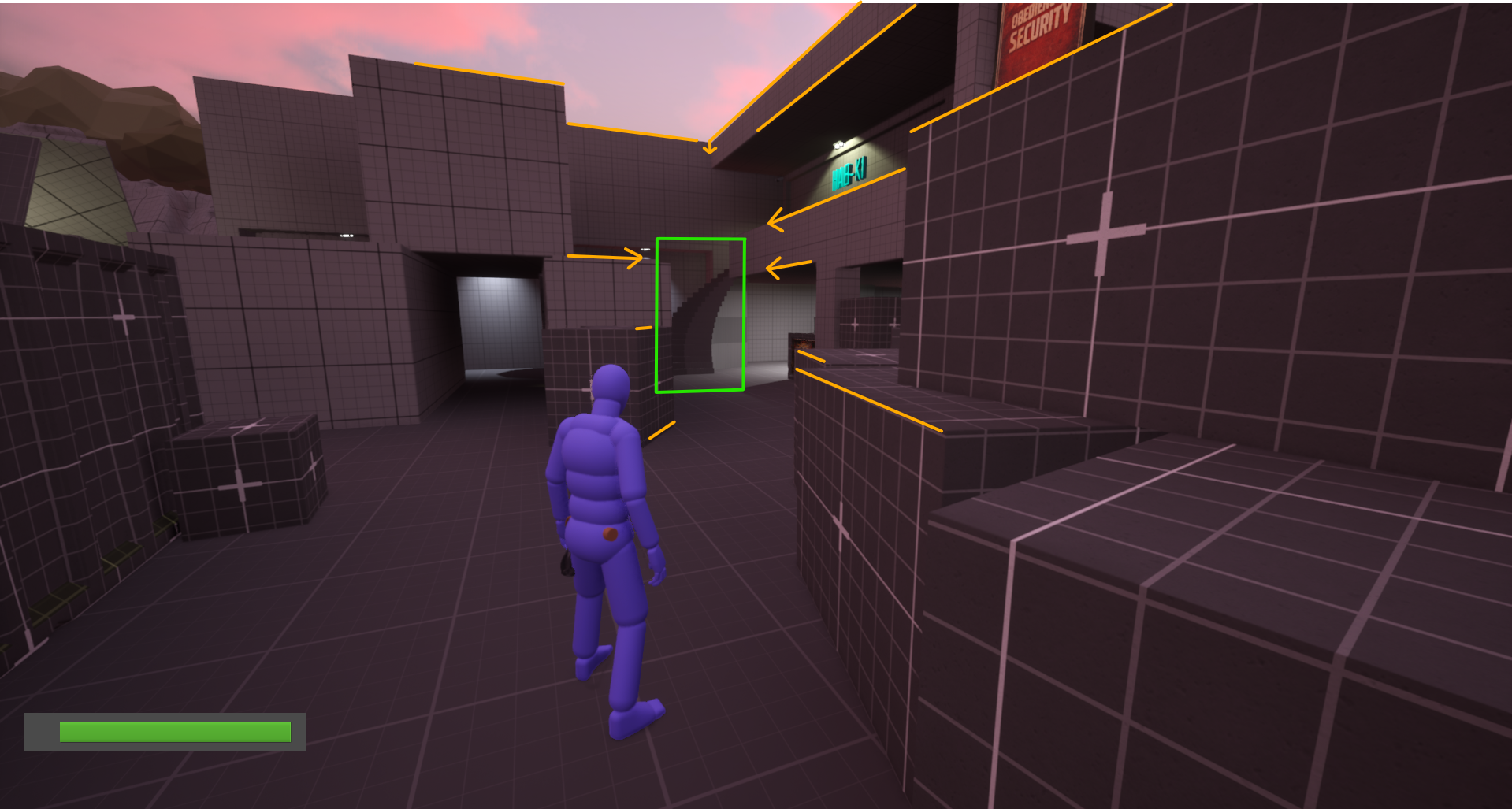
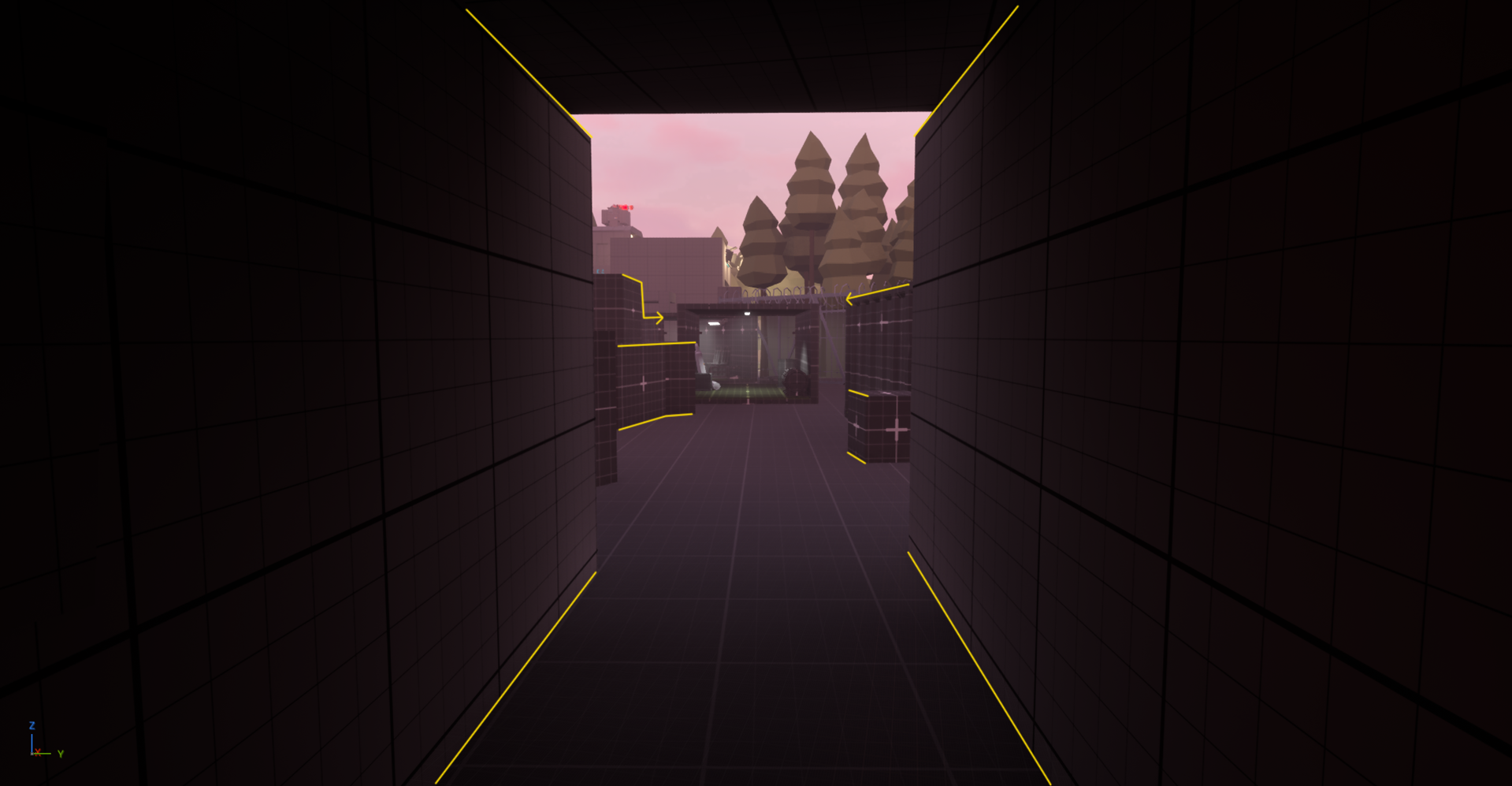
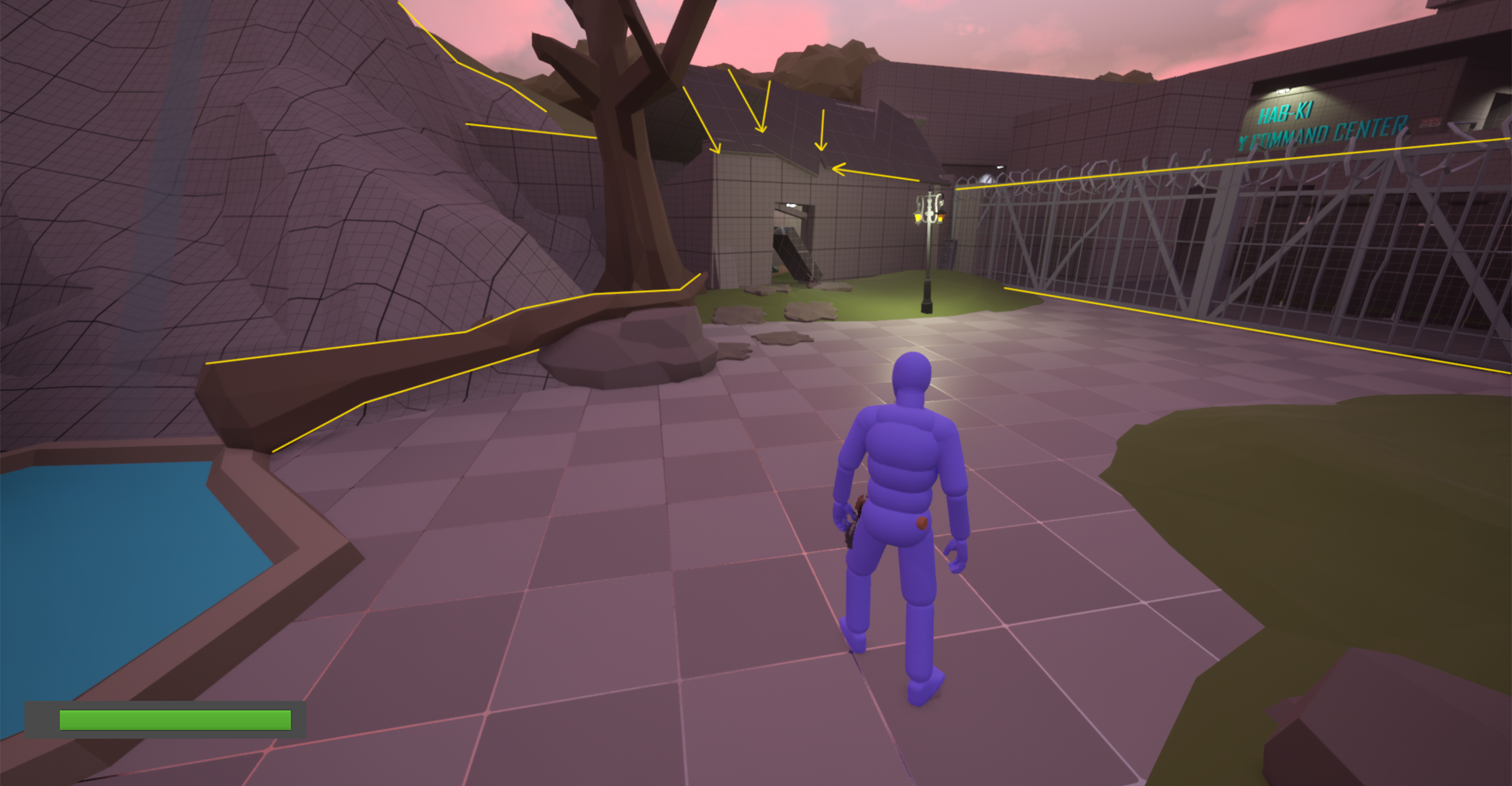
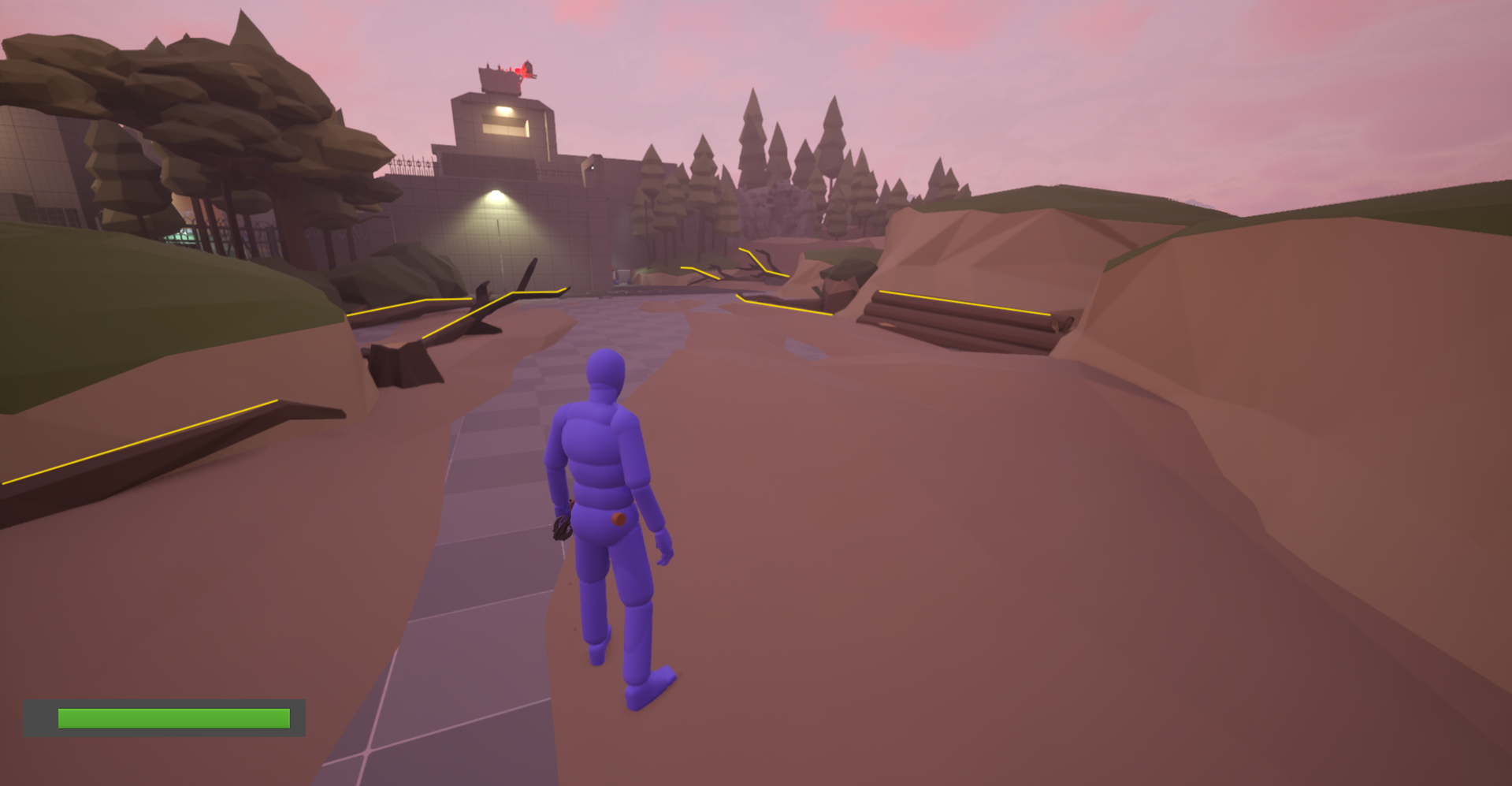
Framing and Leading Lines
06
Process
Seven iterations from concept to refined blockout.
Research, Ideation and Planning
Approach:
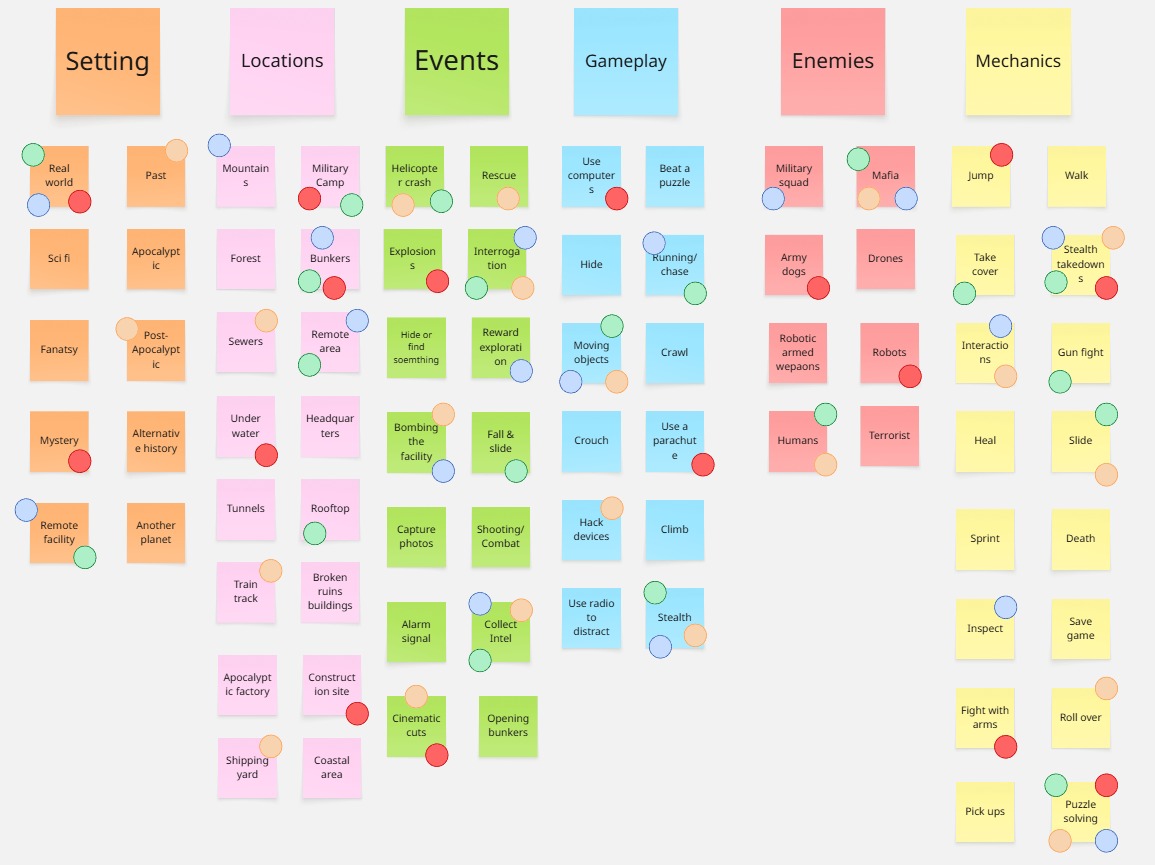
- Used Miro to explore a wide range of ideas across key categories: setting, locations, events, enemies, and mechanics — see the board on the right.
- Had other level designers vote on their favourite concepts to highlight the most promising directions.
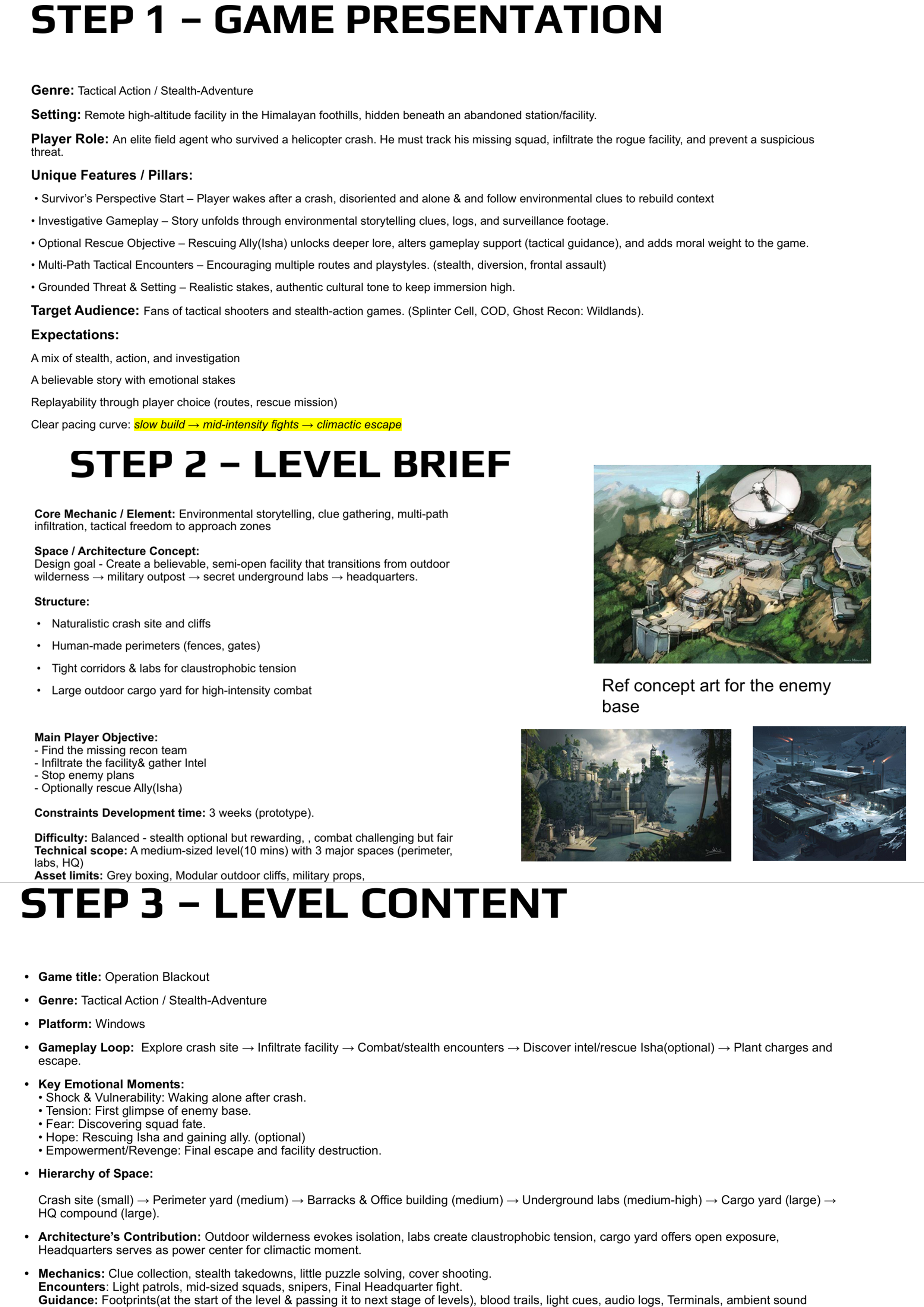
- Built an initial concept document (early LDD draft) outlining the location vision, player objectives, and the core gameplay loop.
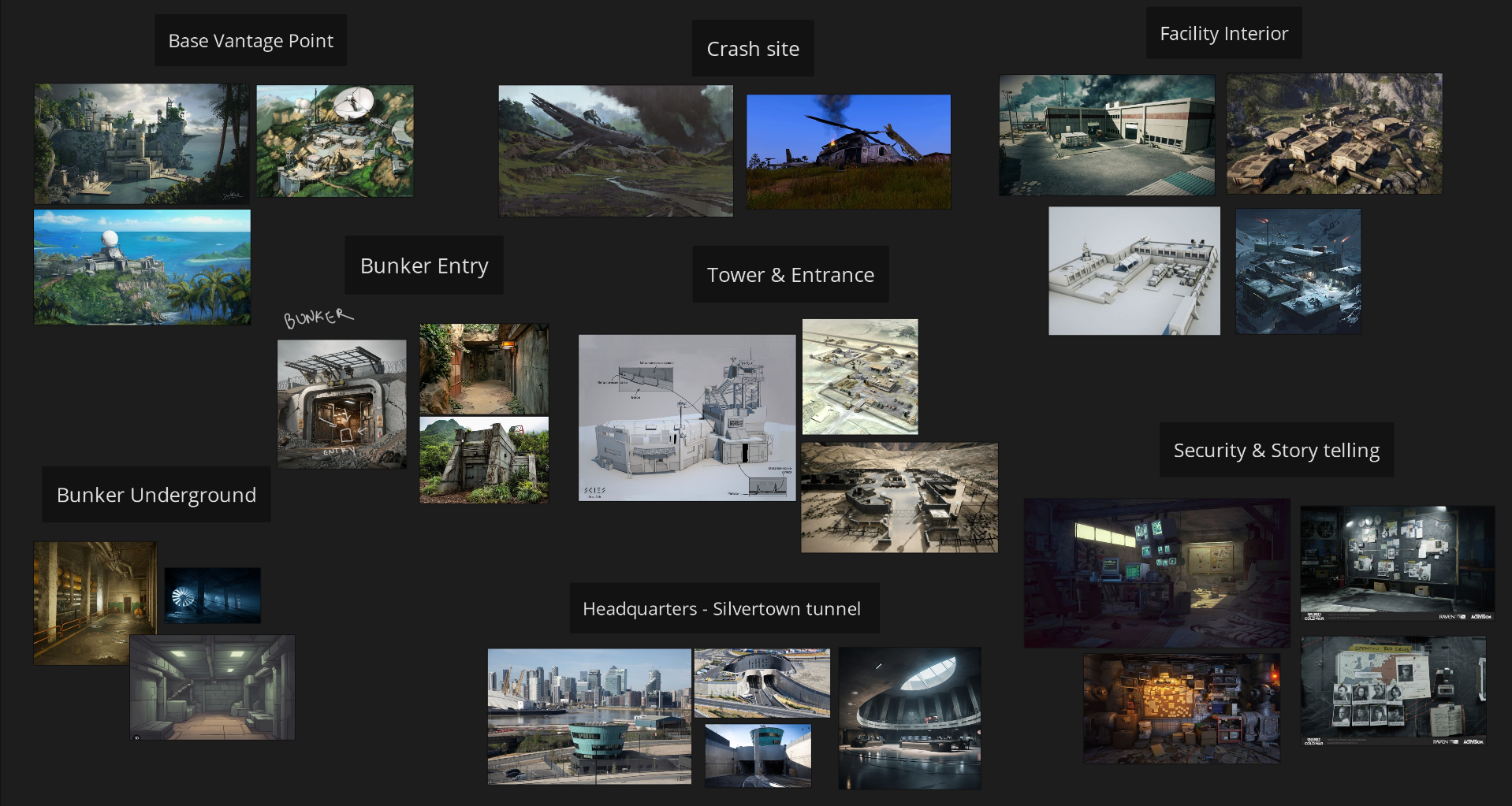
- Collected visual references to establish the intended atmosphere, tone, and environmental style.
Outcome: After reviewing my concept document, my mentor recommended breaking the overall idea into smaller, more manageable pieces, as the original scope was too large. Based on that feedback, I divided the full level concept into three acts and chose to focus on developing Act 1 first, applying level-design fundamentals with proper structure and clarity.
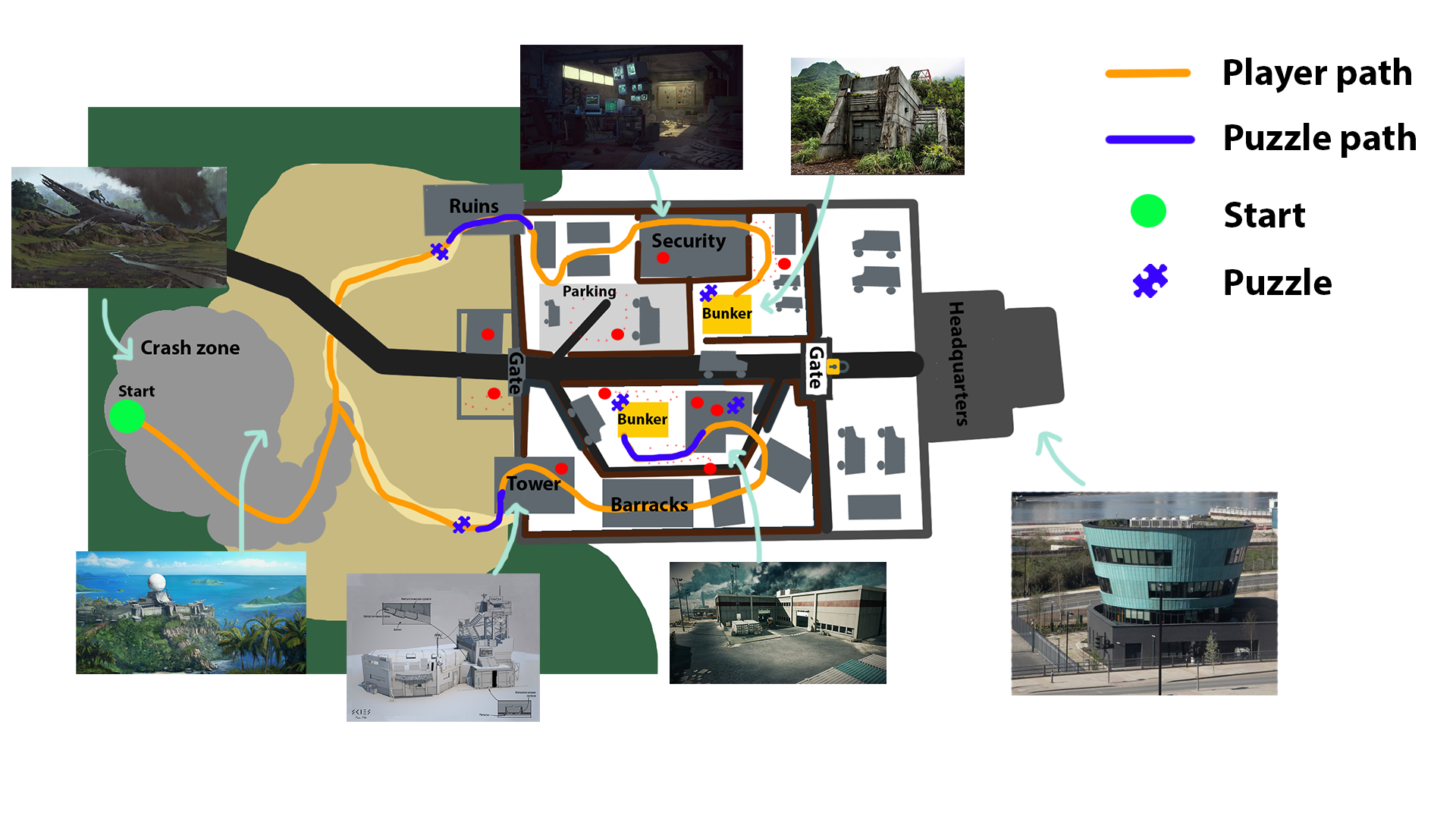
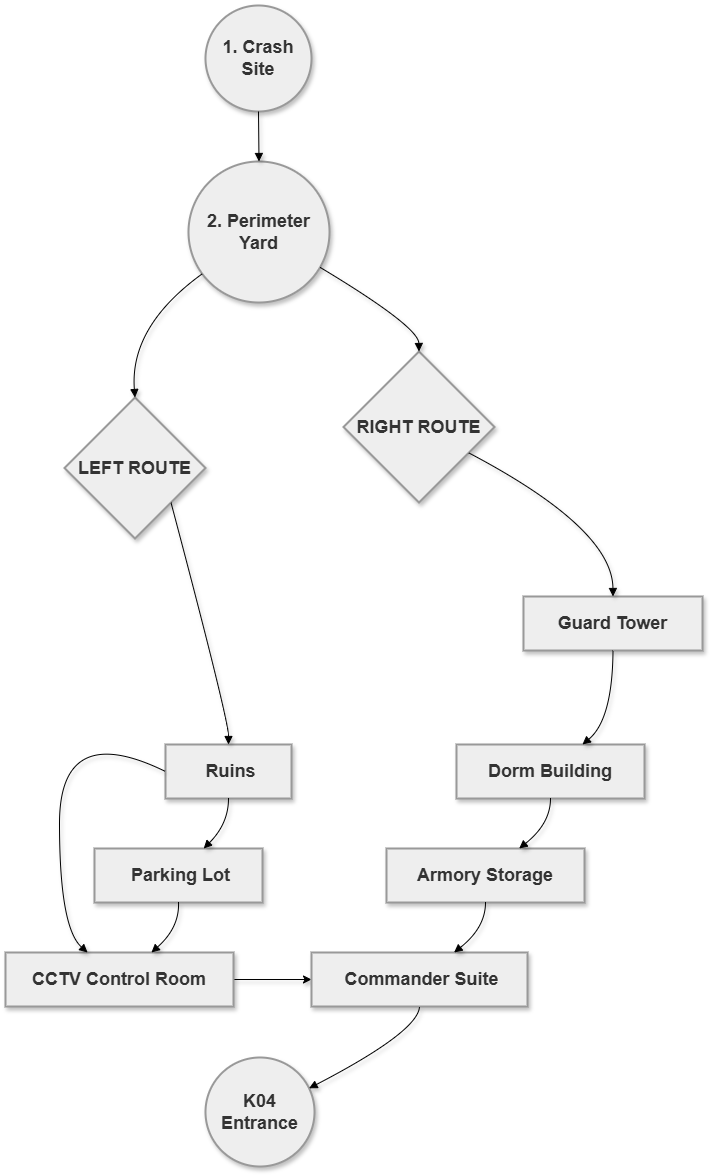
Act 1 is built around three major, distinct areas: Crash Site & Enemy Outpost, Perimeter Yard, and Facility Interior leading into the Bunkers. To support this refined direction, I created a detailed map flowchart for Act 1, outlining player progression, spatial transitions, and key gameplay beats.
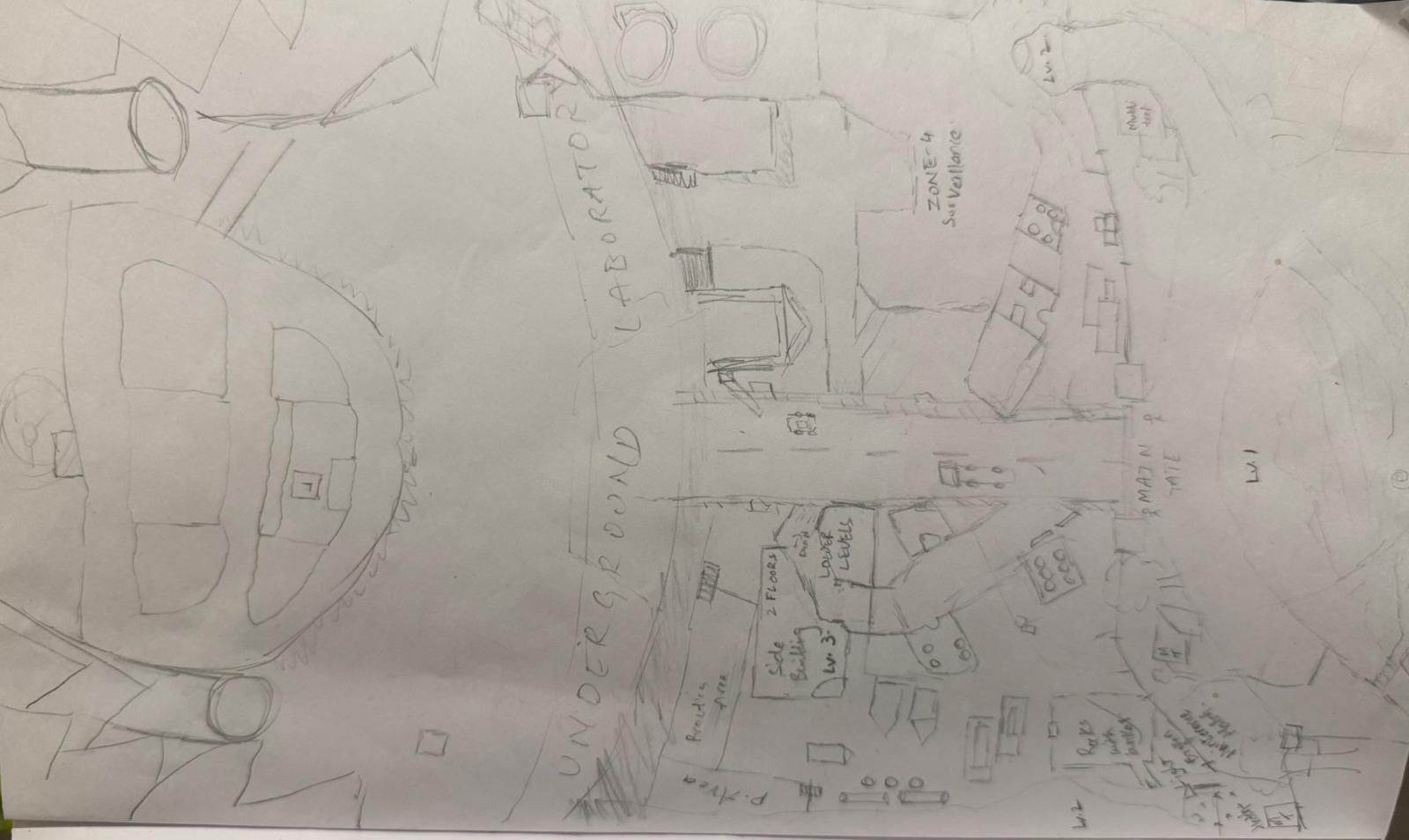
Game Beats & 2D Map
Solution: I refined the narrative into a structured quest, breaking it down into clear gameplay beats.
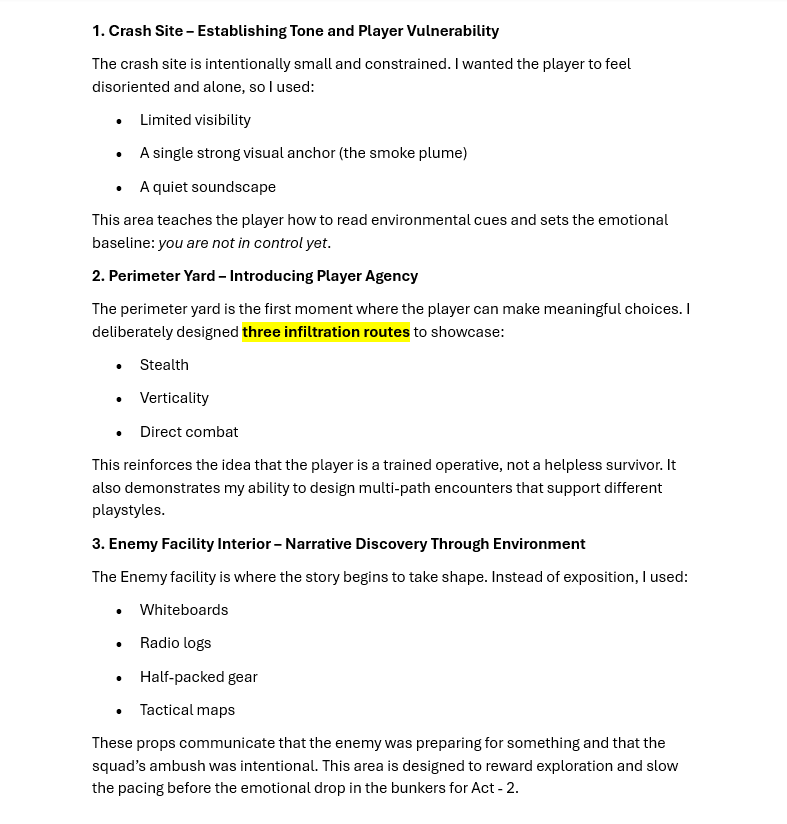
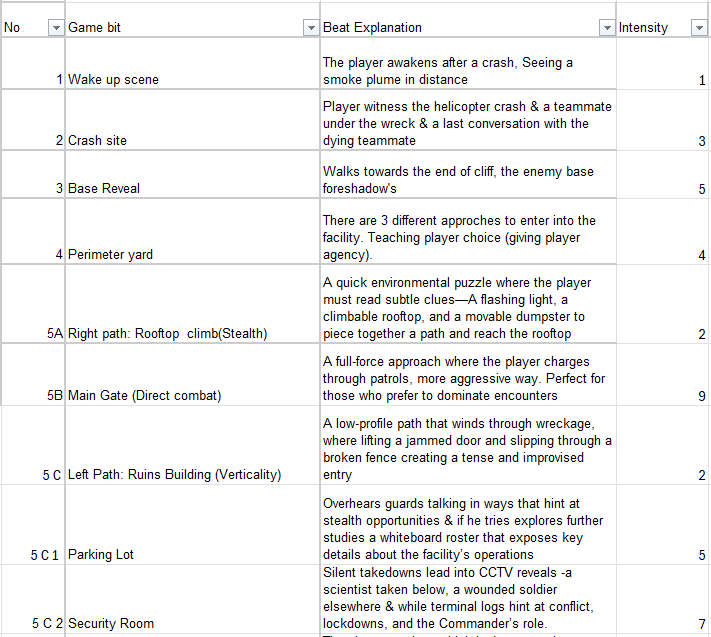
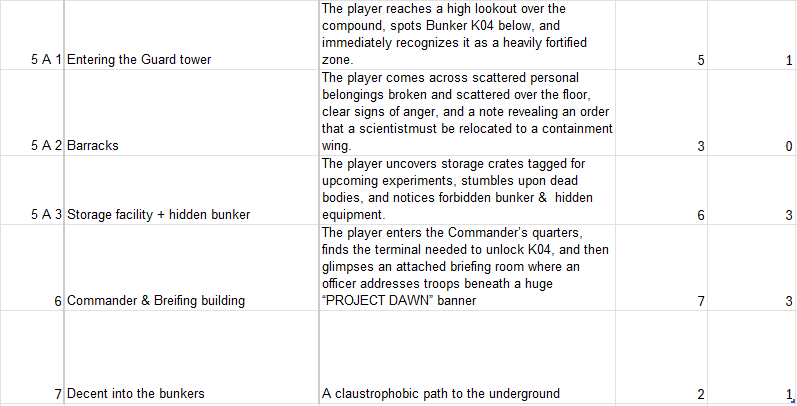
And then I defined the environmental clues, clarified the narrative purpose of each location, and identified the environmental tools used to communicate information to the player.
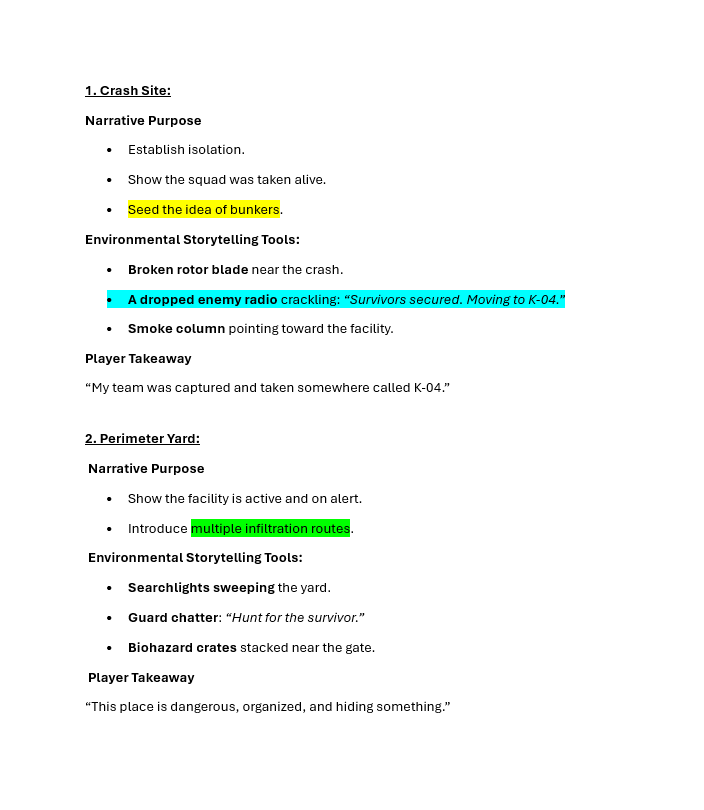
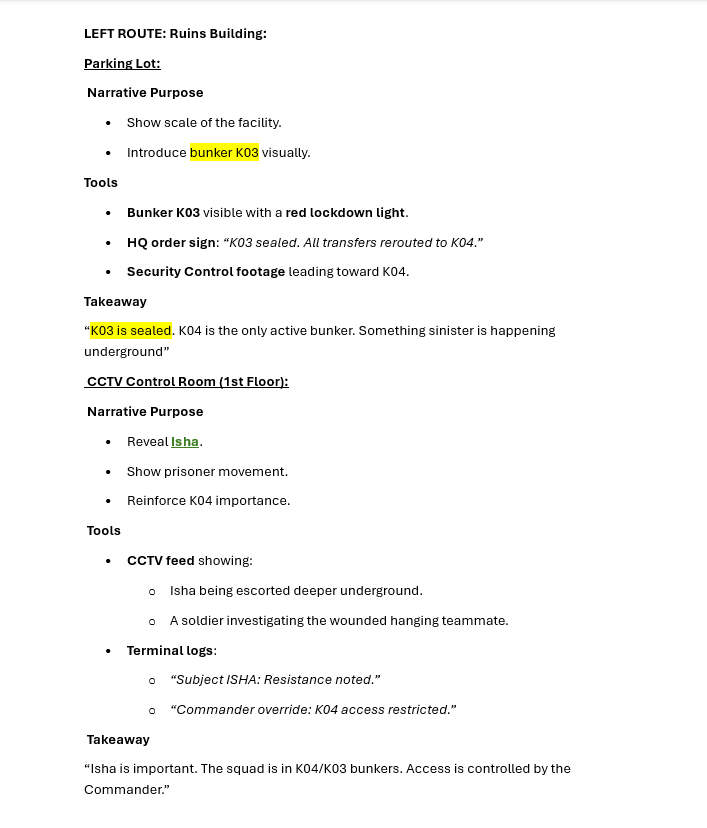
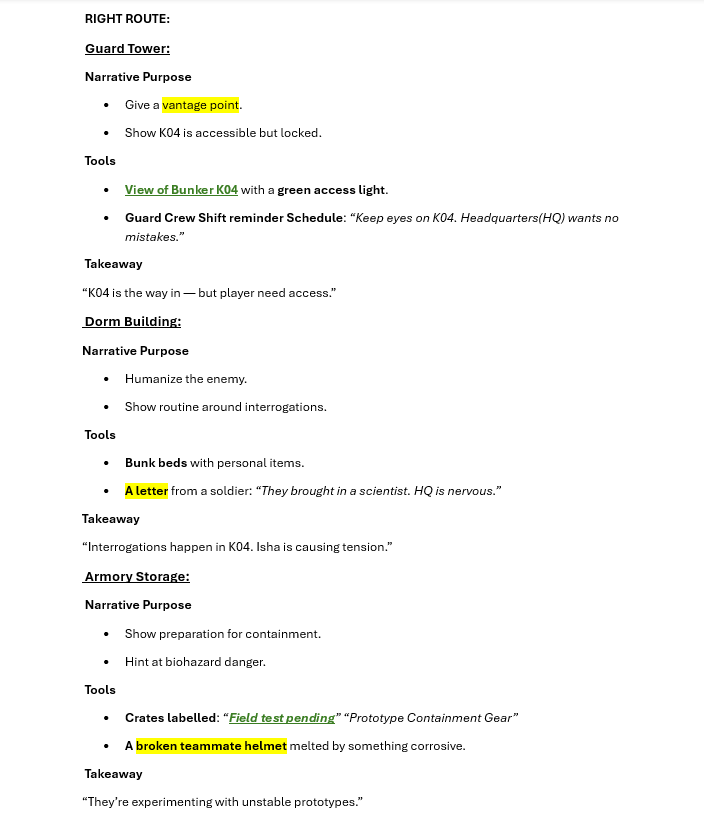
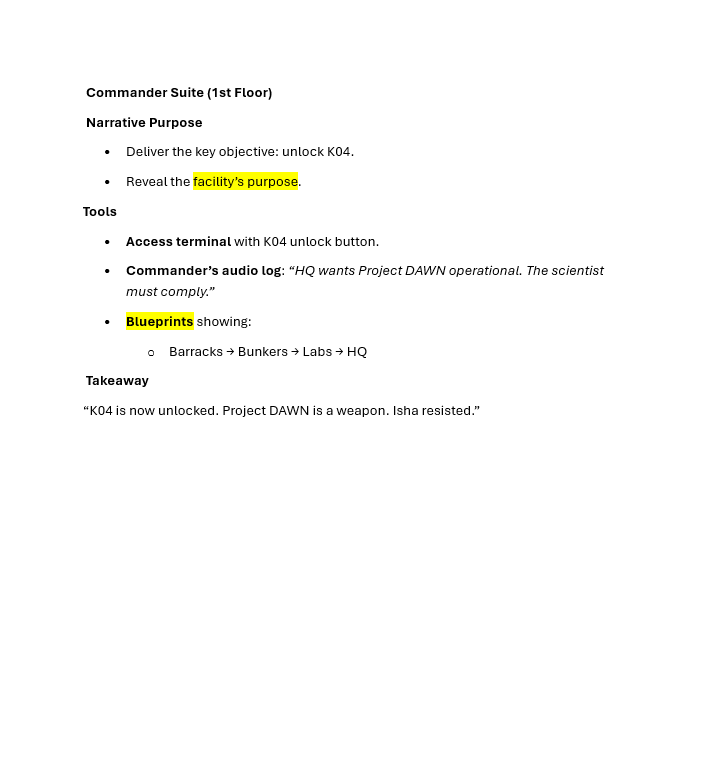
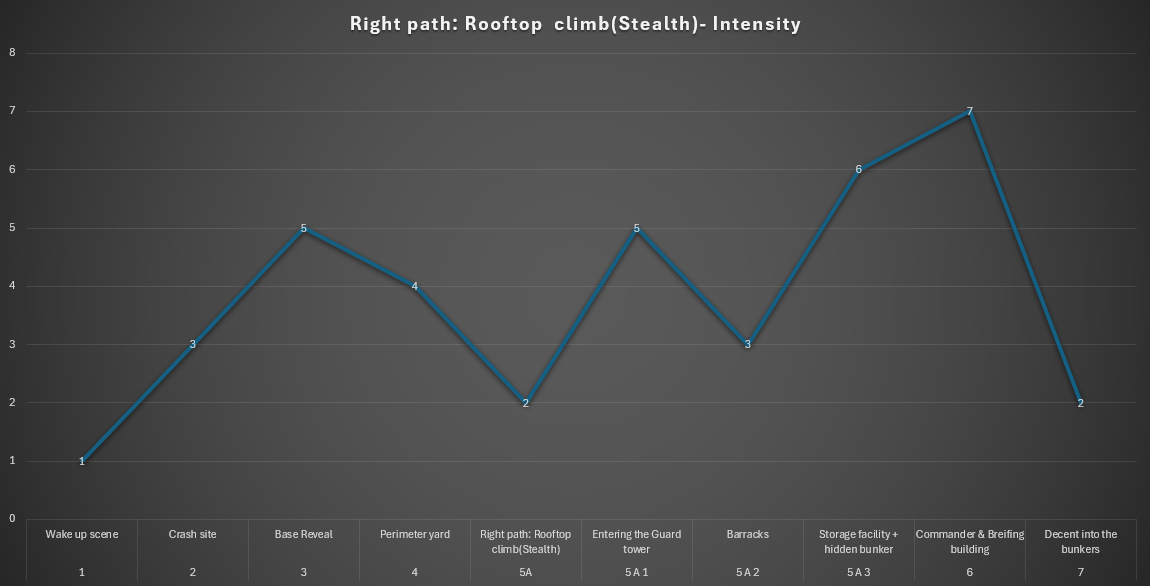
I also assigned pacing and intensity values to each segment to support a well-balanced gameplay flow.
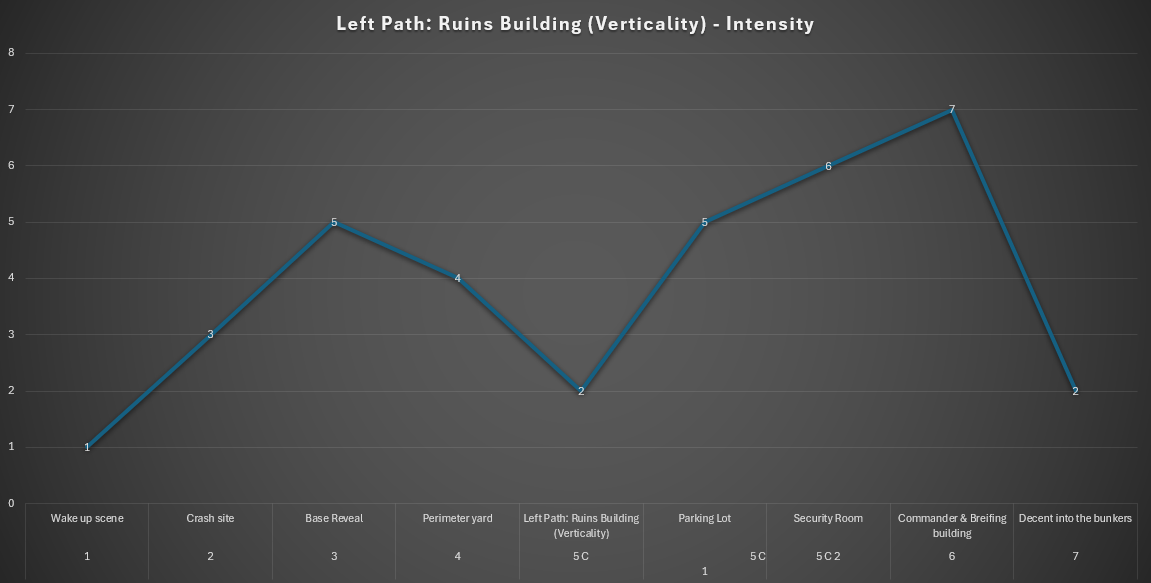
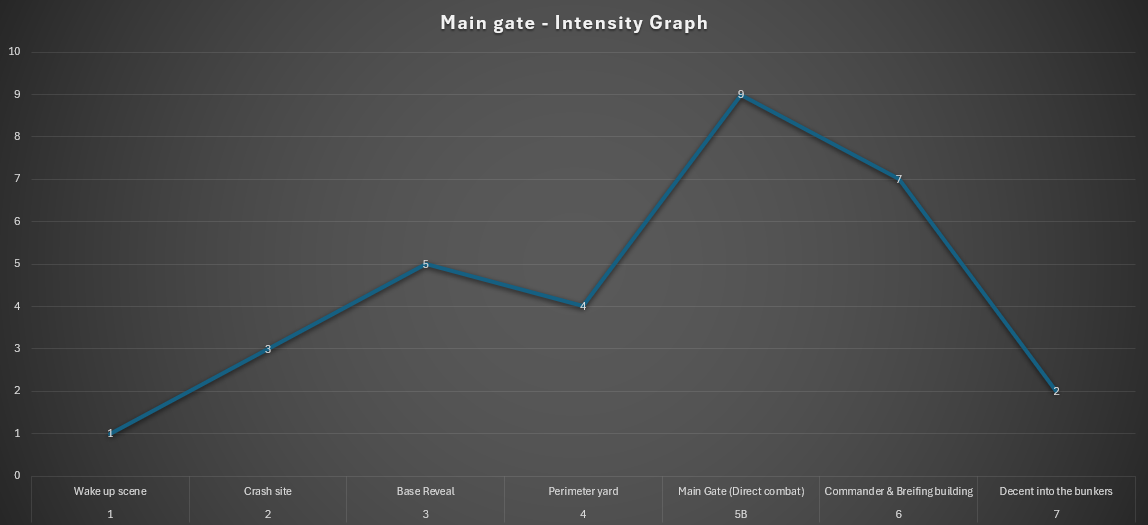
Later, I brought the paper layout into Photoshop, developed a 2D digital layout, and refined it to align with the project's visual storytelling goals.
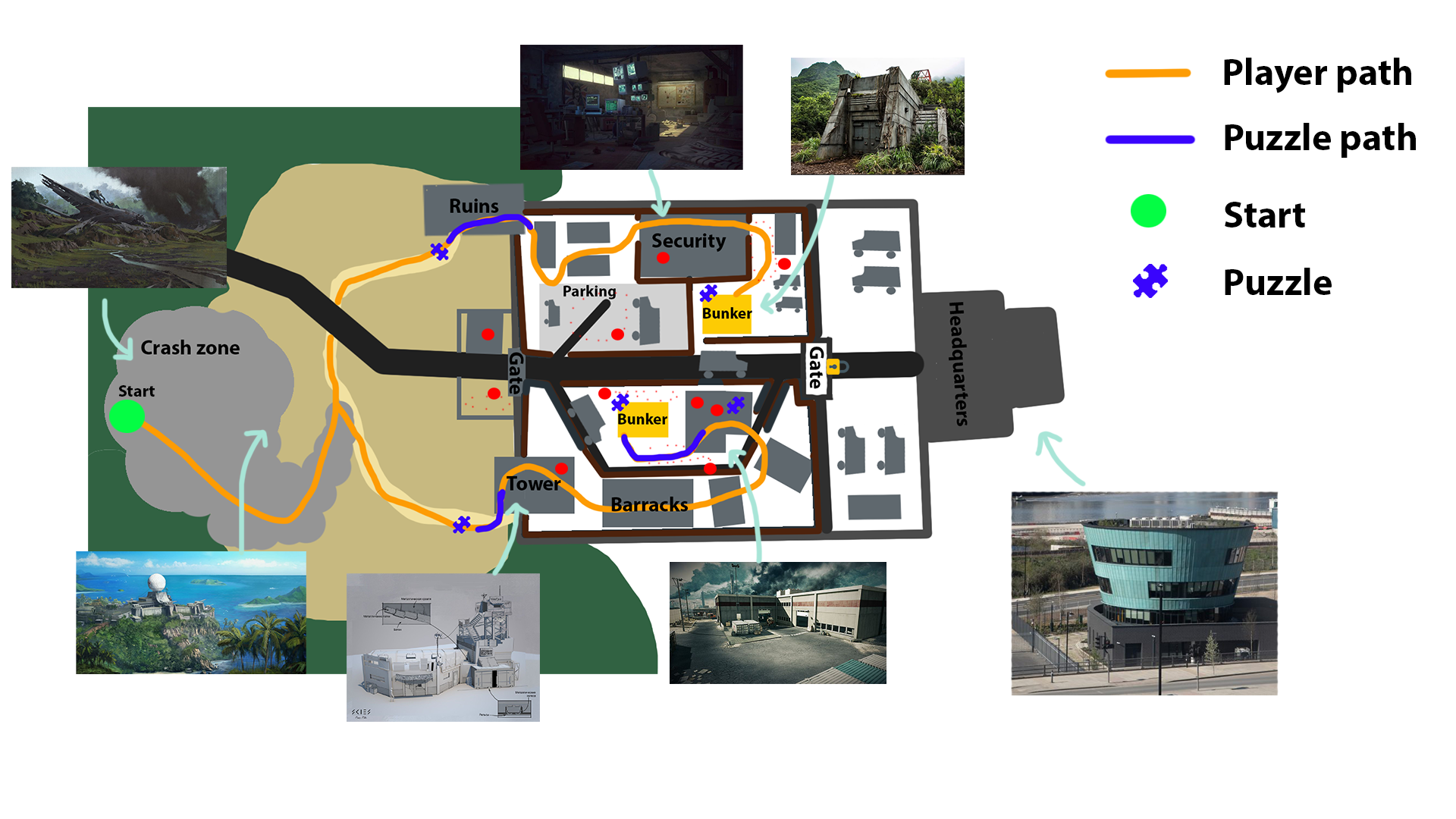

After narrowing the full concept down to Act 1, I revised the earlier concept document and produced an updated LDD that provided a much clearer breakdown of player flow, emotional pacing, and environmental context. The refined 2D map also improved how I communicated my design intentions during peer reviews and team discussions.
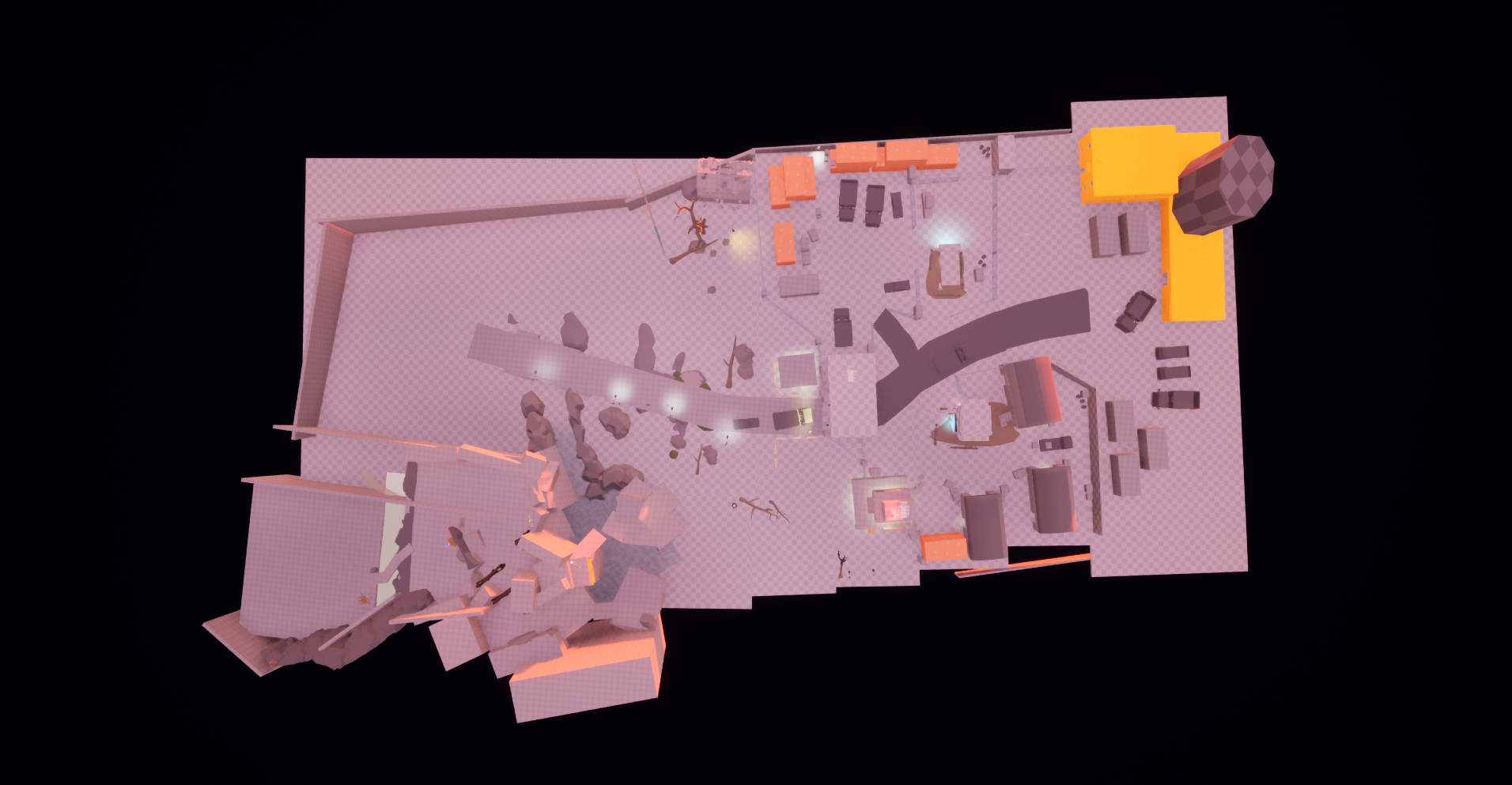
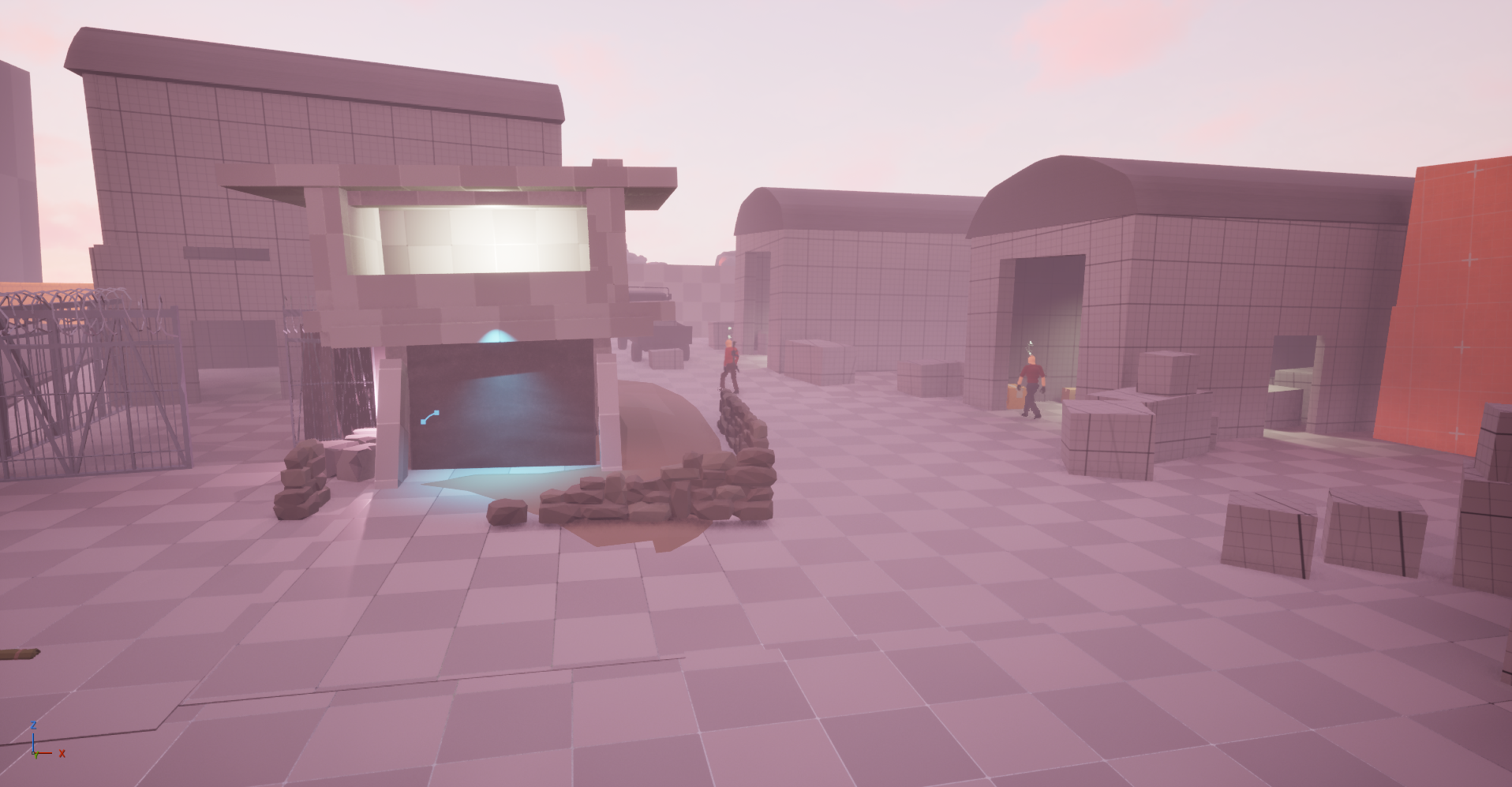
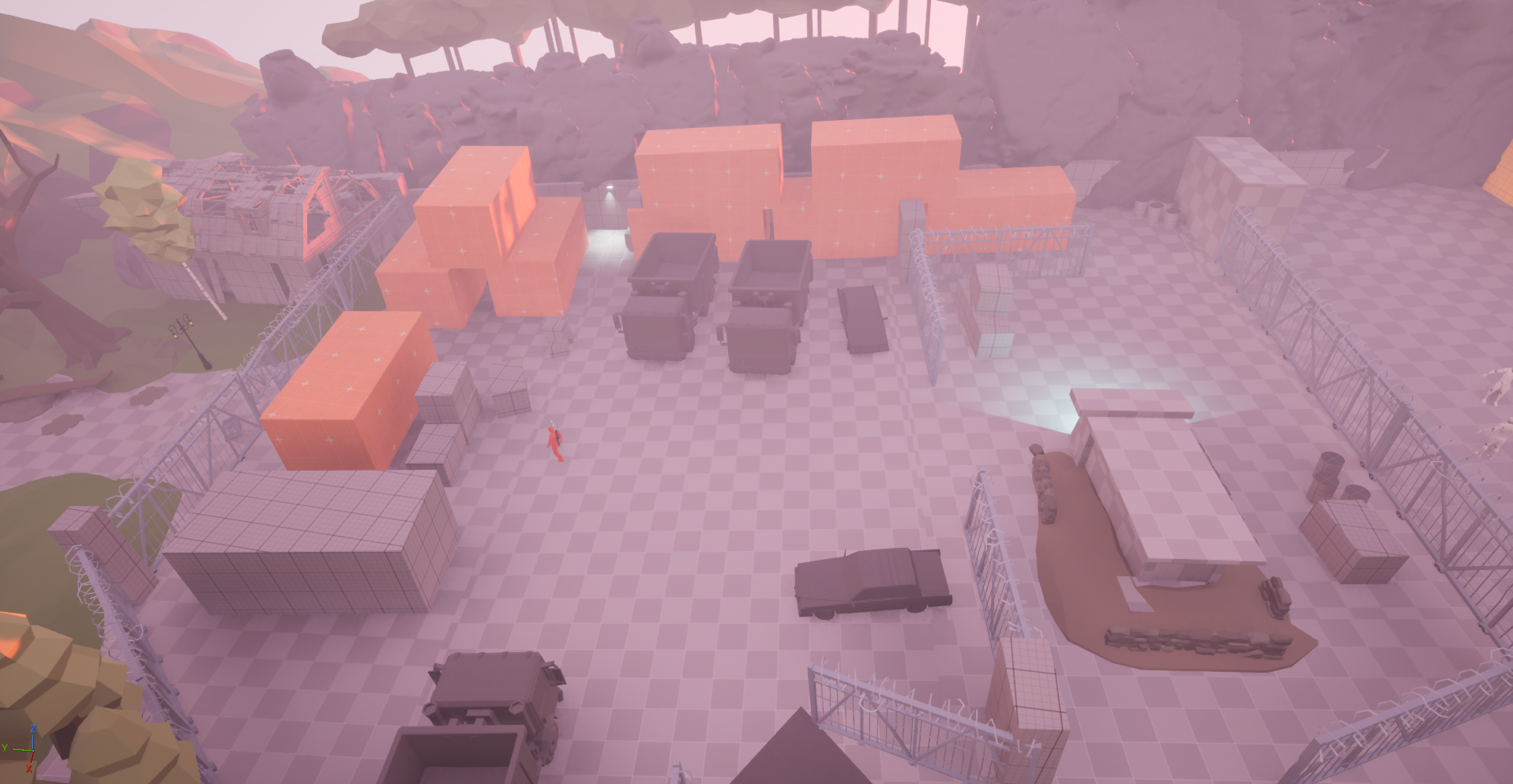
First Roughout — Establishing the Playable Foundation
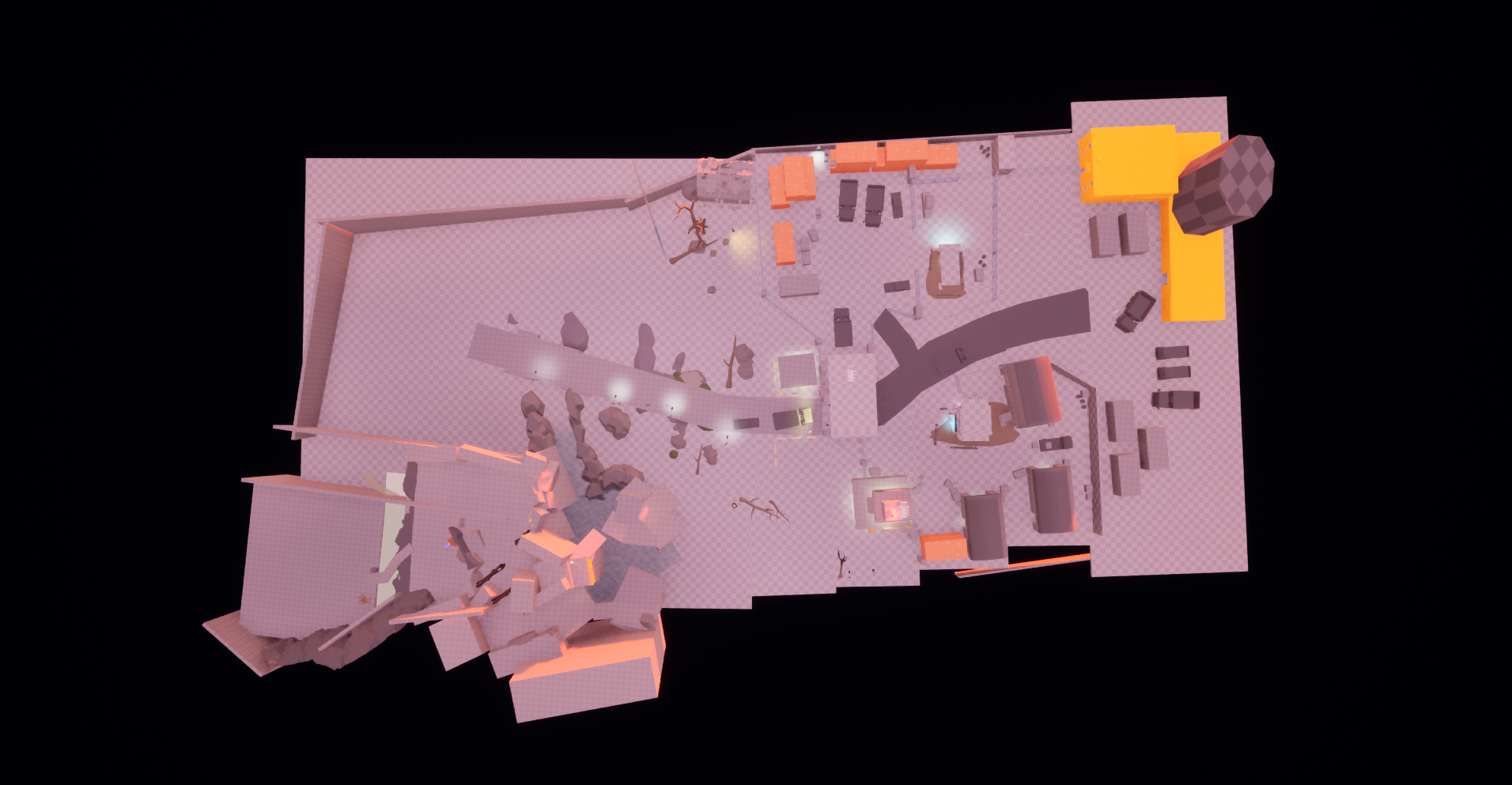
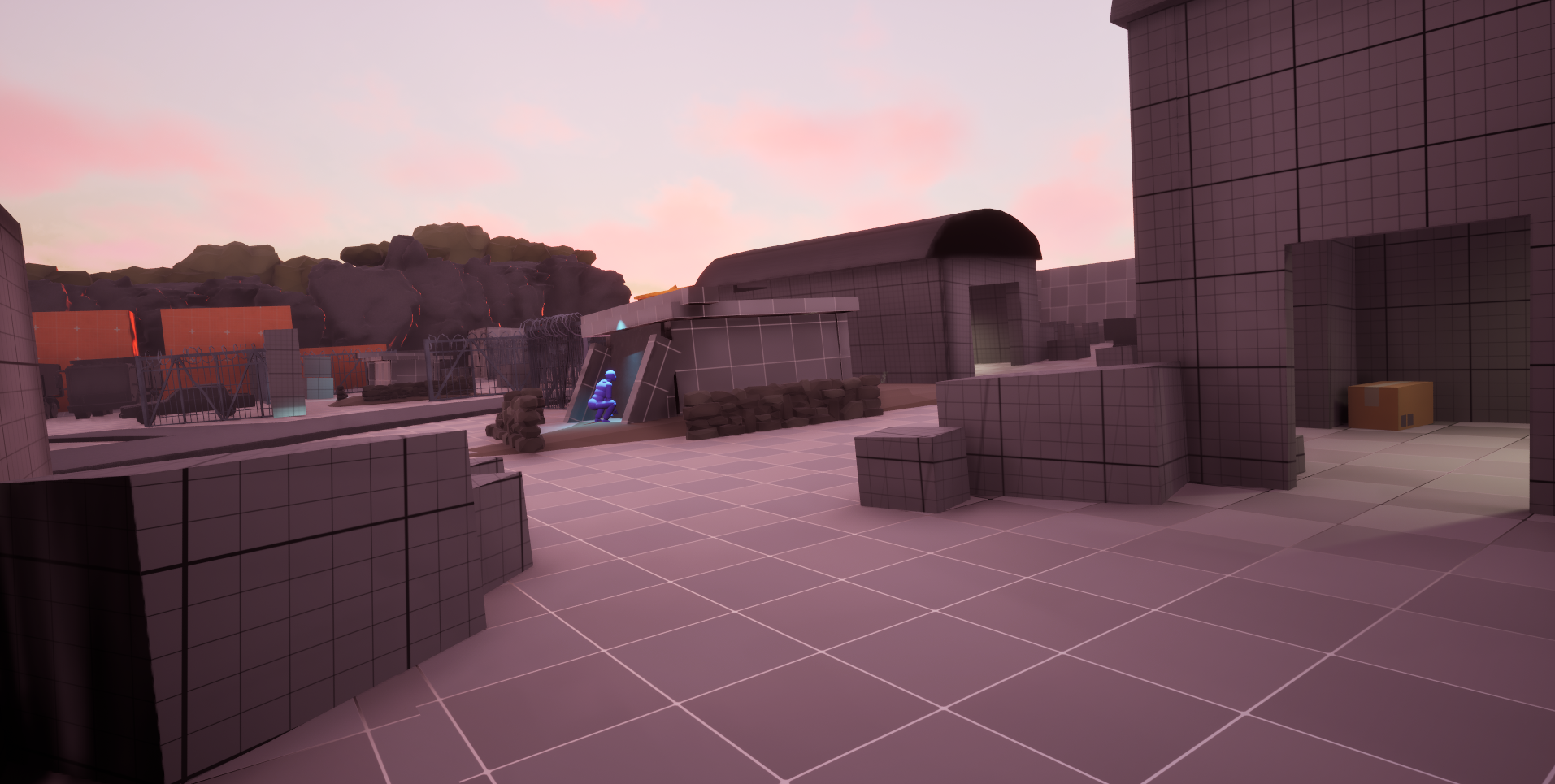
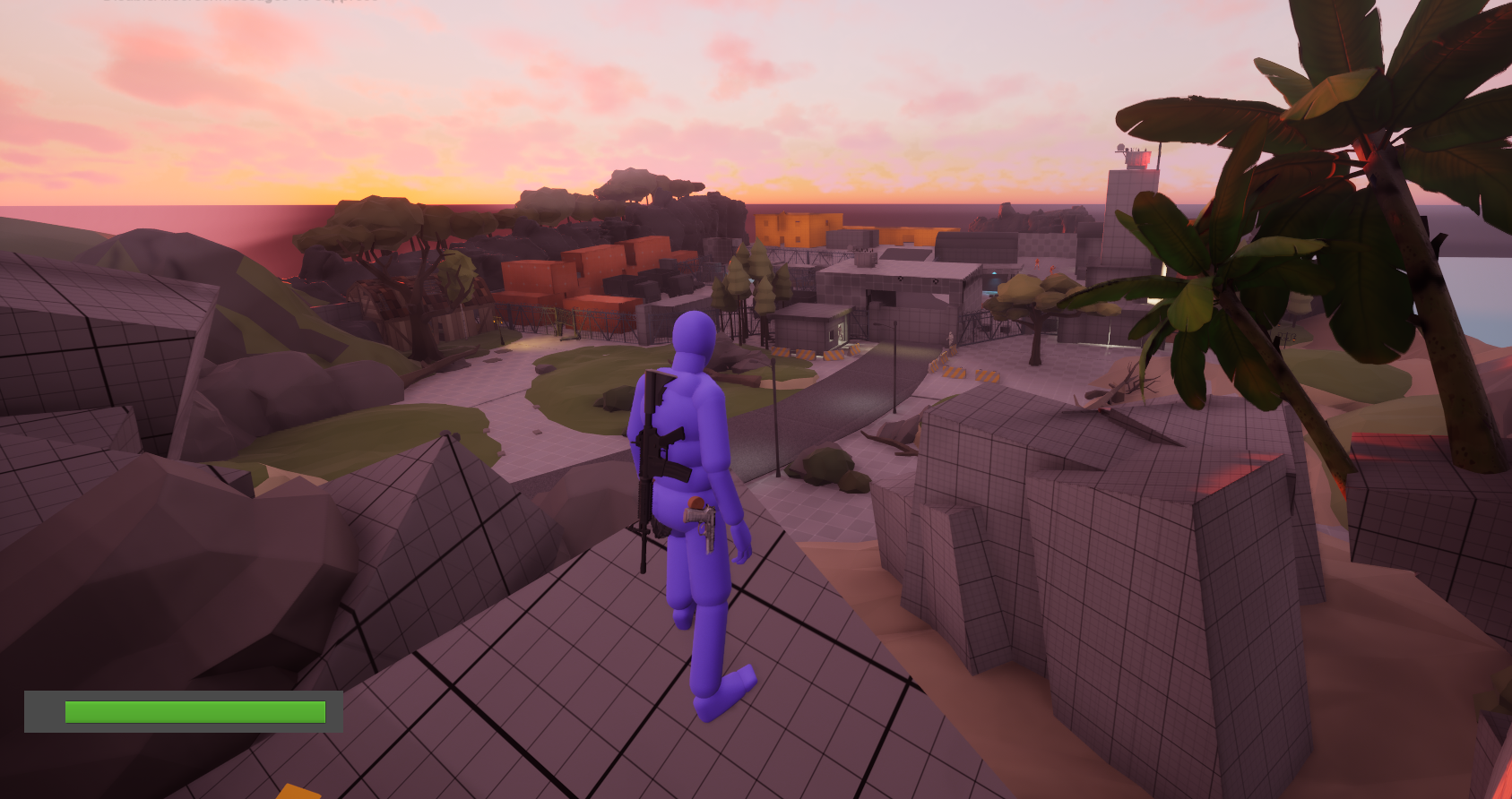
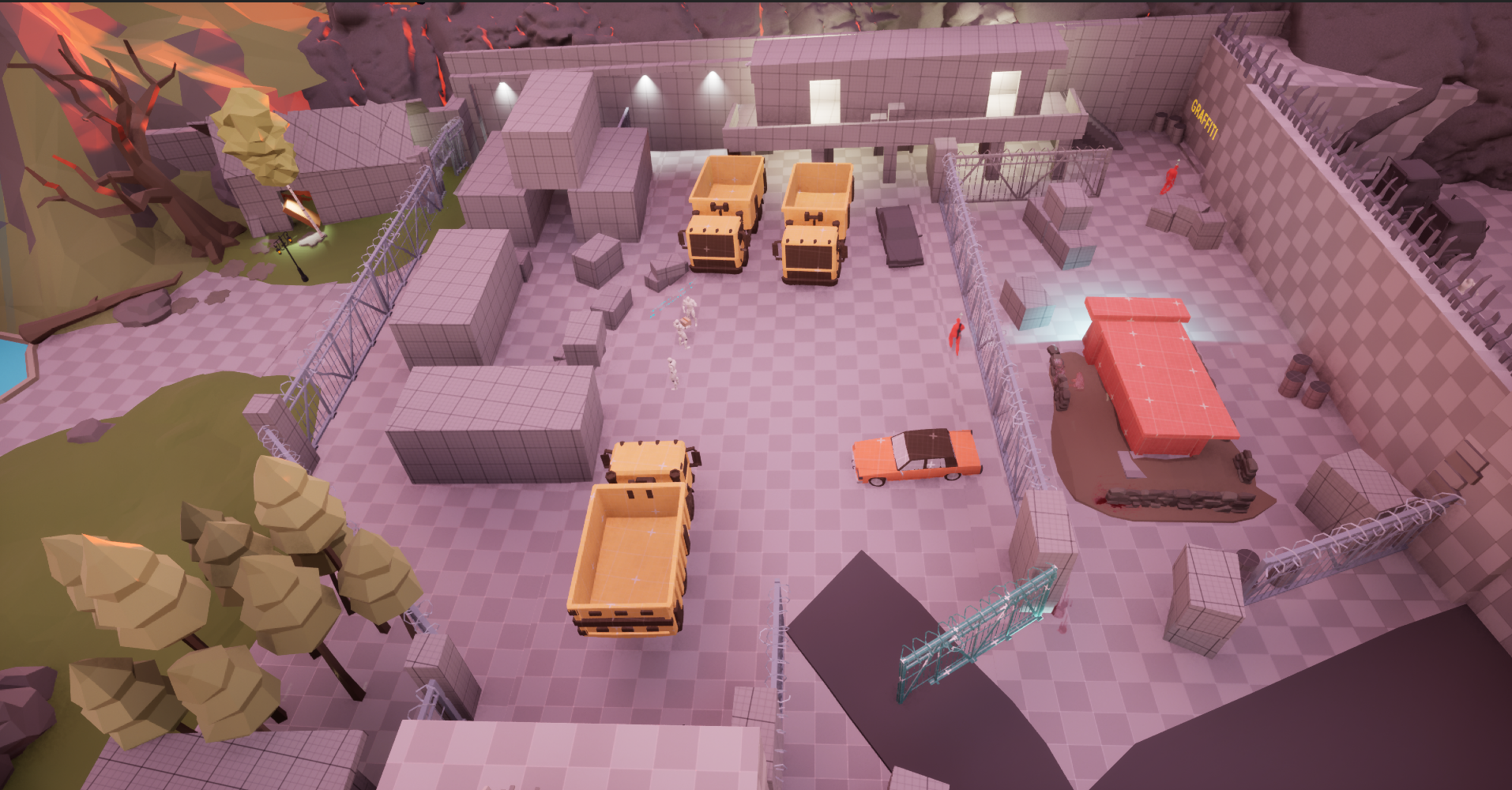
Process:
- Shifted the initial 2D layout into Unreal Engine 5 and constructed the environment using simple block out geometry.
- Continuously iterated in play mode to assess navigation, sightlines, and overall gameplay flow.
- Implemented placeholder elements like enemy encounters, NPCs, and loot locations to simulate the intended gameplay structure.
- Used a Level Design Kit for rapid prototyping and developed a PureRef board to guide the visual and thematic direction.
The level reached a fully playable state early in development. Despite the minimal visuals, the core gameplay loop like exploration, reward discovery, and story progression was clearly communicated. This roughout provided a strong structural base for subsequent design and visual iterations.
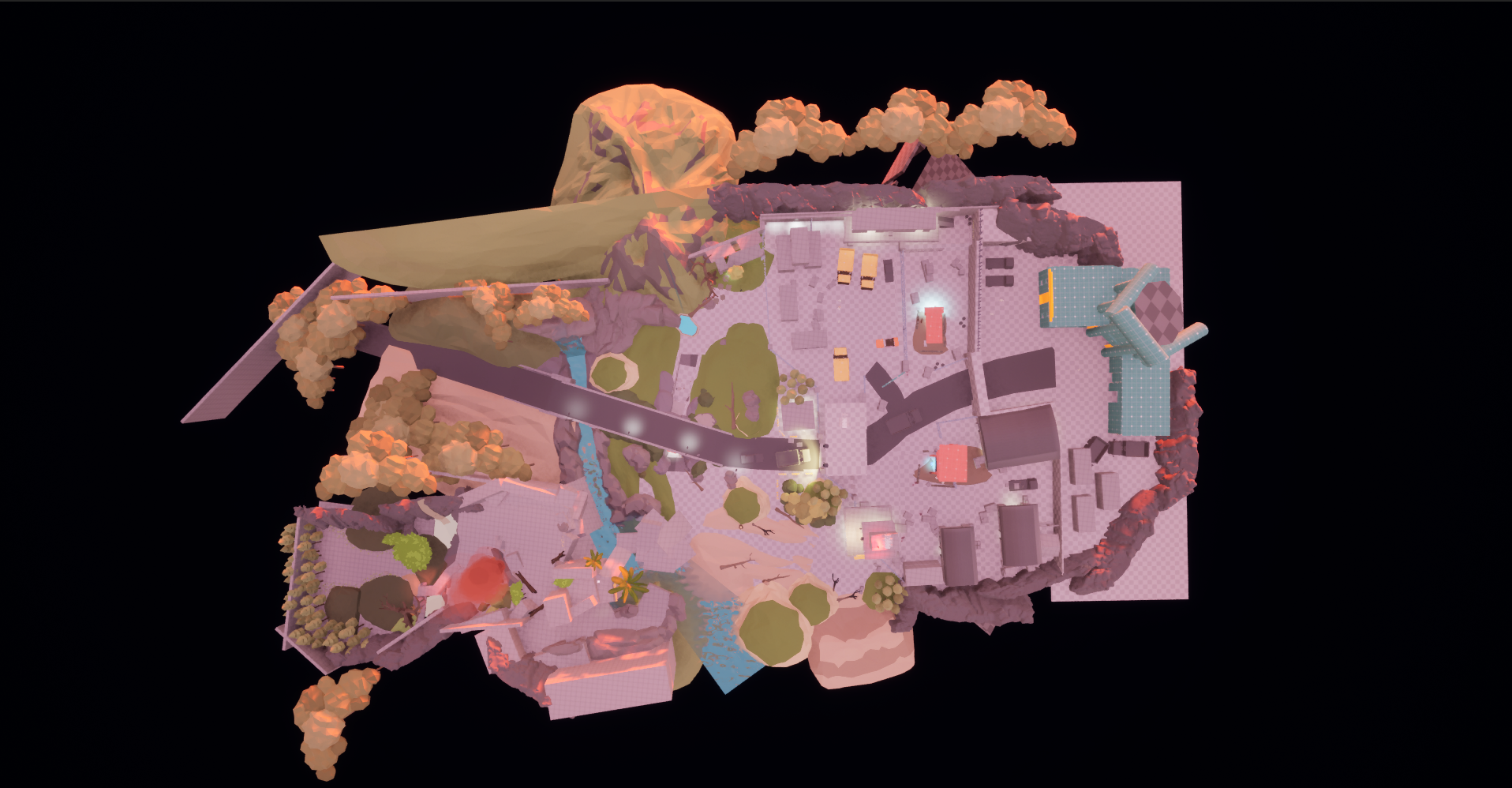
Iterating the Roughout
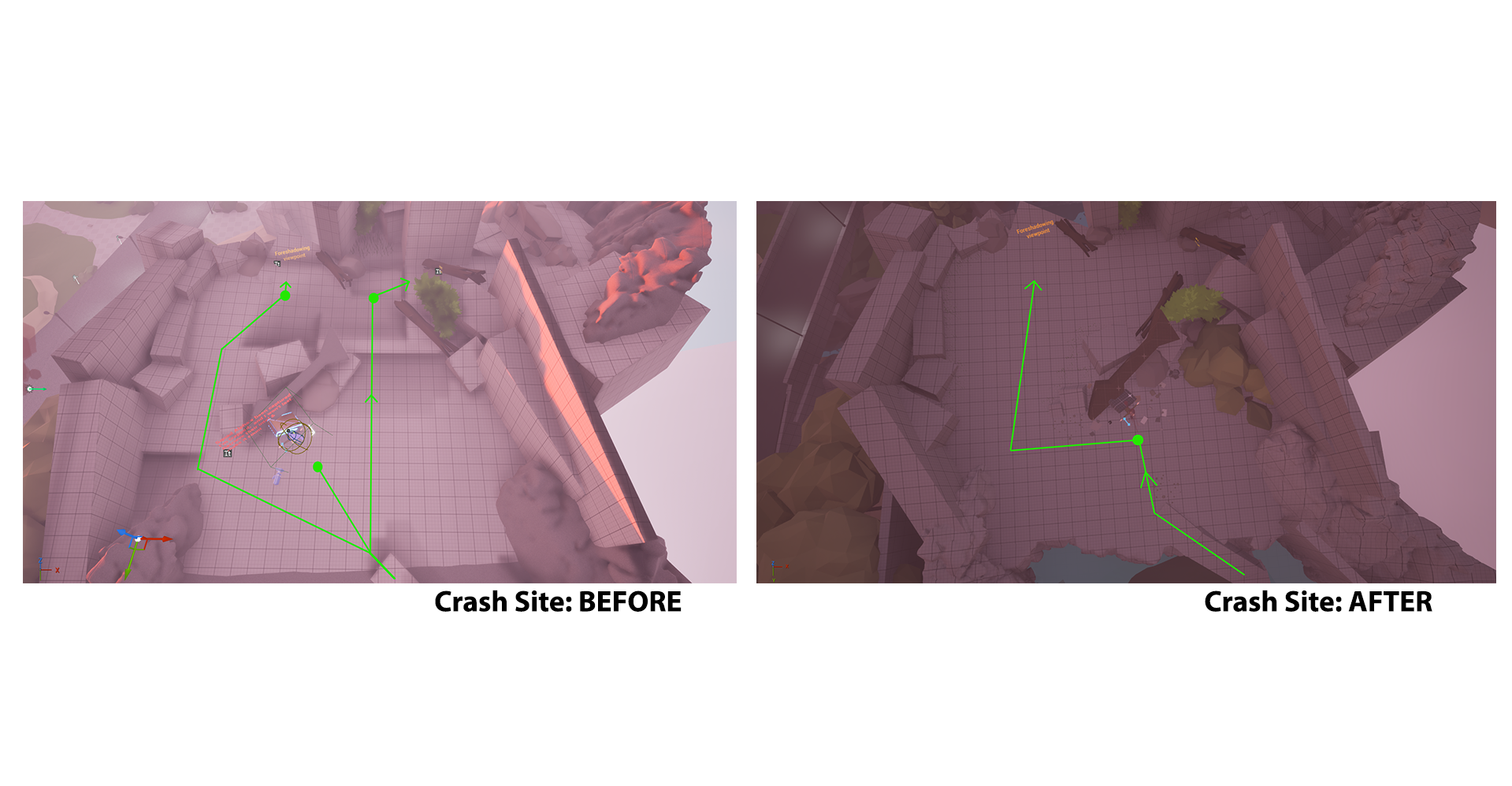
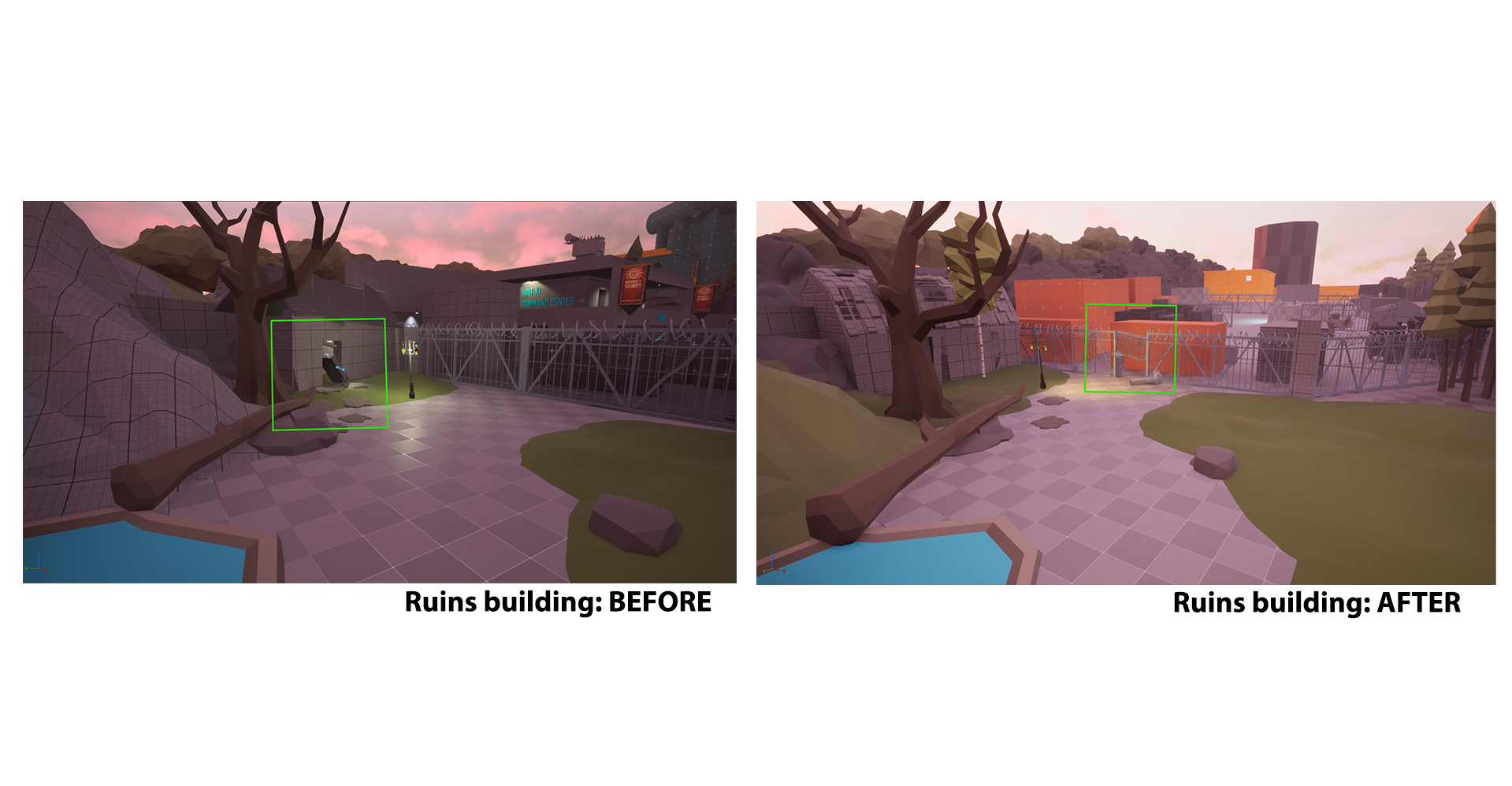
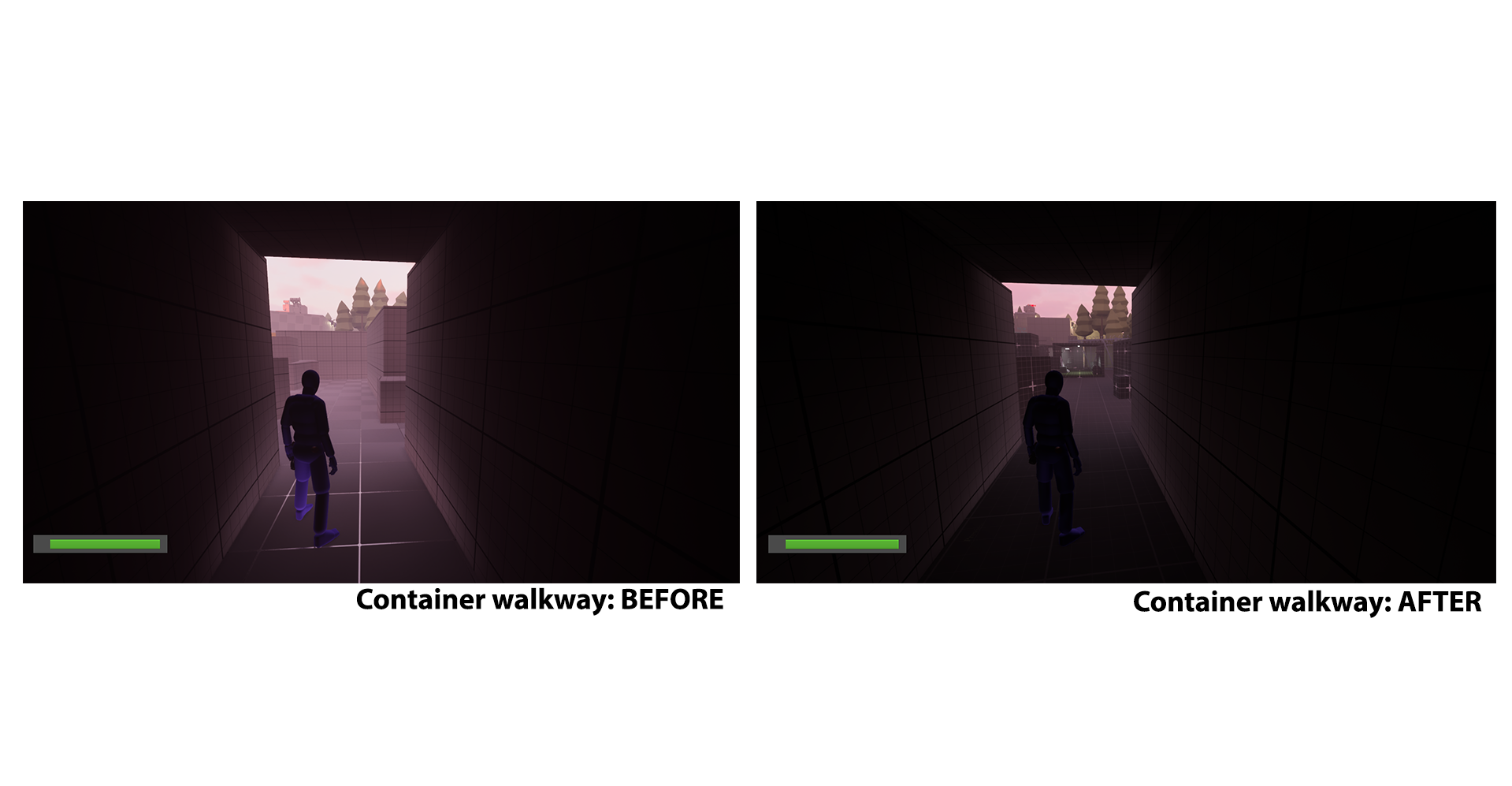
Solution:
- Redesigned the Crash site to open with a short cinematic conversation, followed by a panoramic reveal and title card.
- Reworked the left-side perimeter entry: instead of a simple cut-down fence, the route now features a small environmental puzzle supported by breadcrumbs. This adds a moment of player agency, slows the pacing in a meaningful way, and reinforces the idea that the facility is secure and must be outsmarted rather than simply walked into.
- Introduced an early jump challenge using a broken cliff edge that naturally leads players toward their first enemy encounter, creating tension and engagement right from the start.
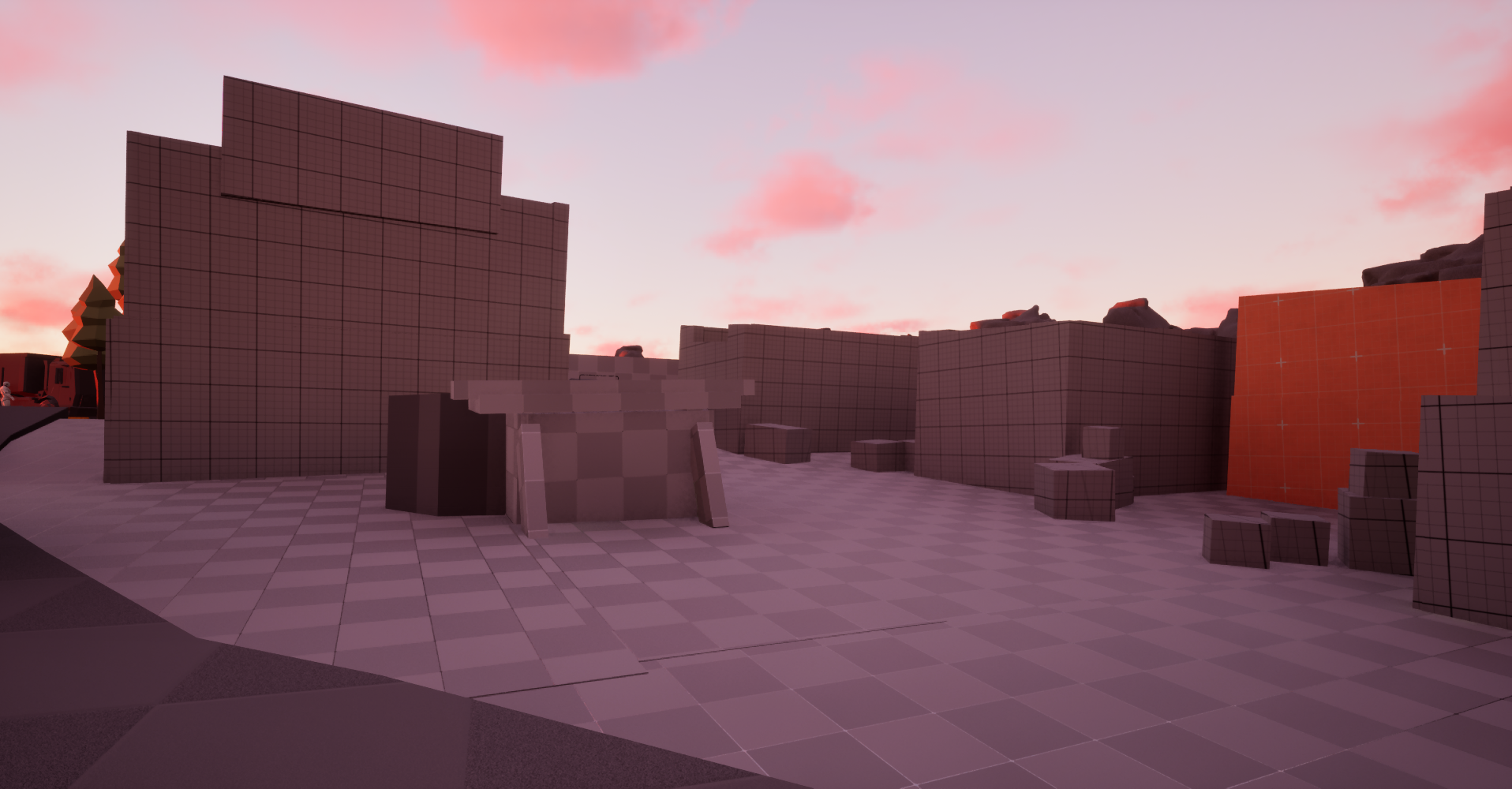
- Refined lighting, and sky atmosphere to establish a cohesive mood and enhance the sense of scale and realism.
- Game Mode upgrade: switched to ALS for smoother movement and interaction.
The redesigned introduction now feels alive, intentional, and narratively cohesive. Players begin with a cinematic overview, transition into a moment of tension, and naturally follow a guided path shaped by visual cues, environmental puzzles, and storytelling. The improved atmosphere, exploration opportunities, and refined gameplay systems create a stronger first impression and a more engaging start to the experience.
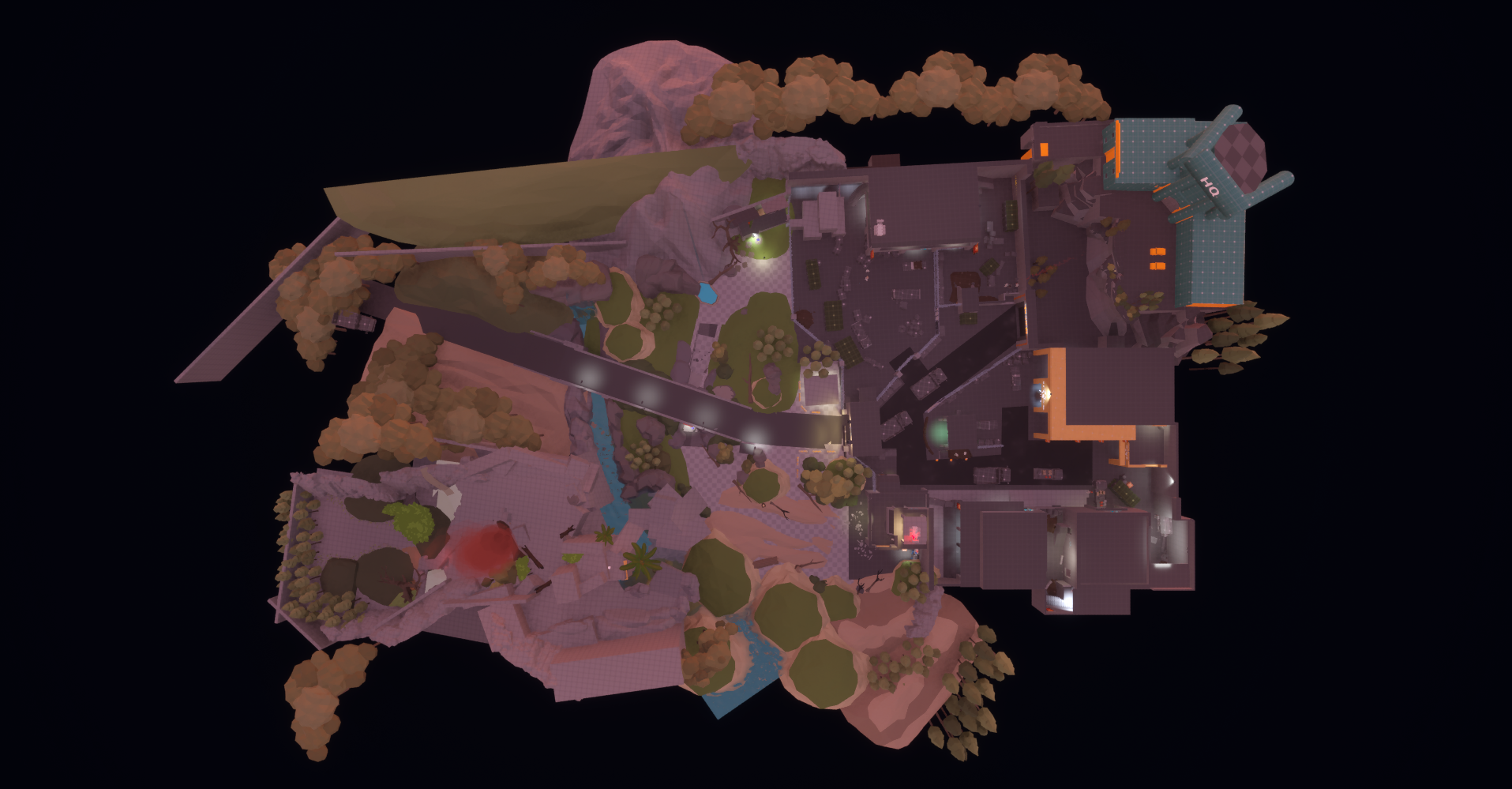
Moving to the Blockout
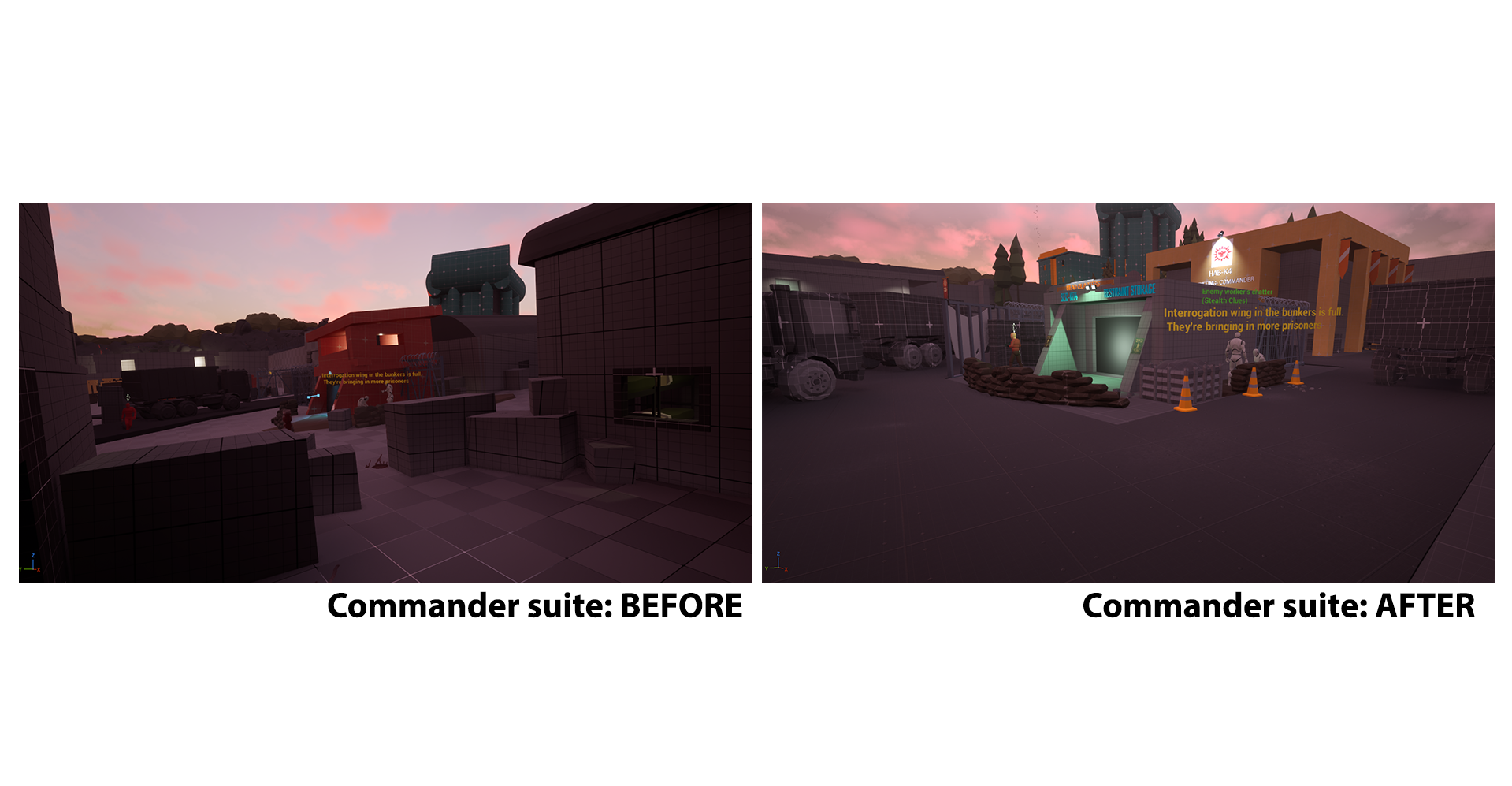
Solution:
- Improved player orientation by introducing a tall landmark structure with distinctively coloured structured pillars, creating a strong visual anchor that guides navigation. This landmark naturally draws players toward a key narrative reveal connected to the SEC K04 bunker.
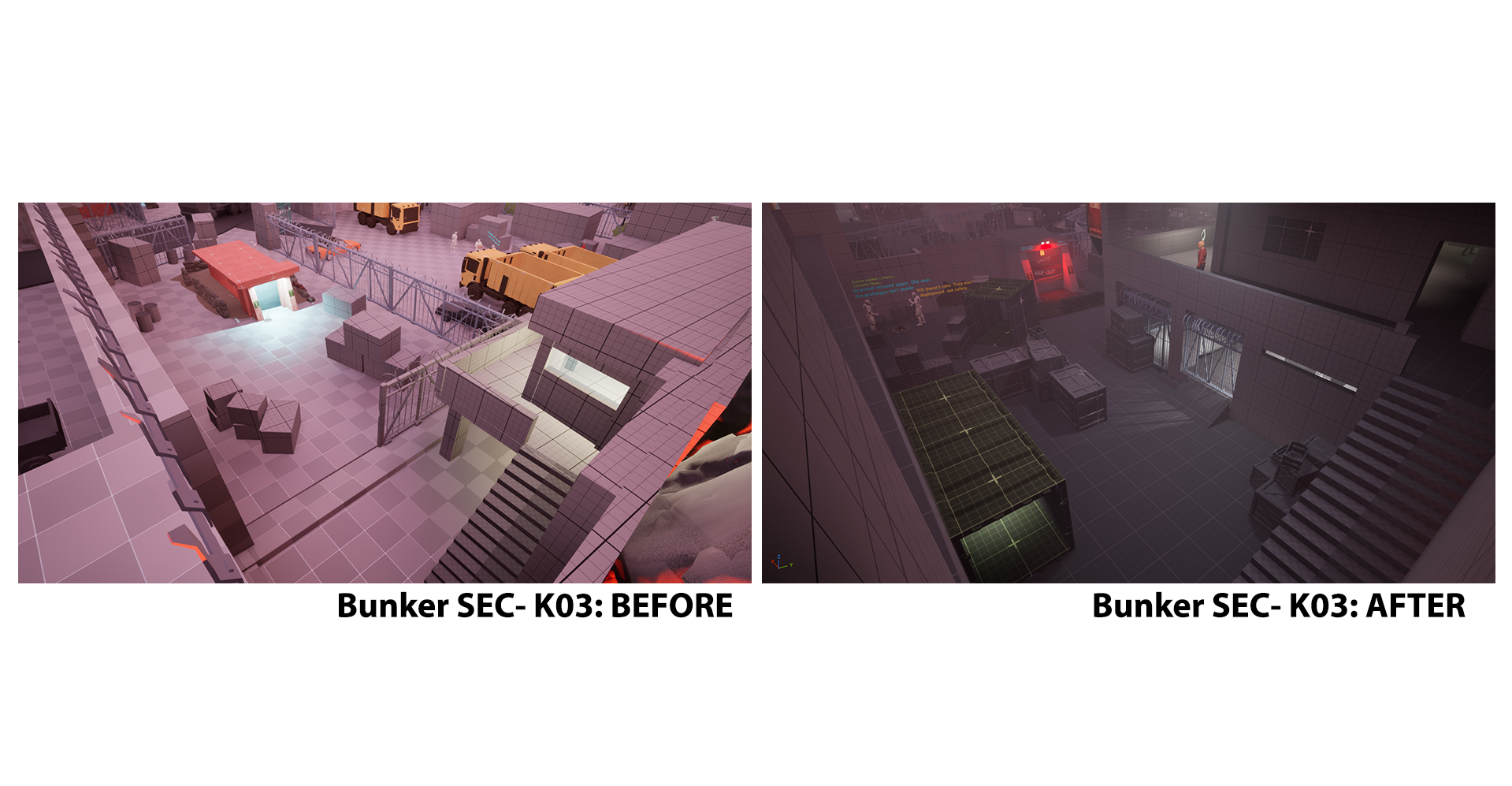
- Identified a sequence break where players could enter through SEC K03 and miss key Commander Suite story beats. To fix this, I locked SEC K03 and redesigned the traversal flow to guide players naturally toward the Commander Suites, ensuring consistent narrative delivery while preserving player agency.
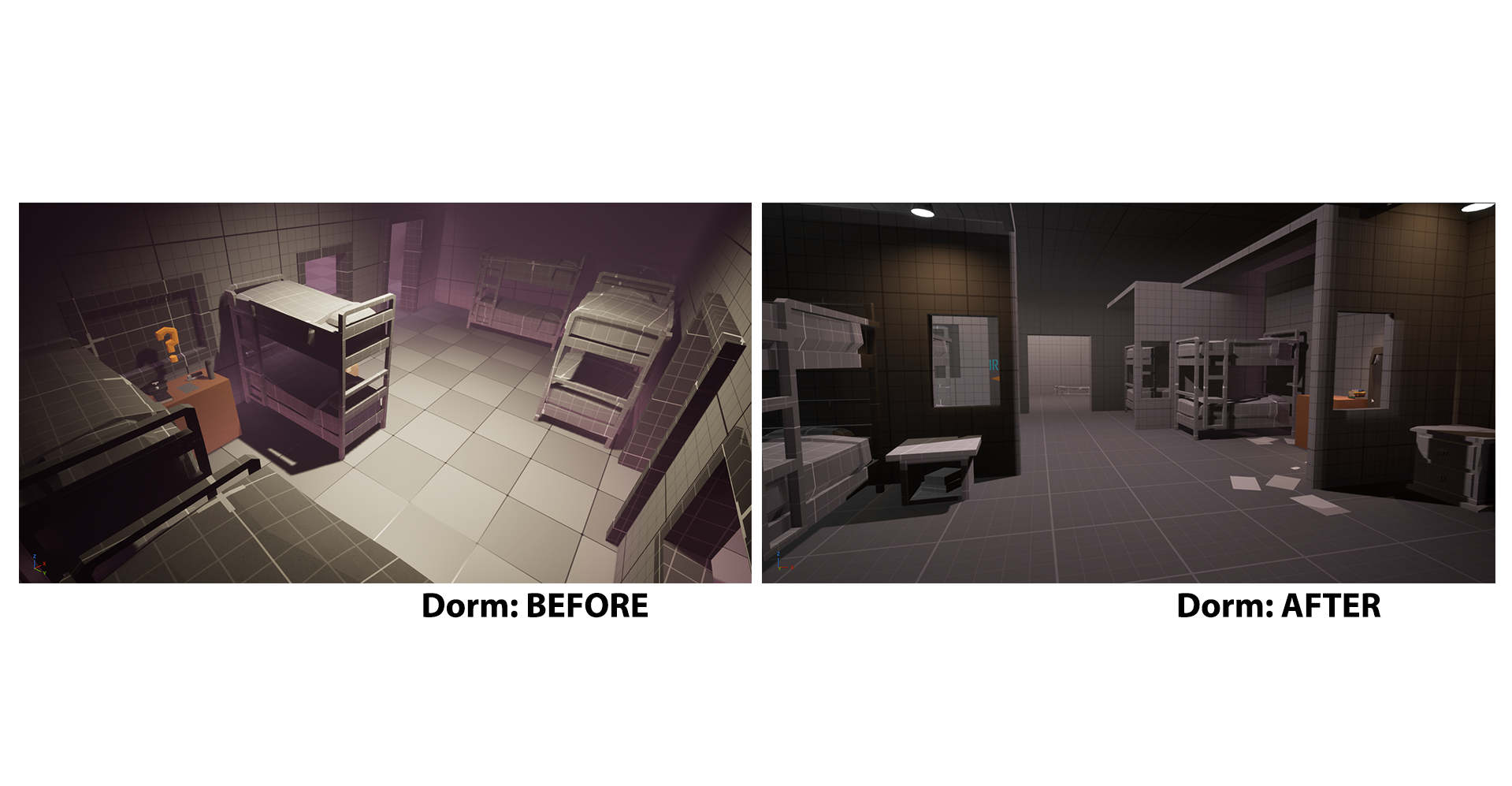
- Expanding Dormitory Spaces for Balanced Golden Path & Optional Exploration: Initially, the dorm building served as an optional exploration area with light rewards. After playtesting, I expanded the dorms into two distinct floors. Dorm A became part of the golden path, supporting core intel-gathering and narrative progression. Dorm B (Second Floor) was developed as an optional reward space, offering additional loot and traversal-based exploration opportunities. This adjustment created a healthier balance between required progression and optional discovery.
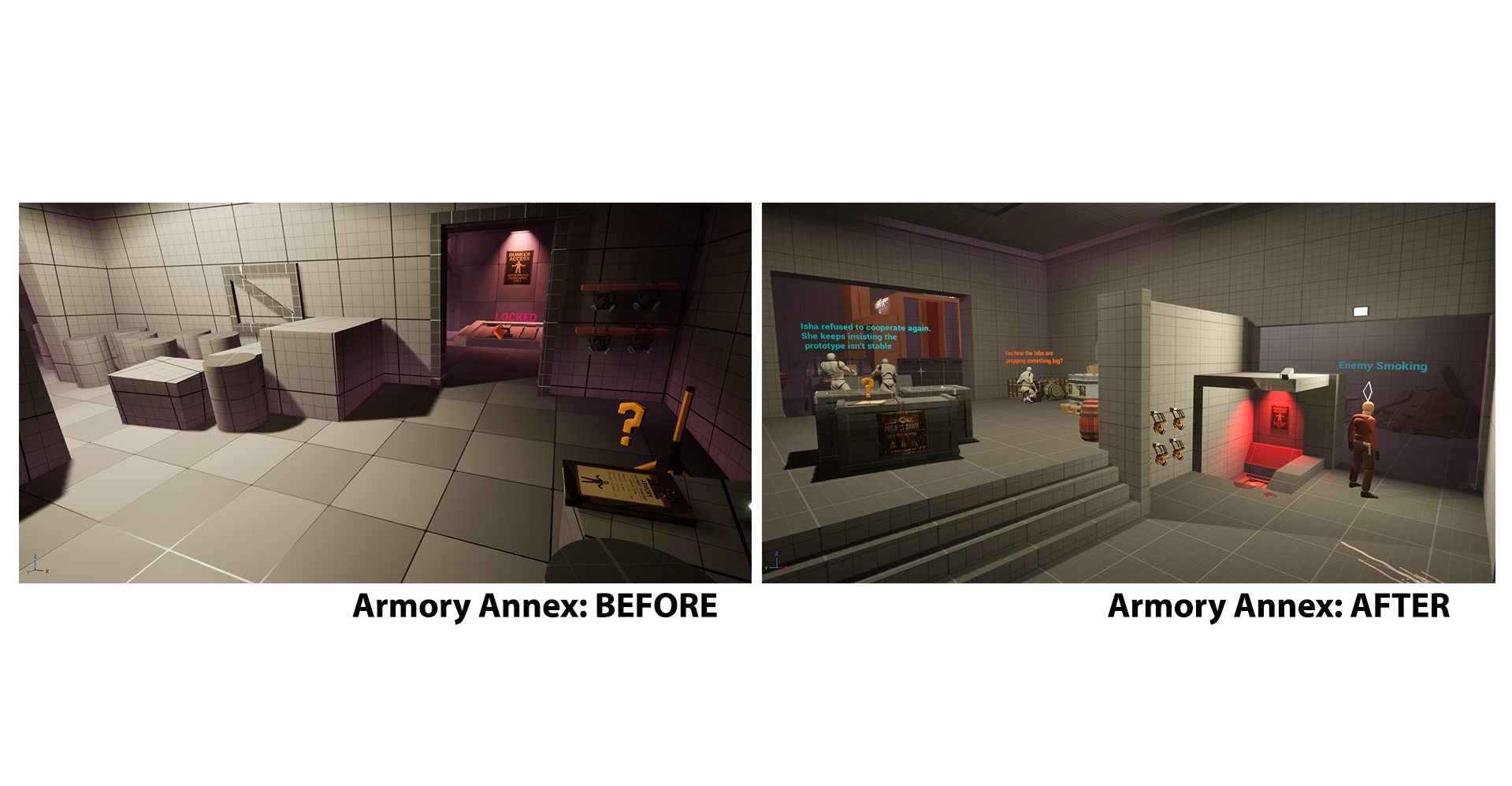
- Redesigned the Armory to expand its interior layout, improving pacing, combat readability, and tactical options through refined cover placement. Introduced a locked SEC K02 bunker door to subtly foreshadow deeper facility routes, and rebuilt a key narrative moment in the Armory Annex to strengthen story delivery during player exploration.
- Each area uses a consistent prefix-wing-depth code (e.g., LAB K12, SEC K03) to create a coherent world logic that supports player orientation and environmental storytelling.
The updated blockout layout delivered a stronger visual rhythm and a clearer spatial hierarchy, allowing players to read the environment more intuitively. The facility as a whole began to feel more alive, layered, and naturally navigable.
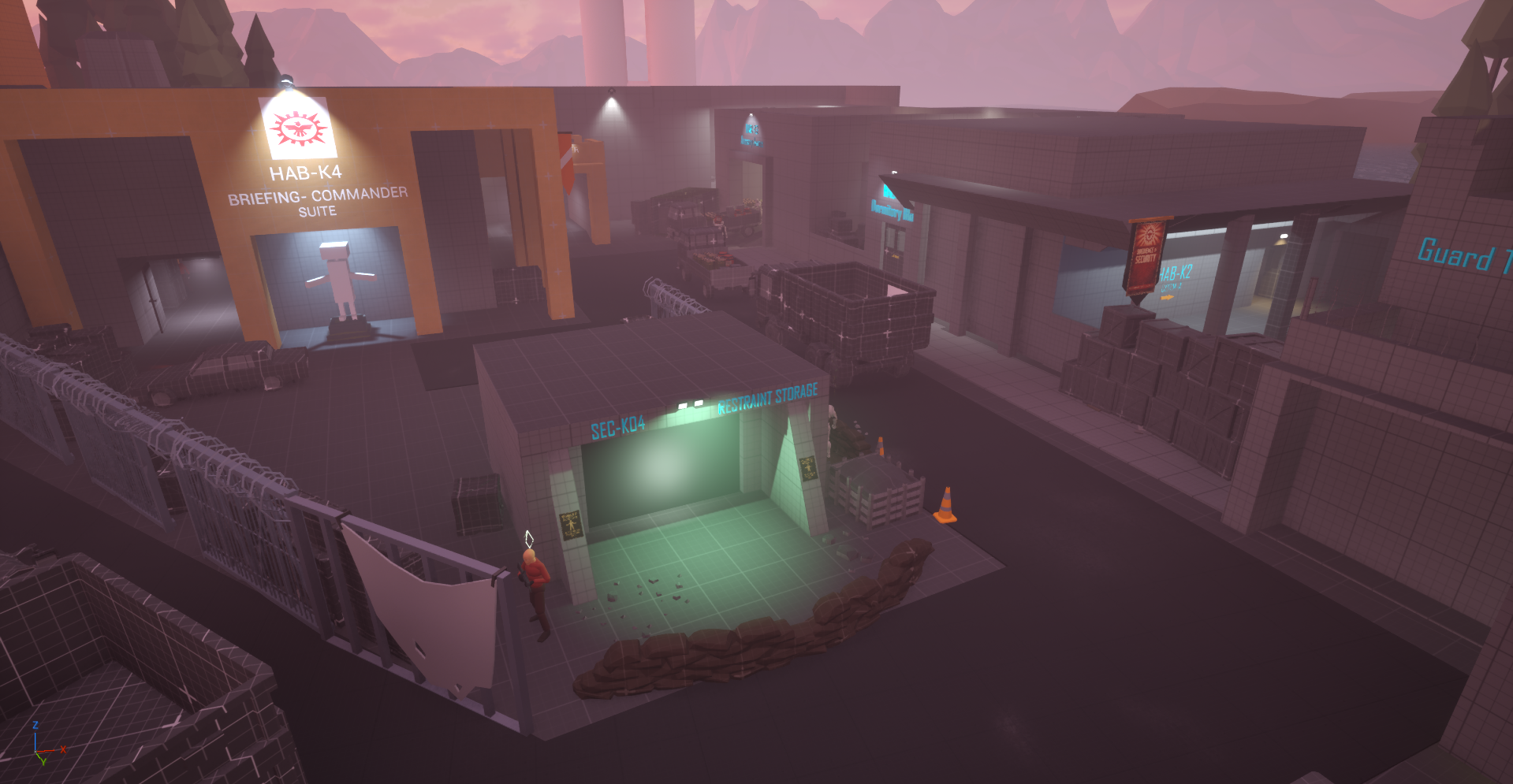
Iterating the Blockout
- Finalize the first tutorial enemy encounter.
- Polish the Right-Side areas, including the Armory Annex and Commander Suite, as well as the Left-Side Parking Lot, improving layout clarity, navigation flow, and environmental storytelling.
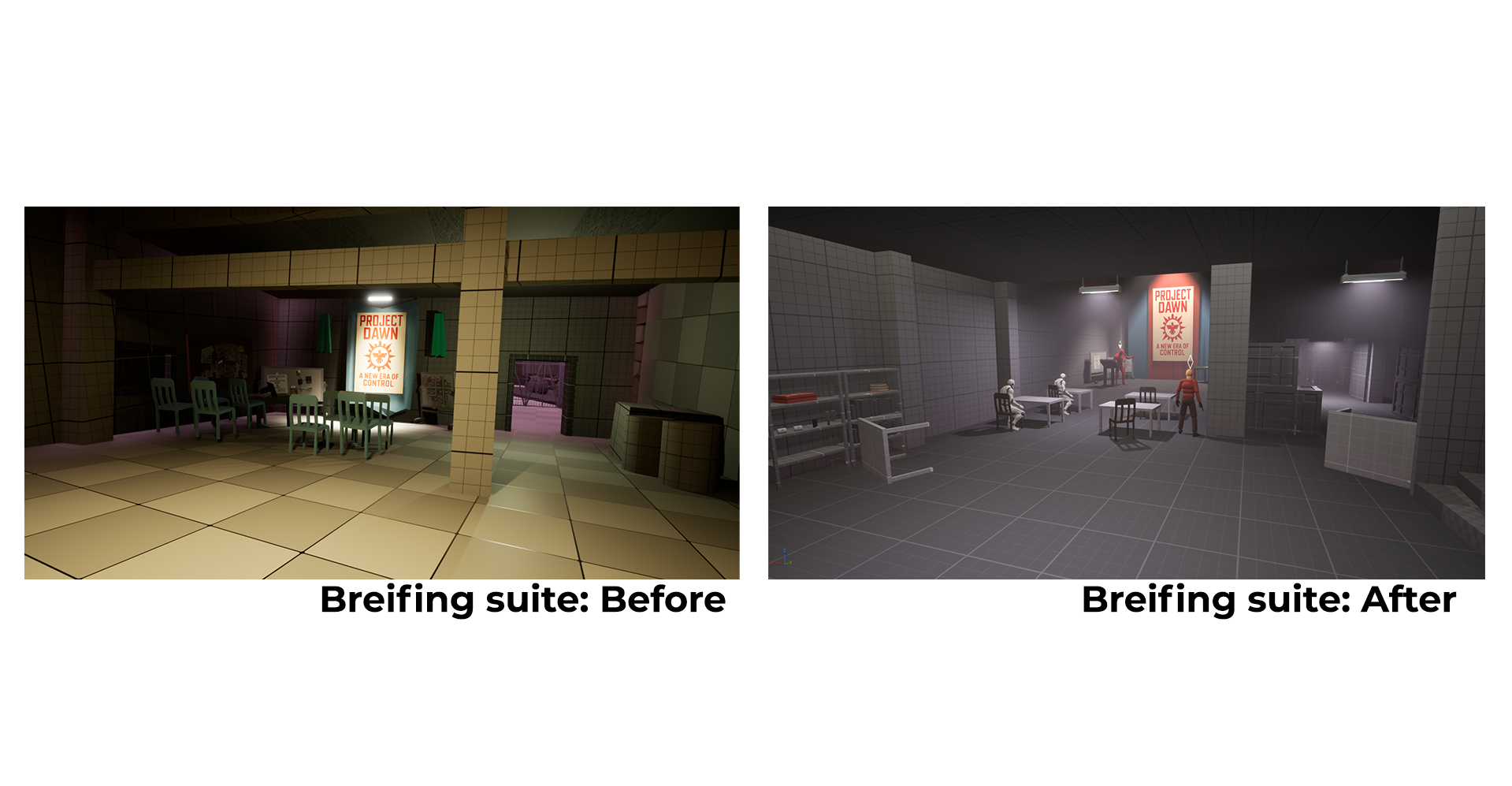
- Refine the Briefing Suite and Commander Suite, focusing on their connections from all entrance points to strengthen spatial hierarchy, and player orientation.
- Start working on lighting and post-processing to enhance overall atmosphere, improve visual hierarchy, and support gameplay readability throughout the level.
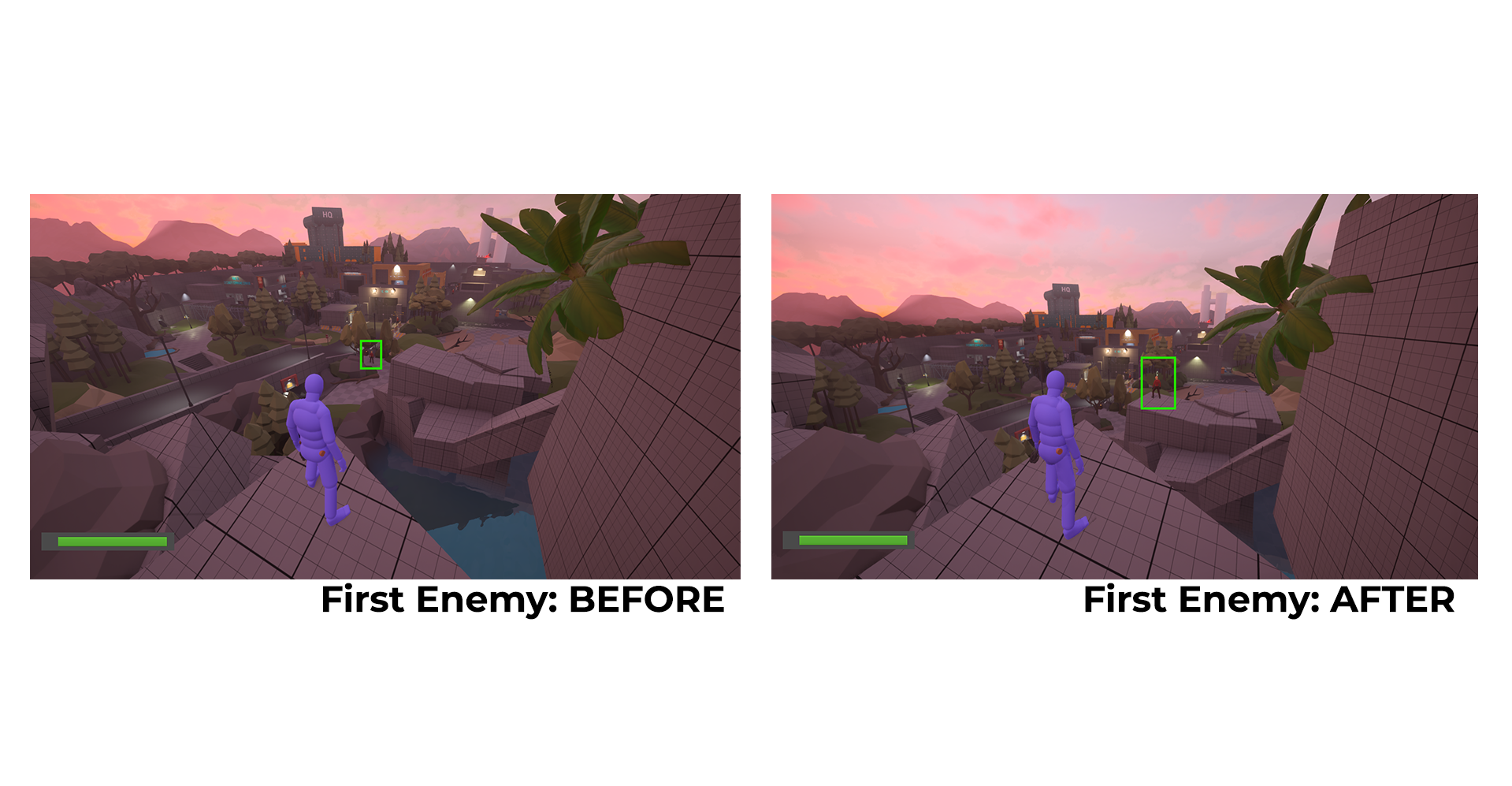
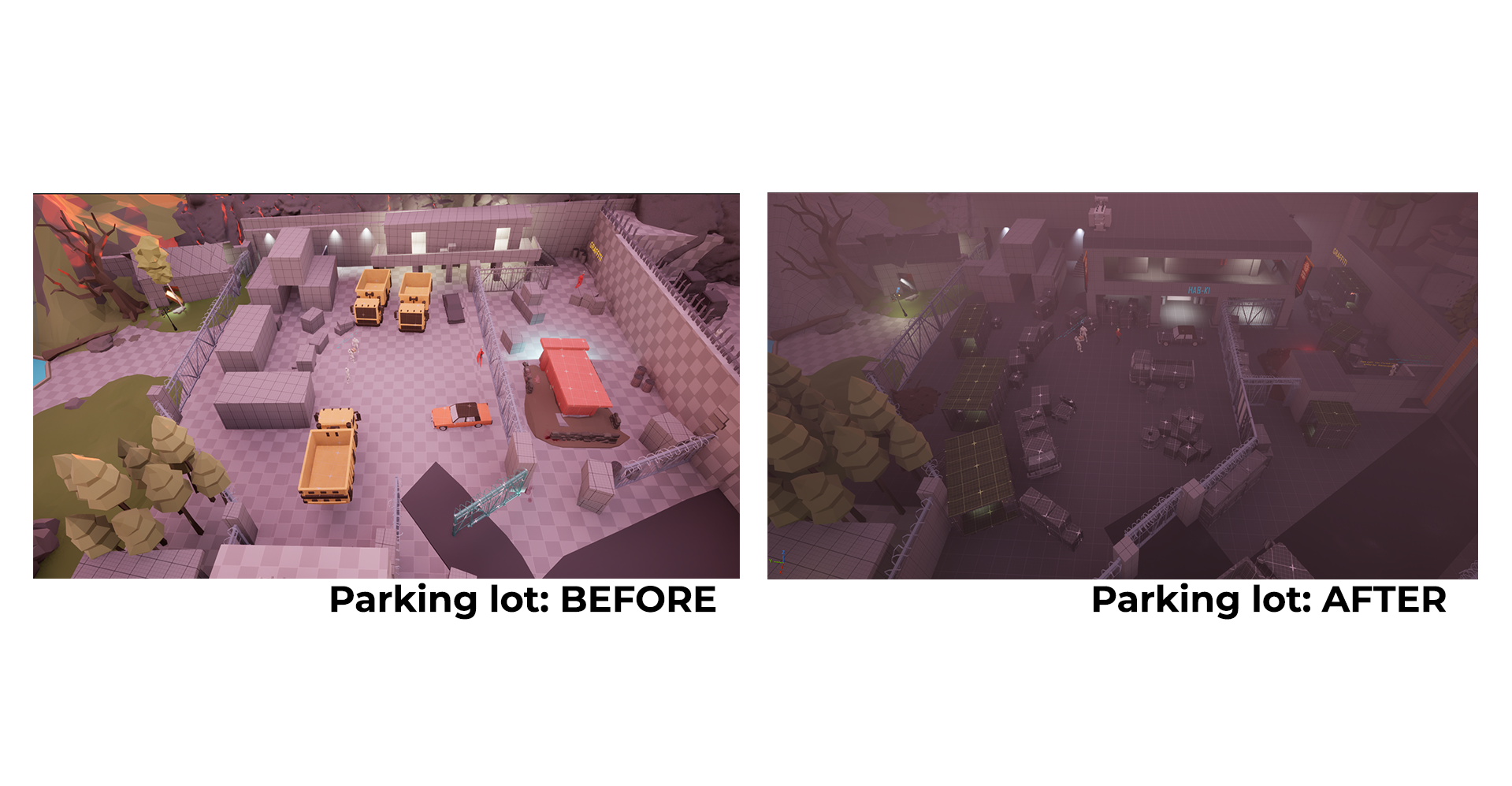
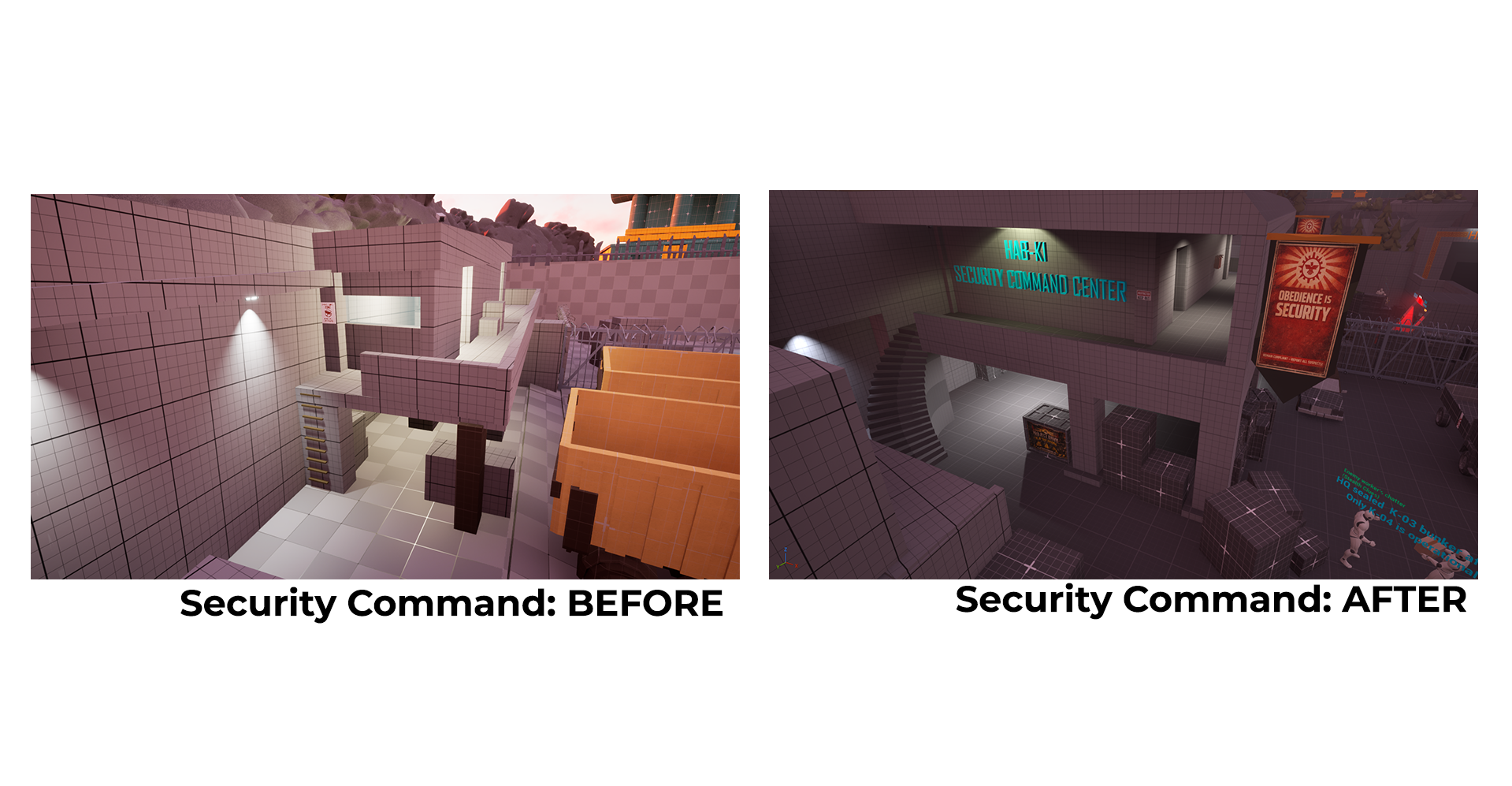
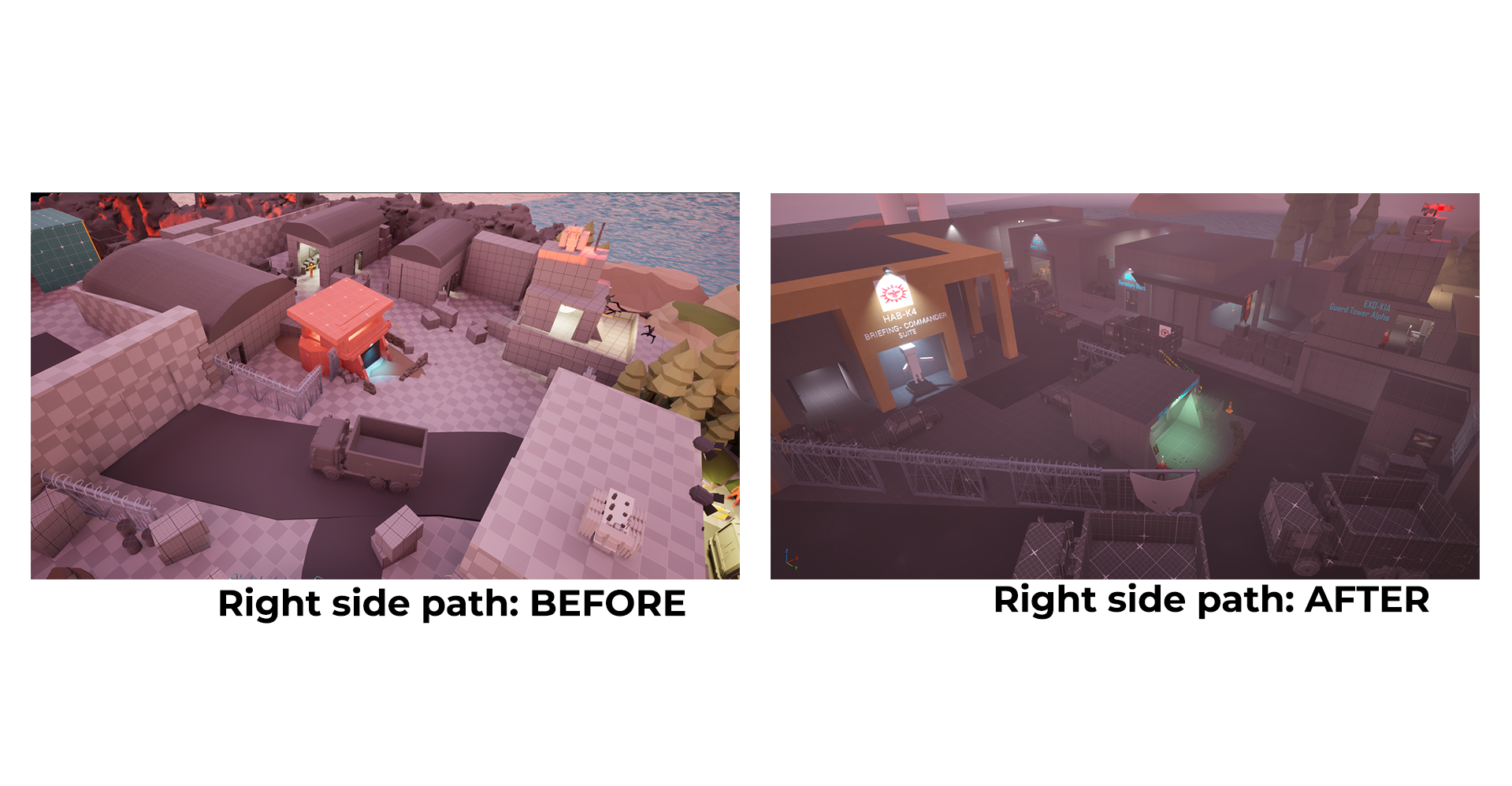
Solution:
- I originally planned the first enemy encounter right after the player descends the cliff, followed by a takedown and a cinematic showing the heavily guarded main gate. It felt like too much at once, so I moved the first encounter to the cliff edge to give the player a breather.
- Reworked the parking lot with props for stealth traversal, attention-guiding lighting, and Blueprints for interactions.
- In the Briefing Suite, my focus was on elevating clarity and purpose. I refined the geometry, rebalanced the lighting, and reorganized props to create a cleaner, more functional environment that feels lived-in and supports both player interaction and key narrative moments. All entrance points on the ground floor were also reworked to provide balanced combat encounters, ensuring fair and readable engagements from every approach.
- Color-coded non-interactive props (e.g. doors) in neutral grey to reduce visual noise.
- Introduced post-processing to reinforce a slightly oppressive mood and guide player perception.
The level became more readable, grounded, and tactically interesting. The updated layout offered players more strategic options during combat, while lighting and visual cues helped guide navigation and reinforced the setting's mood.
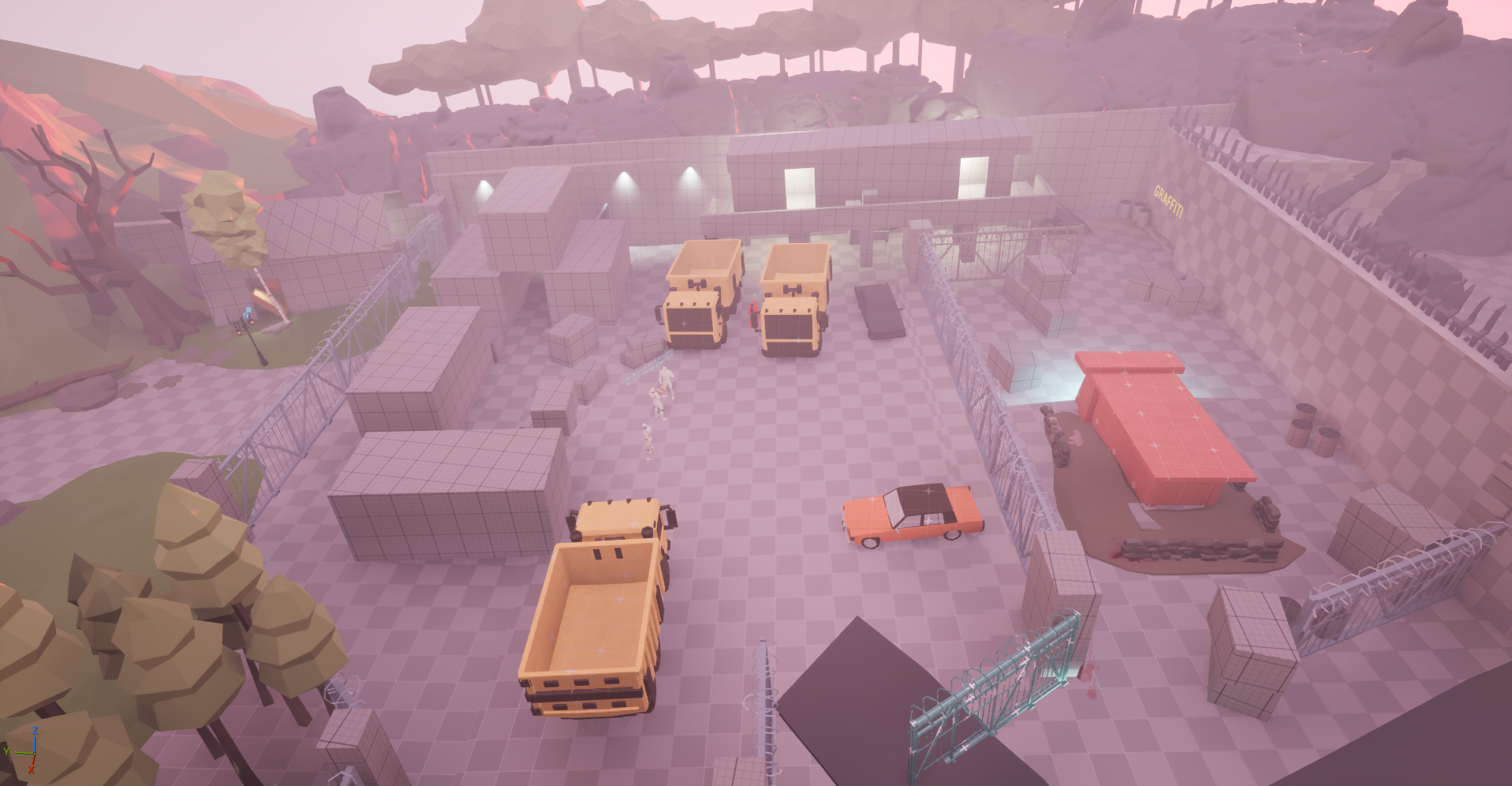
Refining the Blockout
Solution:
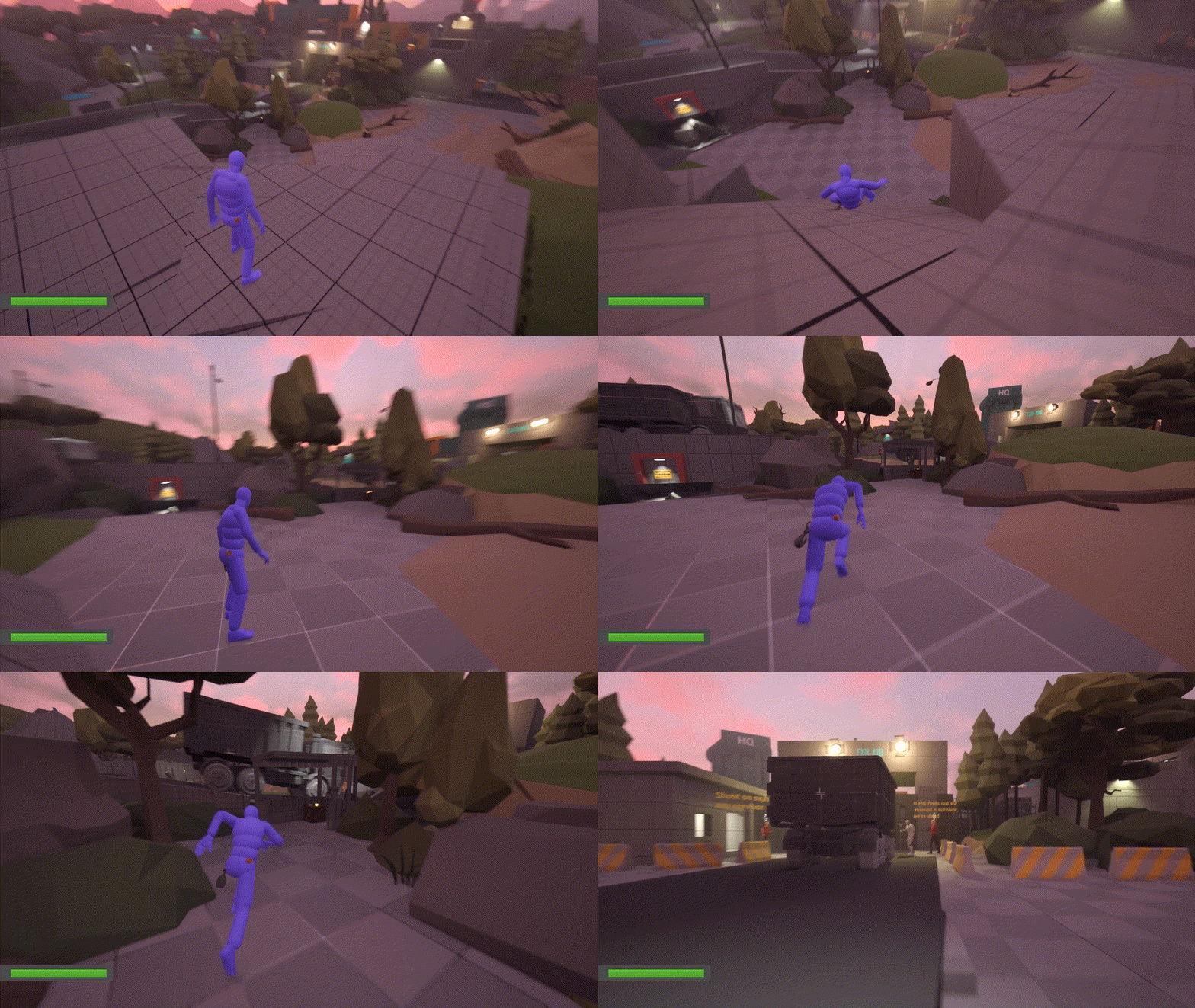
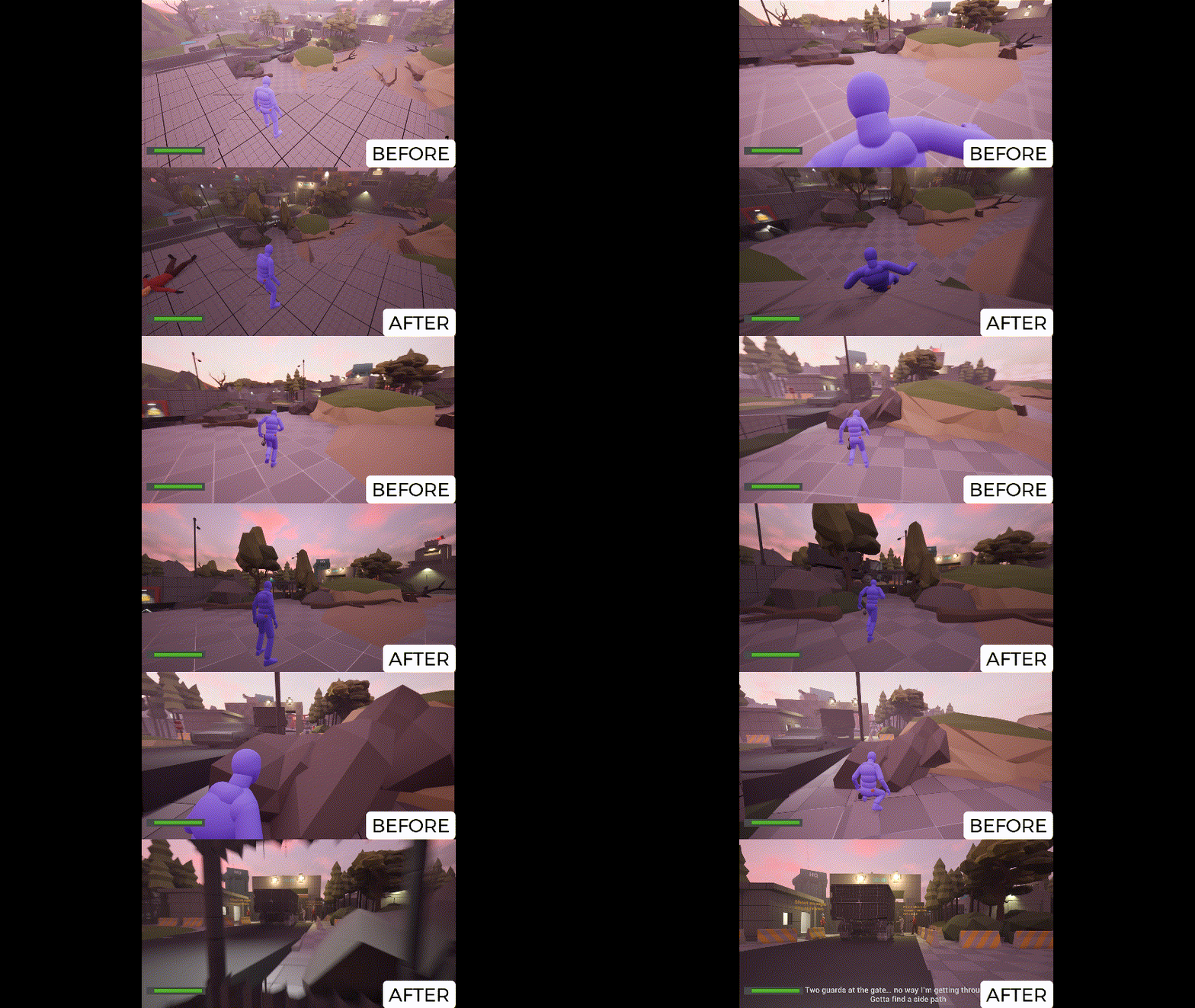
- Added dynamic environmental storytelling. A truck entering the facility becomes a visual anchor that draws the player's eye as they slide down the cliff, using motion and composition as leading lines toward the main entrance.
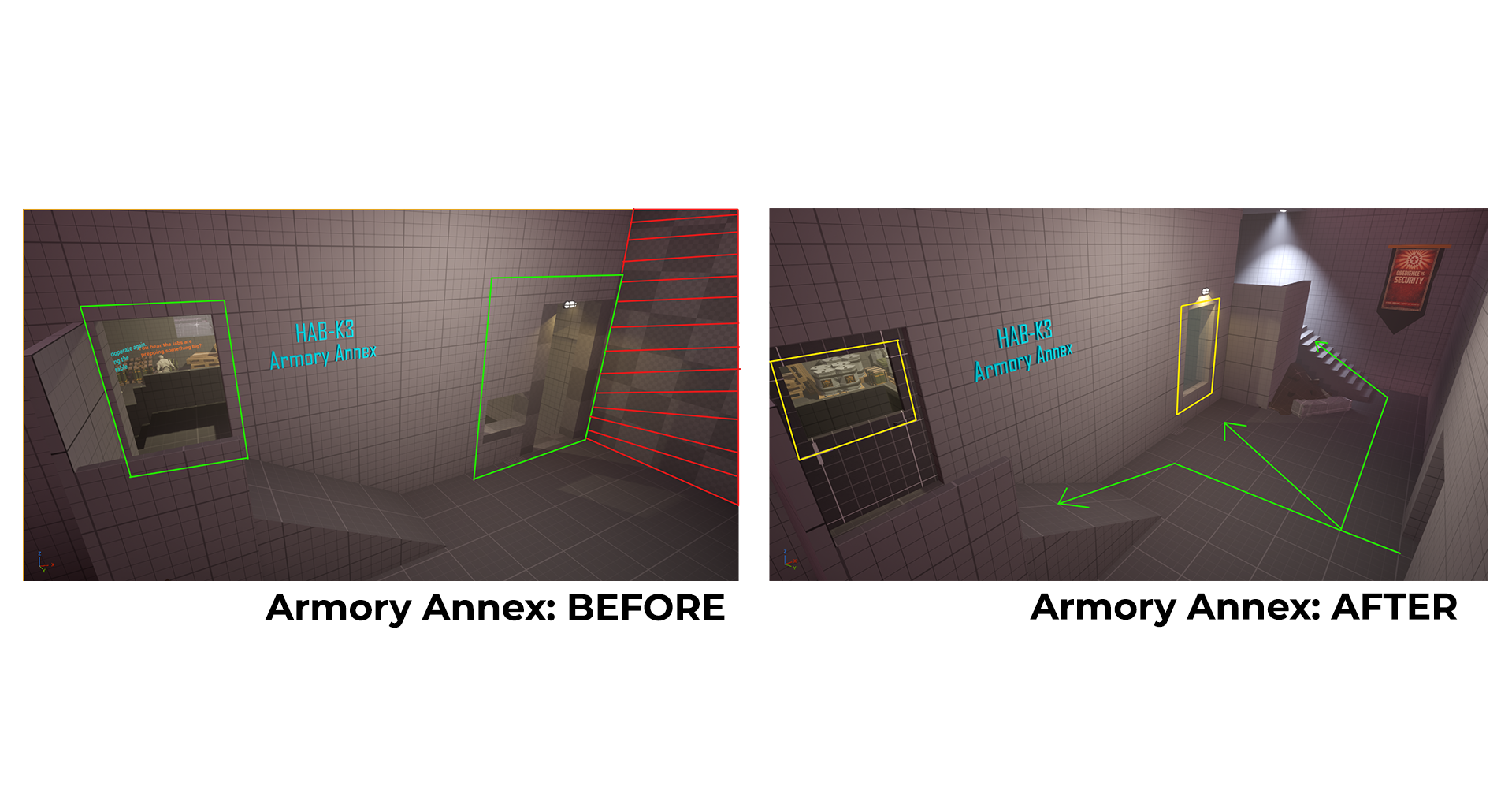
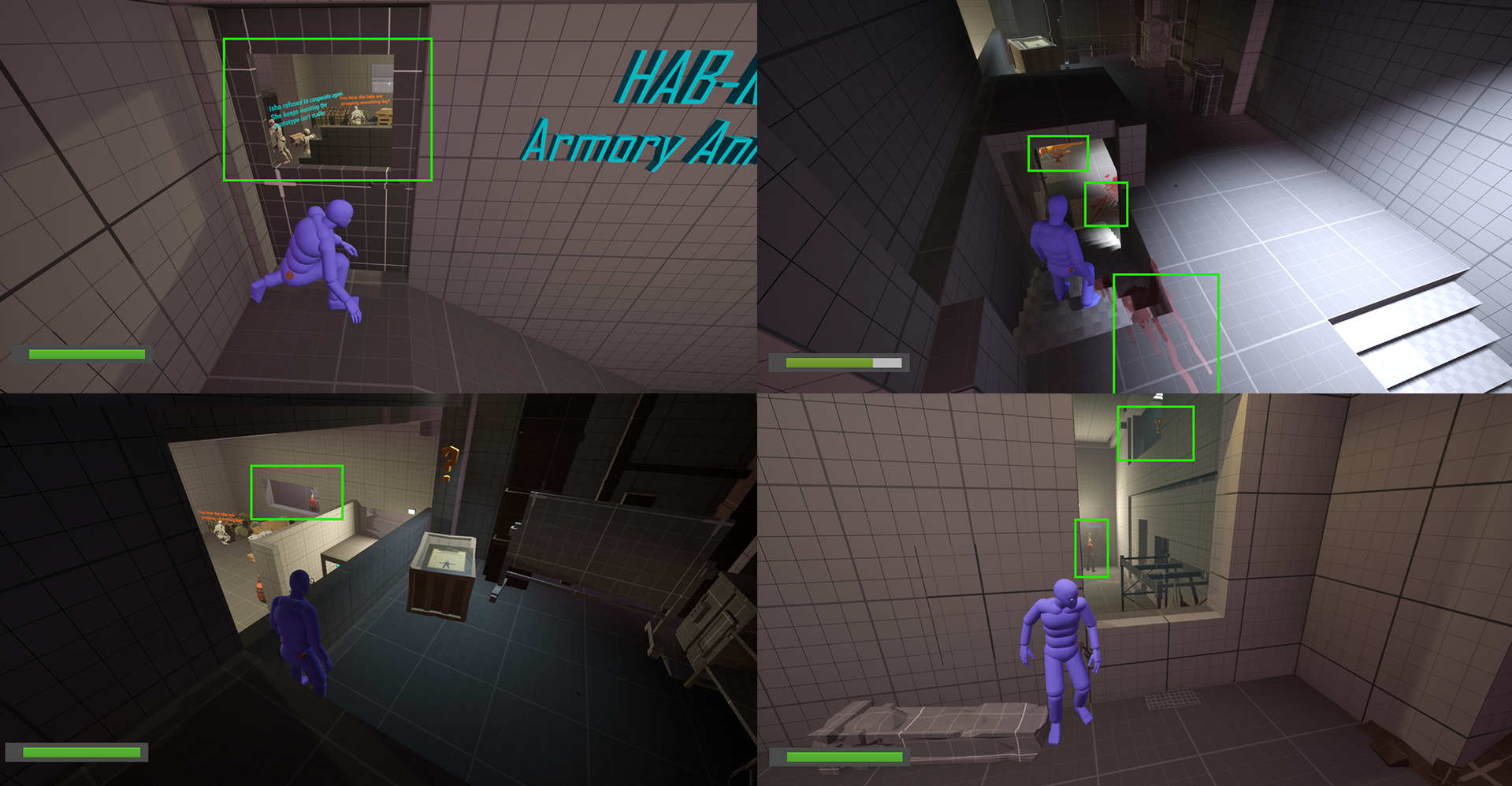
- Expanded the Armory annex, blocking direct access & allowing player to foreshadowing of the scene, enemies & different approaches.
- Added narrative graffiti and environmental storytelling elements to convey the area's past and hint at what occurred here, enriching player context and deepening the atmosphere.
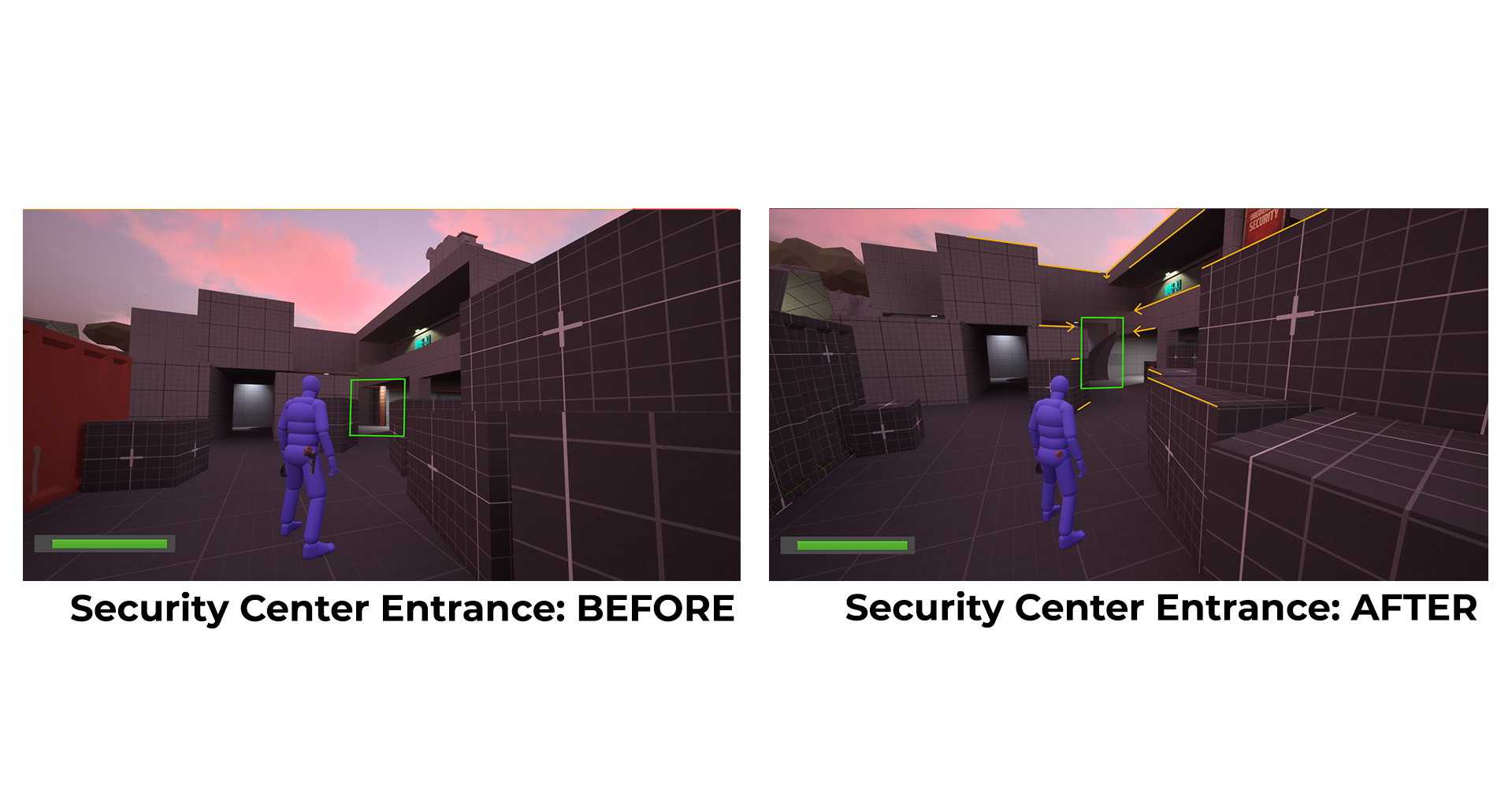
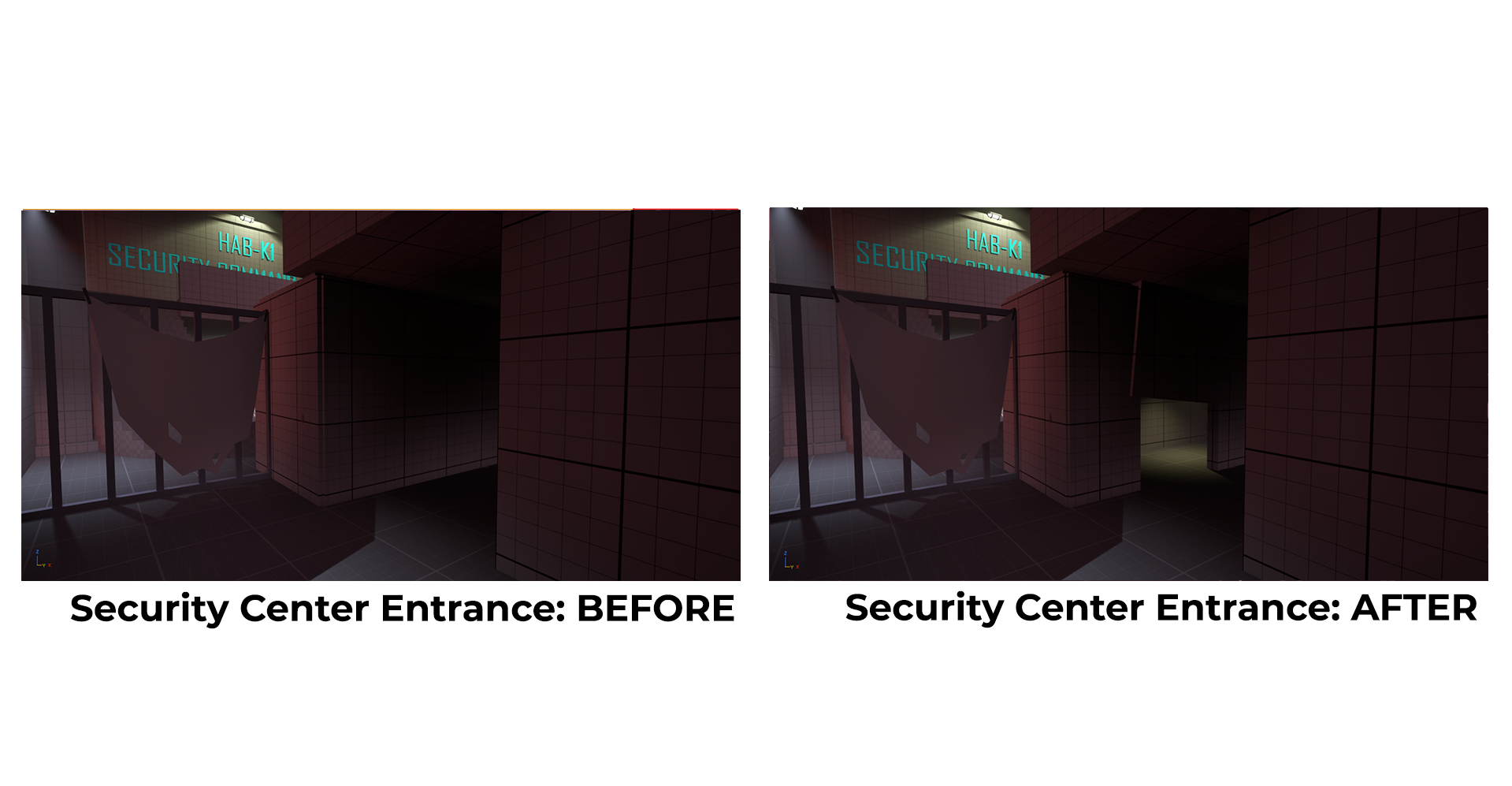
- Players were struggling to locate the ladder leading into the Security Command Center, so I replaced it with a rounded staircase supported by environmental leading lines and targeted lighting. This redesign creates a clearer visual path and naturally guides players toward the intended entry point.
- As the player approaches the facility via the left-side route, the container corridor features a small, broken entry point that subtly foreshadows the storage complex hidden beneath the Security Command Center. A brief cinematic beat provides the player's first glimpse into the facility's deeper operations, ensuring that both infiltration paths deliver balanced narrative setup and consistent environmental storytelling.
The dynamic truck-entry set piece that preserves player agency while supporting multiple approach options with narrative elements. The Armory Annex offered a more atmospheric, story-driven space, reinforcing the mystery of the facility and giving space for emotional pacing between combat sequences.
Key Design Lessons
Building this level taught me several important lessons:
- Emotional pacing is as important as mechanical pacing.
- Environmental storytelling can carry narrative weight without cutscenes.
- Spatial hierarchy naturally guides player expectations.
- Every area should answer "Why does this exist?"
This project helped me refine my ability to blend narrative and gameplay into a cohesive experience.